A Cleaning with the Hygienist
接受洁牙护理
Mia cleans Emma’s teeth and explains what she is doing. Emma asks how to care for her teeth at home.
Mia为Emma清洁牙齿,并说明操作步骤。Emma询问在家该如何护理牙齿。
对话9
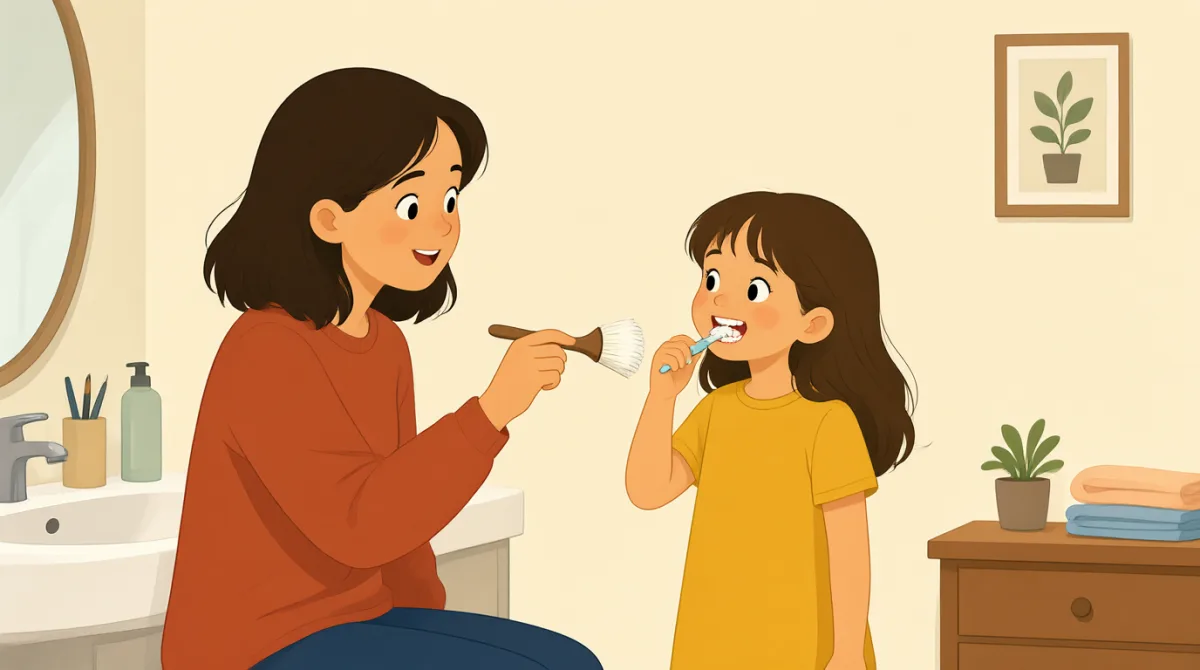

Please sit back and relax. I’m going to clean your teeth now.
请靠着坐好,放轻松。我现在要给你清洁牙齿了。

Okay. Will it hurt? One tooth has been a little sore.
好的。会疼吗?有一颗牙有点疼。
It shouldn’t hurt. Tell me if anything feels uncomfortable.
应该不会疼。如果有哪里不舒服,请告诉我。
What are you doing now? I hear a little buzzing sound.
你现在在做什么?我听到一点嗡嗡声。
I’m using a small tool to clean around your teeth and gums.
我在用一个小工具清洁你的牙齿和牙龈周围。
How often should I brush and floss at home?
我在家应该多久刷一次牙、用一次牙线?
Brush twice a day, and floss once a day. Be gentle near your gums.
每天刷两次牙,每天用一次牙线。在牙龈附近动作要轻柔。
Thanks. Should I use mouthwash, too?
谢谢。我还需要用漱口水吗?
You can, but brushing and flossing are most important. Rinse with water after meals, too.
可以用,不过刷牙和用牙线最重要。饭后也可以用清水漱口。
词汇8
- sit back and relax靠着坐好,放轻松
This means to lean back and try to feel calm. A dentist may say this before starting a treatment.
这个短语的意思是向后靠着坐,尽量放松下来。牙医可能会在开始治疗前这样对你说。
- a little sore有点疼
This means slightly painful or tender. You can use it to describe a part of your body.
这个短语表示轻微疼痛或触痛,可以用来描述身体某个部位的感觉。
- hurt疼
Here, “hurt” means to cause pain. You can ask “Will it hurt?” before a treatment or procedure.
这里的“hurt”表示引起疼痛。接受治疗或操作前,你可以问“Will it hurt?”。
- uncomfortable不舒服
This means not feeling comfortable, or feeling some pain or worry. You can tell someone if something feels uncomfortable.
这个词表示感觉不舒服,或有些疼痛、担心。如果某件事让你感到不舒服,可以告诉对方。
- buzzing sound嗡嗡声
This is a low, steady sound, like the sound of a small electric tool. You can use it to describe a noise you hear.
这是低沉而持续的声音,比如小型电动工具发出的声音。你可以用它来描述听到的噪声。
- floss用牙线清洁
To floss means to clean between your teeth with dental floss. It is often used as part of daily dental care.
“floss”指用牙线清洁牙缝,通常是日常口腔护理的一部分。
- be gentle轻柔一点
This means to do something carefully and not use too much force. You can use it when giving advice about sensitive areas.
这个短语表示小心地做某事,不要用力过猛。给别人提供敏感部位的护理建议时,可以这样说。
- rinse with water用水漱口
This means to wash your mouth by moving water around in it and then spitting it out. You can rinse your mouth after eating.
这个短语表示让水在嘴里流动,然后吐出来。饭后可以漱口。
重点句子8
- 1
Will it hurt?
会疼吗?
Use this to ask if a treatment or activity will cause pain. You can replace “it” with another activity or procedure.
用这句话询问某项治疗或活动是否会引起疼痛。你可以把“it”换成其他活动或操作。
- 2
Tell me if anything feels uncomfortable.
如果有哪里不舒服,请告诉我。
This is a helpful way to invite someone to speak up if they feel pain or discomfort. You can use “Tell me if…” to ask someone to let you know about a problem.
这是一种贴心的说法,表示如果对方感到疼痛或不适,可以告诉你。你可以用“Tell me if…”请别人有问题时告诉你。
- 3
What are you doing now?
你现在在做什么?
Use this to ask what someone is doing at this moment. It is useful when you want an explanation during an activity.
用这句话询问某人此刻正在做什么。活动进行时,如果你想请对方解释一下,这句话就很实用。
- 4
How often should I brush and floss at home?
我在家应该多久刷一次牙、用一次牙线?
Use “How often should I…?” to ask how frequently to do something. You can change the actions to ask about other routines.
用“How often should I…?”询问某件事应该多频繁地做。你可以替换后面的动作,询问其他日常习惯。
- 5
Brush twice a day, and floss once a day.
每天刷两次牙,每天用一次牙线。
This gives simple advice about how often to do two things. You can use “once a day” and “twice a day” to describe daily routines.
这句话简单说明了两件事各自应该做的频率。你可以用“once a day”和“twice a day”来描述日常习惯。
- 6
Be gentle near your gums.
在牙龈附近动作要轻柔。
This is advice to use care and not press too hard. You can use “Be gentle near…” when talking about a sensitive area.
这句话建议你小心操作,不要按得太用力。谈到敏感部位时,可以用“Be gentle near…”来提醒对方。
- 7
You can, but brushing and flossing are most important.
可以用,不过刷牙和用牙线最重要。
This gives permission while explaining which actions matter most. You can use “You can, but…” to offer a choice and add a more important point.
这句话先表示可以这么做,同时说明哪些事情最重要。你可以用“You can, but…”表示允许某种选择,并补充一个更重要的提醒。
- 8
Rinse with water after meals, too.
饭后也用清水漱漱口。
This gives a simple instruction and says when to do it. You can use “after meals” to describe when to do a daily activity.
这句话给出一个简单的指示,并说明什么时候做。你可以用“after meals”来描述日常活动的时间。