A Cleaning with the Hygienist
Una limpieza con la higienista dental
Mia cleans Emma’s teeth and explains what she is doing. Emma asks how to care for her teeth at home.
Mia le limpia los dientes a Emma y le explica lo que está haciendo. Emma pregunta cómo cuidar sus dientes en casa.
Diálogo9
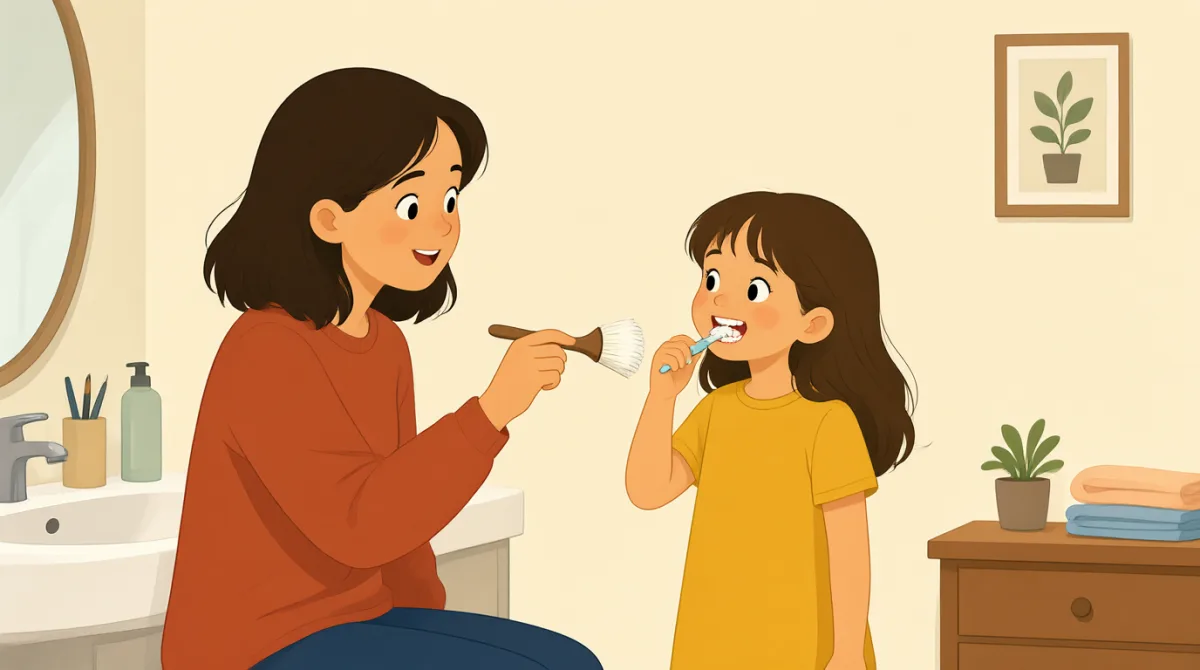

Please sit back and relax. I’m going to clean your teeth now.
Recuéstese y relájese, por favor. Ahora voy a limpiarle los dientes.

Okay. Will it hurt? One tooth has been a little sore.
De acuerdo. ¿Me va a doler? Me ha estado molestando un poco un diente.
It shouldn’t hurt. Tell me if anything feels uncomfortable.
No debería dolerle. Dígame si siente alguna molestia.
What are you doing now? I hear a little buzzing sound.
¿Qué está haciendo ahora? Oigo un zumbido suave.
I’m using a small tool to clean around your teeth and gums.
Estoy usando una herramienta pequeña para limpiar alrededor de los dientes y las encías.
How often should I brush and floss at home?
¿Con qué frecuencia debería cepillarme los dientes y usar hilo dental en casa?
Brush twice a day, and floss once a day. Be gentle near your gums.
Cepíllese los dientes dos veces al día y use hilo dental una vez al día. Tenga cuidado cerca de las encías.
Thanks. Should I use mouthwash, too?
Gracias. ¿También debería usar enjuague bucal?
You can, but brushing and flossing are most important. Rinse with water after meals, too.
Puede hacerlo, pero lo más importante es cepillarse los dientes y usar hilo dental. Enjuáguese también con agua después de las comidas.
Vocabulario8
- sit back and relaxrecuéstese y relájese
This means to lean back and try to feel calm. A dentist may say this before starting a treatment.
Significa echarse hacia atrás e intentar relajarse. El dentista puede decirte esto antes de empezar un tratamiento.
- a little soremolestar un poco
This means slightly painful or tender. You can use it to describe a part of your body.
Significa que algo duele o está sensible, pero no mucho. Puedes usar esta expresión para describir una parte del cuerpo.
- hurtdoler
Here, “hurt” means to cause pain. You can ask “Will it hurt?” before a treatment or procedure.
Aquí, “hurt” significa causar dolor. Puedes preguntar “Will it hurt?” antes de un tratamiento o procedimiento.
- uncomfortableincómodo
This means not feeling comfortable, or feeling some pain or worry. You can tell someone if something feels uncomfortable.
Significa que no te sientes a gusto o que sientes algo de dolor o preocupación. Puedes decirle a alguien si algo te resulta incómodo.
- buzzing soundzumbido
This is a low, steady sound, like the sound of a small electric tool. You can use it to describe a noise you hear.
Es un sonido bajo y constante, como el de una herramienta eléctrica pequeña. Puedes usar esta expresión para describir un ruido que oyes.
- flossusar hilo dental
To floss means to clean between your teeth with dental floss. It is often used as part of daily dental care.
“To floss” significa limpiar entre los dientes con hilo dental. Suele formar parte del cuidado dental diario.
- be gentletener cuidado
This means to do something carefully and not use too much force. You can use it when giving advice about sensitive areas.
Significa hacer algo con cuidado y sin aplicar demasiada fuerza. Puedes usar esta expresión al dar consejos sobre zonas sensibles.
- rinse with waterenjuagarse con agua
This means to wash your mouth by moving water around in it and then spitting it out. You can rinse your mouth after eating.
Significa enjuagarse la boca moviendo agua dentro de ella y luego escupiéndola. Puedes enjuagarte la boca después de comer.
Frases clave8
- 1
Will it hurt?
¿Me va a doler?
Use this to ask if a treatment or activity will cause pain. You can replace “it” with another activity or procedure.
Usa esta pregunta para saber si un tratamiento o una actividad va a causar dolor. Puedes sustituir “it” por otra actividad o procedimiento.
- 2
Tell me if anything feels uncomfortable.
Dígame si siente alguna molestia.
This is a helpful way to invite someone to speak up if they feel pain or discomfort. You can use “Tell me if…” to ask someone to let you know about a problem.
Es una forma útil de animar a alguien a decir si siente dolor o alguna molestia. Puedes usar “Tell me if…” para pedirle a alguien que te avise si hay algún problema.
- 3
What are you doing now?
¿Qué está haciendo ahora?
Use this to ask what someone is doing at this moment. It is useful when you want an explanation during an activity.
Usa esta pregunta para saber qué está haciendo alguien en ese momento. Es útil si quieres que te expliquen algo mientras lo hacen.
- 4
How often should I brush and floss at home?
¿Con qué frecuencia debería cepillarme los dientes y usar hilo dental en casa?
Use “How often should I…?” to ask how frequently to do something. You can change the actions to ask about other routines.
Usa “How often should I…?” para preguntar cada cuánto debes hacer algo. Puedes cambiar las acciones para preguntar por otras rutinas.
- 5
Brush twice a day, and floss once a day.
Cepíllese los dientes dos veces al día y use hilo dental una vez al día.
This gives simple advice about how often to do two things. You can use “once a day” and “twice a day” to describe daily routines.
Esta frase da un consejo sencillo sobre la frecuencia con la que hay que hacer dos cosas. Puedes usar “once a day” y “twice a day” para hablar de rutinas diarias.
- 6
Be gentle near your gums.
Tenga cuidado cerca de las encías.
This is advice to use care and not press too hard. You can use “Be gentle near…” when talking about a sensitive area.
Este consejo indica que hay que tener cuidado y no presionar demasiado. Puedes usar “Be gentle near…” para hablar de una zona sensible.
- 7
You can, but brushing and flossing are most important.
Puede hacerlo, pero lo más importante es cepillarse los dientes y usar hilo dental.
This gives permission while explaining which actions matter most. You can use “You can, but…” to offer a choice and add a more important point.
Esta frase da permiso y a la vez explica qué acciones son las más importantes. Puedes usar “You can, but…” para ofrecer una opción y añadir algo más importante.
- 8
Rinse with water after meals, too.
Enjuáguese con agua también después de las comidas.
This gives a simple instruction and says when to do it. You can use “after meals” to describe when to do a daily activity.
Esta frase da una instrucción sencilla e indica cuándo hacerlo. Puedes usar “after meals” para decir cuándo realizar una actividad diaria.