Cooking Over a Fire
焚き火で料理
Emma and Jack cook dinner over the campsite fire. They prepare a simple meal and talk about what they want to do the next day.
エマとジャックはキャンプ場の焚き火で夕食を作る。簡単な料理を準備しながら、次の日にしたいことを話す。
会話8
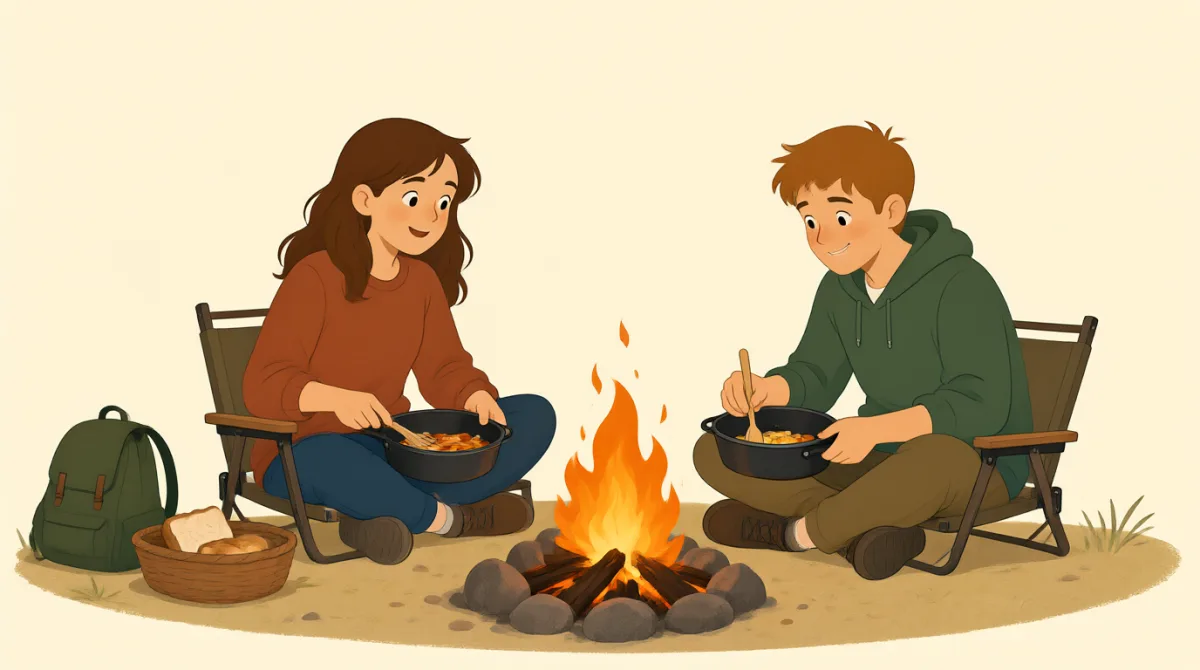

The fire is ready. What should we cook for dinner?
火の準備ができたね。夕食は何を作ろうか?

Let’s cook sausages and potatoes. I brought some bread, too.
ソーセージとジャガイモを焼こう。パンも持ってきたよ。
Great! Can you put the potatoes in the pan?
いいね!ジャガイモをフライパンに入れてくれる?
Sure. We should cook them slowly so they don’t burn.
もちろん。焦げないように、ゆっくり焼こう。
I’ll turn the sausages. They smell really good.
ソーセージをひっくり返すね。すごくいい匂いがする。
Dinner will be ready soon. What do you want to do tomorrow?
もうすぐ夕食だね。明日は何をしたい?
I’d like to hike by the lake and take some pictures.
湖のそばをハイキングして、写真を撮りたいな。
Sounds good. Let’s eat, then plan our morning.
いいね。食べてから、朝の予定を立てよう。
語彙8
- cook for dinner夕食に何かを作る
This means to prepare food for the evening meal. You can ask, “What should we cook for dinner?”
夕食のために料理をする、という意味です。「What should we cook for dinner?」のように、夕食に何を作るか尋ねるときに使えます。
- brought持ってきた
“Brought” is the past form of “bring.” Use it to say you carried something with you, such as food on a camping trip.
「Brought」は「bring(持ってくる)」の過去形です。キャンプに食べ物を持ってきたときのように、何かを携えてきたことを伝えるのに使います。
- put the potatoes in the panジャガイモをフライパンに入れる
This means to place the potatoes inside the pan. You can use “put [something] in [a container]” when giving a simple instruction.
ジャガイモをフライパンの中に入れる、という意味です。「put [something] in [a container]」は、簡単な指示をするときに使える表現です。
- cook them slowlyゆっくり焼く
This means to heat the food gently over time. You can use this phrase when food needs to cook without burning.
時間をかけて、食べ物に穏やかに火を通すという意味です。焦げないように調理したいときに使える表現です。
- turn the sausagesソーセージをひっくり返す
This means to move or flip the sausages so they cook on the other side. It is useful when cooking food in a pan or over a fire.
ソーセージの反対側にも火が通るように、動かしたりひっくり返したりするという意味です。フライパンや焚き火で料理するときに便利な表現です。
- burn焦げる
Food burns when it gets too hot or cooks for too long. You can say, “Watch the food so it doesn’t burn.”
食べ物が熱くなりすぎたり、長く火にかけすぎたりすると焦げます。「Watch the food so it doesn’t burn.」のように言えます。
- by the lake湖のそばに
This means near or beside the lake. Use “by” to describe a place next to something.
湖の近く、または湖のすぐそばという意味です。「by」は、何かの隣にある場所を表すときに使います。
- take some pictures写真を撮る
This means to use a camera or phone to make photographs. You can say, “I’d like to take some pictures” when talking about plans.
カメラやスマートフォンを使って写真を撮影するという意味です。予定について話すときは、「I’d like to take some pictures」のように言えます。
重要な文8
- 1
What should we cook for dinner?
夕食は何を作ろうか?
Use this question to ask for ideas about what to prepare for an evening meal. You can replace “dinner” with another meal or occasion.
夕食に何を用意するか、アイデアを尋ねるときに使う質問です。「dinner」を別の食事や行事に置き換えて使えます。
- 2
I brought some bread, too.
パンも持ってきたよ。
This sentence tells someone that you brought an additional item. Use “I brought [something], too” to mention something you have with you.
何かを追加で持ってきたことを相手に伝える文です。「I brought [something], too」は、持ってきたものをもう一つ伝えるときに使えます。
- 3
Can you put the potatoes in the pan?
ジャガイモをフライパンに入れてくれる?
This is a polite way to ask someone to do a task. Replace “the potatoes” and “the pan” with other things and places.
相手に何かをしてもらうときの、丁寧な頼み方です。「the potatoes」と「the pan」を別の物や場所に置き換えられます。
- 4
We should cook them slowly so they don’t burn.
焦げないように、ゆっくり焼こう。
Use “We should” to make a suggestion, and “so” to explain the reason. You can use this pattern to give practical advice.
「We should」は提案をするときに使い、「so」はその理由を説明します。実用的なアドバイスをするときにも使えるパターンです。
- 5
I’ll turn the sausages.
ソーセージをひっくり返すね。
Use “I’ll” to offer to do something now or soon. Replace “turn the sausages” with another helpful task.
「I’ll」は、今または近いうちに何かをすると申し出るときに使います。「turn the sausages」を、別の手伝いに置き換えてみましょう。
- 6
What do you want to do tomorrow?
明日は何をしたい?
Use this question to ask someone about their plans for the next day. You can replace “tomorrow” with another time.
次の日の予定を相手に尋ねるときに使う質問です。「tomorrow」を別の時に置き換えられます。
- 7
I’d like to hike by the lake and take some pictures.
湖のそばをハイキングして、写真を撮りたいな。
Use “I’d like to” to talk about something you want to do. Add two activities with “and” to describe your plans.
「I’d like to」は、したいことを話すときに使います。「and」で二つの活動をつなげると、予定を説明できます。
- 8
Let’s eat, then plan our morning.
食べてから、朝の予定を立てよう。
Use “Let’s” to suggest doing something together. “Then” shows the order of the activities: eat first and plan afterward.
「Let’s」は、一緒に何かをしようと提案するときに使います。「Then」は活動の順番を示していて、先に食べて、そのあと予定を立てるという意味です。