Feeling Tired the Next Day
翌日、疲れを感じて
The next day, Emma tells her friend Mia that she feels tired and has a sore arm. Mia helps her decide what to do.
翌日、エマは友達のミアに、疲れていて腕が痛むと話します。ミアはどうしたらいいか一緒に考えてくれます。
会話8
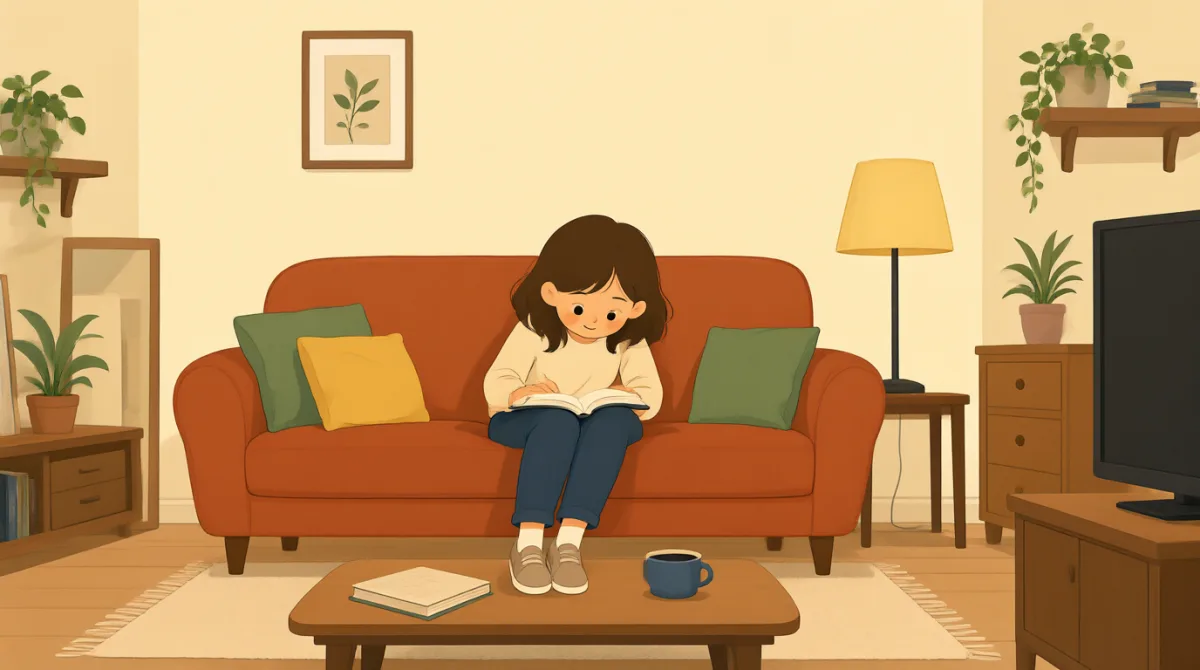

I feel tired today, and my arm is sore where I got the flu shot.
今日は疲れてるし、インフルエンザの予防接種をしたところが痛いんだ。

That can happen after a shot. Did you get enough sleep last night?
予防接種のあとにそうなることもあるよ。昨夜はちゃんと眠れた?
Not really. I woke up a few times, but my arm hurts more than I expected.
あんまり。何度か目が覚めたんだけど、思ってたより腕が痛いんだ。
Try resting and drinking some water. You can move your arm gently, too.
休んで、水を飲んでみて。それから、腕をゆっくり動かしてもいいよ。
Should I take medicine, or should I wait and see if it gets better?
薬を飲んだほうがいいかな?それとも、よくなるか様子を見たほうがいい?
Check the instructions from the pharmacy, or ask your doctor before taking anything.
何か飲む前に、薬局でもらった説明書を確認するか、お医者さんに聞いてね。
Okay. If I feel worse, I’ll call my doctor. How long might this last?
わかった。もっと具合が悪くなったら、お医者さんに電話するね。どれくらい続くのかな?
It often gets better in a day or two. Take it easy today.
たいていは1、2日でよくなるよ。今日は無理しないでね。
語彙6
- feel tired疲れを感じる
This means you do not have much energy. You can use it to describe how you feel: “I feel tired today.”
あまり元気がない、という意味です。自分の状態を伝えるときに使えます。「I feel tired today.」(今日は疲れてるよ。)のように言います。
- sore痛む、ひりひりする
Sore means painful or uncomfortable. You can use it to describe a part of your body: “My arm is sore.”
痛みや不快感がある、という意味です。体の一部の状態を表すときに使えます。「My arm is sore.」(腕が痛いんだ。)のように言います。
- get enough sleep十分な睡眠をとる
This means to sleep for the amount of time your body needs. You can ask someone, “Did you get enough sleep?”
体に必要な時間だけ眠る、という意味です。「Did you get enough sleep?」(ちゃんと眠れた?)と人に尋ねることもできます。
- resting休むこと
Resting means relaxing instead of doing tiring activities. You can say, “Try resting” to suggest taking it easy.
疲れることをせず、ゆっくり過ごすことです。「Try resting」(休んでみて)と言うと、無理せず休むよう勧められます。
- gets betterよくなる
This means that a problem or symptom improves. You can ask, “When will it get better?”
問題や症状が改善する、という意味です。「When will it get better?」(いつごろよくなるかな?)と尋ねられます。
- take it easy無理をしない
This means to relax and avoid doing too much. You can say it to someone who needs to rest.
ゆっくりして、頑張りすぎないという意味です。休む必要がある人に伝えるときに使えます。
重要な文8
- 1
I feel tired today, and my arm is sore where I got the flu shot.
今日は疲れてるし、インフルエンザの予防接種をしたところが痛いんだ。
This sentence describes how you feel and where you have pain. You can reuse the pattern “I feel [feeling], and my [body part] is sore.”
この文では、自分の気分と痛む場所を伝えています。「I feel [feeling], and my [body part] is sore.」という形を使えば、感じていることや痛む体の部分を入れ替えて応用できます。
- 2
Did you get enough sleep last night?
昨夜はちゃんと眠れた?
This is a simple way to ask whether someone slept well. You can change “enough sleep” to ask about other needs, such as “Did you get enough water?”
相手が十分に眠れたかを尋ねる、簡単な言い方です。「enough sleep」の部分を変えれば、ほかに必要なものについても聞けます。たとえば「Did you get enough water?」(水分は十分にとれた?)と言えます。
- 3
Try resting and drinking some water.
休んで、水を飲んでみて。
This gives two simple suggestions. You can use “Try [activity]” to recommend something helpful.
簡単な提案を二つ伝える文です。「Try [activity]」の形を使うと、役に立ちそうなことを勧められます。
- 4
You can move your arm gently, too.
腕をゆっくり動かしてもいいよ。
This suggests doing a movement carefully and without force. You can use “You can [action] gently” for other gentle actions.
力を入れずに、注意して動かすよう勧めています。「You can [action] gently」の形は、ほかの動作をやさしく行うよう伝えるときにも使えます。
- 5
Check the instructions from the pharmacy, or ask your doctor before taking anything.
薬を飲む前に、薬局でもらった説明書を確認するか、お医者さんに聞いてね。
This gives safe next steps before taking medicine. You can reuse “Check the instructions, or ask [person]” when you need advice.
薬を飲む前にできる、安全のための行動を伝えています。「Check the instructions, or ask [person]」という形は、アドバイスが必要なときに応用できます。
- 6
If I feel worse, I’ll call my doctor.
もっと具合が悪くなったら、お医者さんに電話するね。
This explains what you will do if your condition becomes worse. Use “If [situation], I’ll [action]” to talk about a future plan.
状態が悪くなった場合にどうするかを伝える文です。「If [situation], I’ll [action]」の形を使うと、これからの予定や対応を話せます。
- 7
It often gets better in a day or two.
たいていは1、2日でよくなるよ。
This describes how long a problem may last. You can use “It gets better in [amount of time]” to talk about improvement.
症状や問題がどれくらい続くかを伝えています。「It gets better in [amount of time]」の形を使うと、どれくらいで改善するかを話せます。
- 8
Take it easy today.
今日は無理しないでね。
This is a friendly way to tell someone to rest and avoid doing too much. You can use it when someone feels tired or unwell.
休んで、頑張りすぎないように伝える親しみのある言い方です。相手が疲れていたり、体調が悪かったりするときに使えます。