Calling the Plumber
水道修理業者に電話する
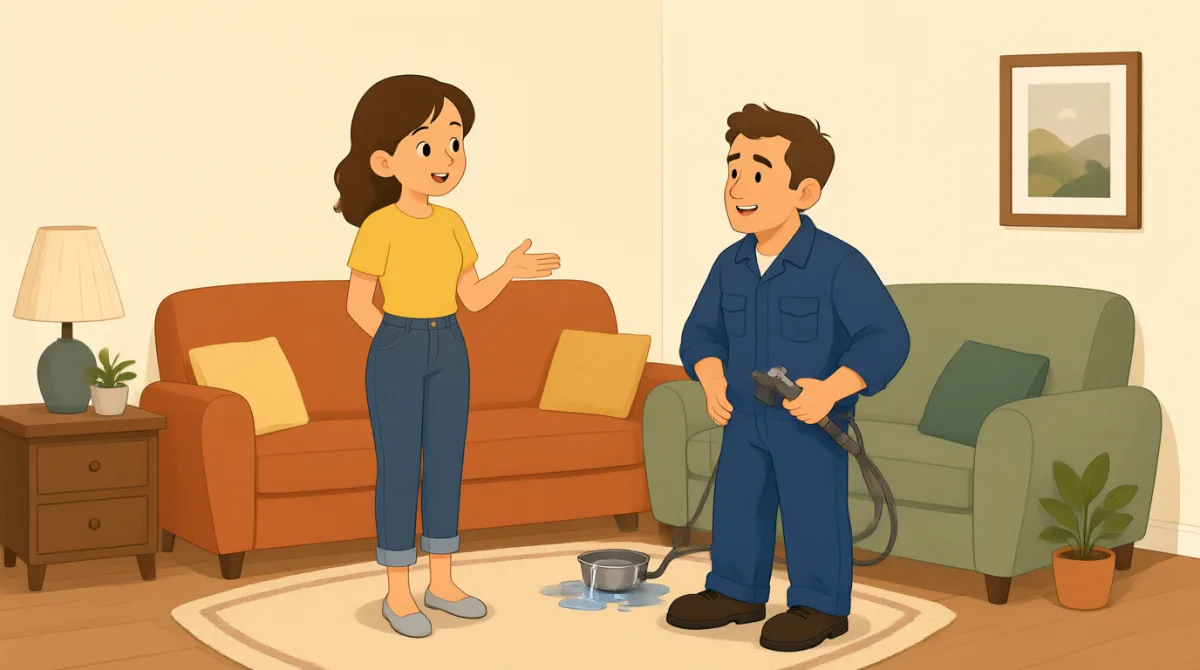
Jack calls plumber David and describes the leak. David asks a few simple questions to understand the problem.
ジャックが水道修理業者のデイビッドに電話し、水漏れについて説明します。デイビッドは状況を把握するため、簡単な質問をいくつかします。
会話9

Hi, David. I’m calling about a leak under my kitchen sink.
もしもし、デイビッドさん。キッチンのシンクの下で水漏れしているので、お電話しました。

I can help. When did you first notice the leak?
対応できますよ。水漏れに最初に気づいたのはいつですか?
I saw water on the floor this morning. It’s still leaking.
今朝、床に水があるのを見ました。まだ漏れています。
Is the water coming from a pipe or the sink itself?
水はパイプから漏れていますか?それともシンク自体からですか?
I’m not sure. It looks like it’s coming from a pipe.
よくわかりません。パイプから漏れているように見えます。
Is it a small leak, or is a lot of water coming out?
少しの水漏れですか?それとも、かなり水が出ていますか?
It’s a small leak, but the cabinet is getting wet.
少しの水漏れですが、シンク下の収納スペースが濡れてきています。
Can you turn off the water under the sink for now?
とりあえず、シンクの下の止水栓を閉めてもらえますか?
Yes, I can. I’ll turn it off now. Can you come take a look?
はい、できます。今、止めます。見に来てもらえますか?
語彙8
- a leak水漏れ
A leak is water that escapes from a pipe or another place. Here, water is coming from under the kitchen sink.
“a leak”は、パイプなどから水が漏れ出ていることです。この会話では、キッチンのシンクの下から水が漏れています。
- under my kitchen sinkキッチンのシンクの下
This phrase tells where the leak is. Use “under my [place]” to describe a location below something.
“under my kitchen sink”は、水漏れの場所を伝える表現です。“under my [place]”で、何かの下にある場所を表せます。
- notice the leak水漏れに気づく
To notice something means to see or become aware of it. Use “When did you first notice…?” to ask when someone became aware of a problem.
“notice”は、何かを見たり、気づいたりするという意味です。“When did you first notice…?”を使うと、問題に最初に気づいたのはいつか尋ねられます。
- on the floor床の上に
This phrase describes where the water was. Use “on the floor” to talk about something lying or spilling on a floor.
“on the floor”は、水がどこにあったかを表しています。床に置かれているものや、床にこぼれたものについて話すときに使います。
- coming from a pipeパイプから漏れている
This phrase describes the source of the water. You can use “coming from” to say where something is coming from.
“coming from a pipe”は、水がどこから出ているのかを表す表現です。“coming from”を使うと、何かの出どころを伝えられます。
- a small leak少しの水漏れ
A small leak means only a little water is escaping. Use “small” to describe a problem that is not serious or large.
“a small leak”は、漏れている水が少しだけという意味です。“small”は、深刻ではない、または規模が大きくない問題を表すときにも使えます。
- turn off the water水を止める
To turn off the water means to stop it from flowing. Use “turn off” with a device or supply that can be stopped.
“turn off the water”は、水が流れないように止めるという意味です。“turn off”は、止められる機器や供給源について使います。
- take a lookちょっと見てみる
To take a look means to examine or check something. You can ask someone to “take a look” when you want them to inspect a problem.
“take a look”は、何かを調べたり確認したりするという意味です。問題を点検してほしいときに、“take a look”と頼めます。
重要な文8
- 1
I’m calling about a leak under my kitchen sink.
キッチンのシンクの下で水漏れしているので、お電話しました。
This is a clear way to explain why you are calling. Replace “a leak under my kitchen sink” with the problem you need help with.
電話をかけた理由をはっきり伝える表現です。“a leak under my kitchen sink”の部分を、助けが必要な問題に置き換えて使えます。
- 2
When did you first notice the leak?
水漏れに最初に気づいたのはいつですか?
This question asks when someone first became aware of a problem. You can use “When did you first notice…?” to ask about other issues too.
問題に最初に気づいた時期を尋ねる質問です。“When did you first notice…?”は、ほかの問題について尋ねるときにも使えます。
- 3
I saw water on the floor this morning.
今朝、床に水があるのを見ました。
This sentence describes what you saw and when you saw it. Use “I saw [something] [time]” to report what happened.
何をいつ見たかを伝える文です。“I saw [something] [time]”を使って、起きたことを説明できます。
- 4
Is the water coming from a pipe or the sink itself?
水はパイプから漏れていますか?それともシンク自体からですか?
This question asks someone to choose between two possible sources. Use “Is it coming from… or…?” when trying to identify a problem.
原因として考えられる二つの選択肢から、どちらかを尋ねる質問です。問題の原因を特定したいときは、“Is it coming from… or…?”を使えます。
- 5
I’m not sure.
よくわかりません。
This is a simple way to say you do not know the answer. You can use it before giving your best guess or asking for help.
答えがわからないことを簡潔に伝える表現です。自分なりの推測を話したり、助けを求めたりする前に使えます。
- 6
It’s a small leak, but the cabinet is getting wet.
少しの水漏れですが、シンク下の収納スペースが濡れてきています。
This sentence describes the problem and adds a detail with “but.” Use “It’s…, but…” to explain a contrast.
問題を説明し、“but”で追加の情報を伝える文です。“It’s…, but…”を使うと、対照的なことを説明できます。
- 7
Can you turn off the water under the sink for now?
とりあえず、シンクの下の止水栓を閉めてもらえますか?
This is a polite way to ask someone to stop the water temporarily. Use “Can you… for now?” to request a short-term action.
水を一時的に止めてほしいと丁寧に頼む表現です。“Can you… for now?”を使うと、しばらくの間だけしてほしいことを頼めます。
- 8
Can you come take a look?
見に来てもらえますか?
This is a natural way to ask someone to come and check a problem. Use “Can you come take a look?” when you need someone to inspect something.
問題を確認しに来てほしいと頼む自然な表現です。何かを点検してもらいたいときに、“Can you come take a look?”を使えます。