Calling the Plumber
Звонок сантехнику
Jack calls plumber David and describes the leak. David asks a few simple questions to understand the problem.
Джек звонит сантехнику Дэвиду и рассказывает о протечке. Дэвид задаёт несколько простых вопросов, чтобы разобраться в проблеме.
Диалог9
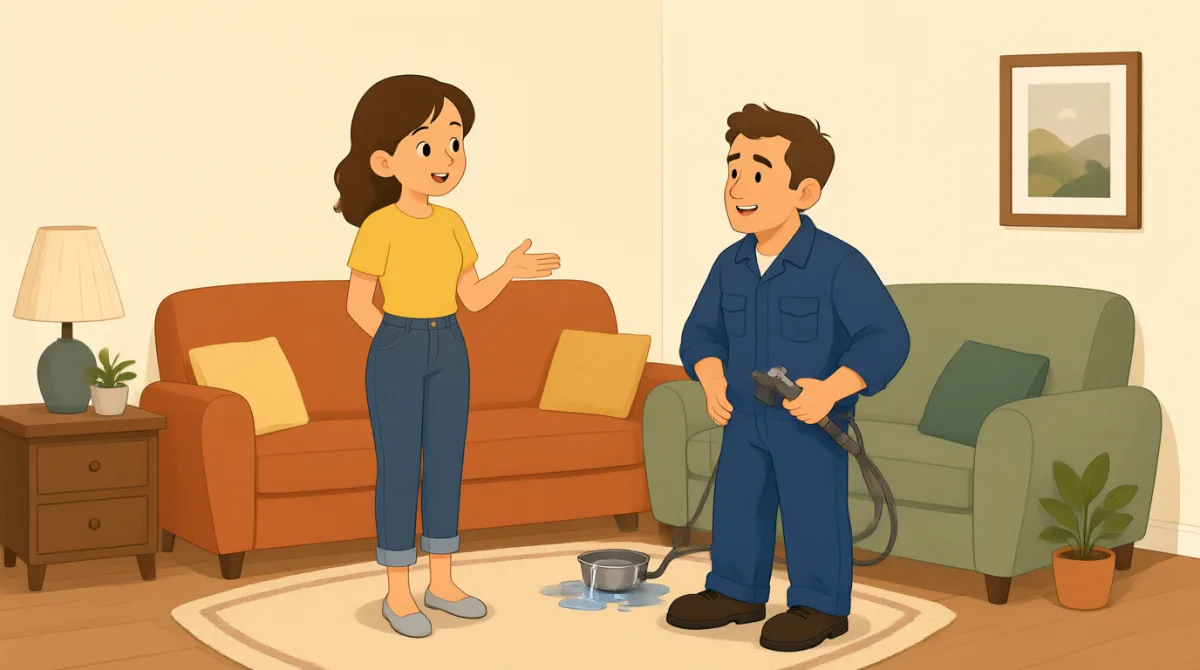

Hi, David. I’m calling about a leak under my kitchen sink.
Здравствуйте, Дэвид. Я звоню насчёт протечки под кухонной раковиной.

I can help. When did you first notice the leak?
Я могу помочь. Когда вы впервые заметили протечку?
I saw water on the floor this morning. It’s still leaking.
Сегодня утром я увидел воду на полу. Она всё ещё течёт.
Is the water coming from a pipe or the sink itself?
Вода течёт из трубы или из самой раковины?
I’m not sure. It looks like it’s coming from a pipe.
Я не уверен. Похоже, вода течёт из трубы.
Is it a small leak, or is a lot of water coming out?
Протечка небольшая или воды вытекает много?
It’s a small leak, but the cabinet is getting wet.
Протечка небольшая, но шкафчик уже намокает.
Can you turn off the water under the sink for now?
Пока можете перекрыть воду под раковиной?
Yes, I can. I’ll turn it off now. Can you come take a look?
Да, могу. Сейчас перекрою. Вы можете приехать и посмотреть?
Словарный запас8
- a leakпротечка
A leak is water that escapes from a pipe or another place. Here, water is coming from under the kitchen sink.
«A leak» — это вода, которая просачивается из трубы или откуда-то ещё. Здесь вода течёт из-под кухонной раковины.
- under my kitchen sinkпод моей кухонной раковиной
This phrase tells where the leak is. Use “under my [place]” to describe a location below something.
Эта фраза указывает, где находится протечка. Используйте “under my [place]”, чтобы описать место под чем-либо.
- notice the leakзаметить протечку
To notice something means to see or become aware of it. Use “When did you first notice…?” to ask when someone became aware of a problem.
«To notice something» значит увидеть что-то или осознать, что оно есть. Фразой “When did you first notice…?” спрашивают, когда человек впервые заметил проблему.
- on the floorна полу
This phrase describes where the water was. Use “on the floor” to talk about something lying or spilling on a floor.
Эта фраза описывает, где была вода. Используйте “on the floor”, говоря о чём-то, что лежит или пролилось на пол.
- coming from a pipeтекущий из трубы
This phrase describes the source of the water. You can use “coming from” to say where something is coming from.
Эта фраза указывает, откуда поступает вода. С помощью “coming from” можно сказать, откуда что-то идёт или поступает.
- a small leakнебольшая протечка
A small leak means only a little water is escaping. Use “small” to describe a problem that is not serious or large.
“A small leak” означает, что просачивается совсем немного воды. Словом “small” описывают проблему, которая не кажется серьёзной или масштабной.
- turn off the waterперекрыть воду
To turn off the water means to stop it from flowing. Use “turn off” with a device or supply that can be stopped.
“To turn off the water” значит остановить поток воды. “Turn off” используют, говоря об устройстве или подаче чего-либо, что можно отключить.
- take a lookвзглянуть
To take a look means to examine or check something. You can ask someone to “take a look” when you want them to inspect a problem.
“To take a look” значит осмотреть или проверить что-либо. Можно попросить кого-нибудь “take a look”, если хотите, чтобы он осмотрел проблему.
Ключевые фразы8
- 1
I’m calling about a leak under my kitchen sink.
Я звоню насчёт протечки под кухонной раковиной.
This is a clear way to explain why you are calling. Replace “a leak under my kitchen sink” with the problem you need help with.
Так можно чётко объяснить, почему вы звоните. Вместо “a leak under my kitchen sink” назовите проблему, с которой вам нужна помощь.
- 2
When did you first notice the leak?
Когда вы впервые заметили протечку?
This question asks when someone first became aware of a problem. You can use “When did you first notice…?” to ask about other issues too.
Этот вопрос задают, чтобы узнать, когда человек впервые заметил проблему. Фразу “When did you first notice…?” можно использовать и для вопросов о других проблемах.
- 3
I saw water on the floor this morning.
Сегодня утром я увидел воду на полу.
This sentence describes what you saw and when you saw it. Use “I saw [something] [time]” to report what happened.
В этом предложении говорится, что вы увидели и когда. Используйте “I saw [something] [time]”, чтобы рассказать о случившемся.
- 4
Is the water coming from a pipe or the sink itself?
Вода течёт из трубы или из самой раковины?
This question asks someone to choose between two possible sources. Use “Is it coming from… or…?” when trying to identify a problem.
Этот вопрос предлагает выбрать один из двух возможных источников. Используйте “Is it coming from… or…?”, когда пытаетесь определить причину проблемы.
- 5
I’m not sure.
Я не уверен.
This is a simple way to say you do not know the answer. You can use it before giving your best guess or asking for help.
Это простой способ сказать, что вы не знаете ответа. Так можно ответить, прежде чем высказать предположение или попросить о помощи.
- 6
It’s a small leak, but the cabinet is getting wet.
Протечка небольшая, но шкафчик уже намокает.
This sentence describes the problem and adds a detail with “but.” Use “It’s…, but…” to explain a contrast.
Это предложение описывает проблему и добавляет подробность с помощью “but”. Используйте “It’s…, but…” для выражения противопоставления.
- 7
Can you turn off the water under the sink for now?
Пока можете перекрыть воду под раковиной?
This is a polite way to ask someone to stop the water temporarily. Use “Can you… for now?” to request a short-term action.
Так вежливо просят временно перекрыть воду. Используйте “Can you… for now?”, чтобы попросить кого-то ненадолго что-нибудь сделать.
- 8
Can you come take a look?
Вы можете приехать и посмотреть?
This is a natural way to ask someone to come and check a problem. Use “Can you come take a look?” when you need someone to inspect something.
Так естественно попросить кого-нибудь приехать и проверить проблему. Используйте “Can you come take a look?”, когда нужно, чтобы кто-то что-то осмотрел.