Calling the Plumber
প্লাম্বারকে ফোন করা
Jack calls plumber David and describes the leak. David asks a few simple questions to understand the problem.
জ্যাক প্লাম্বার ডেভিডকে ফোন করে লিকের কথা জানায়। সমস্যাটা বুঝতে ডেভিড কয়েকটি সহজ প্রশ্ন করে।
সংলাপ9
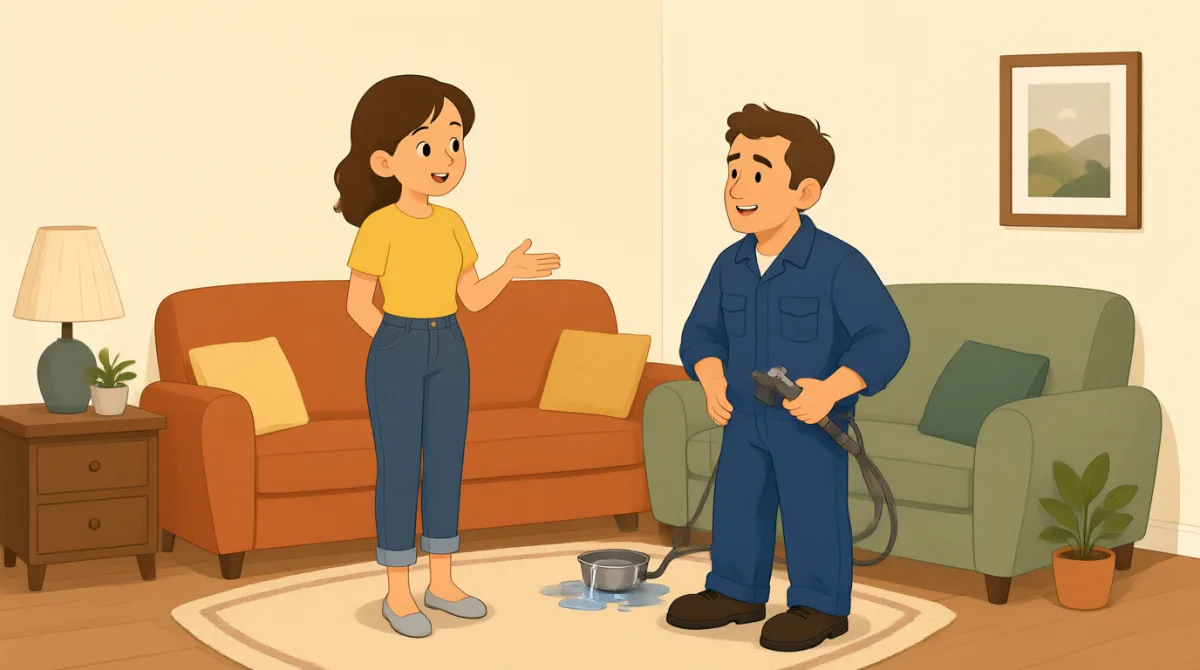

Hi, David. I’m calling about a leak under my kitchen sink.
হ্যালো, ডেভিড। আমার রান্নাঘরের সিঙ্কের নিচে পানি লিক করছে, সে ব্যাপারে ফোন করেছি।

I can help. When did you first notice the leak?
আমি সাহায্য করতে পারি। প্রথম কবে লিকটা খেয়াল করেছিলেন?
I saw water on the floor this morning. It’s still leaking.
আজ সকালে মেঝেতে পানি দেখেছি। এখনো লিক হচ্ছে।
Is the water coming from a pipe or the sink itself?
পানি কি পাইপ থেকে আসছে, নাকি সিঙ্ক থেকেই?
I’m not sure. It looks like it’s coming from a pipe.
আমি নিশ্চিত নই। মনে হচ্ছে পাইপ থেকে আসছে।
Is it a small leak, or is a lot of water coming out?
লিকটা কি সামান্য, নাকি অনেক পানি বের হচ্ছে?
It’s a small leak, but the cabinet is getting wet.
লিকটা সামান্য, কিন্তু ক্যাবিনেটটা ভিজে যাচ্ছে।
Can you turn off the water under the sink for now?
আপাতত সিঙ্কের নিচের পানির লাইনটা বন্ধ করতে পারবেন?
Yes, I can. I’ll turn it off now. Can you come take a look?
হ্যাঁ, পারব। এখনই বন্ধ করছি। আপনি কি এসে একবার দেখে যেতে পারবেন?
শব্দভান্ডার8
- a leakলিক
A leak is water that escapes from a pipe or another place. Here, water is coming from under the kitchen sink.
লিক হলো পাইপ বা অন্য কোনো জায়গা থেকে পানি বেরিয়ে আসা। এখানে রান্নাঘরের সিঙ্কের নিচ থেকে পানি বের হচ্ছে।
- under my kitchen sinkআমার রান্নাঘরের সিঙ্কের নিচে
This phrase tells where the leak is. Use “under my [place]” to describe a location below something.
এই বাক্যাংশটি লিকটি কোথায় হয়েছে তা জানায়। কোনো কিছুর নিচের অবস্থান বোঝাতে “under my [place]” ব্যবহার করুন।
- notice the leakলিকটা খেয়াল করা
To notice something means to see or become aware of it. Use “When did you first notice…?” to ask when someone became aware of a problem.
কোনো কিছু notice করা মানে সেটি দেখা বা সে সম্পর্কে সচেতন হওয়া। কেউ কখনো কোনো সমস্যা প্রথম বুঝতে পেরেছে তা জানতে “When did you first notice…?” ব্যবহার করুন।
- on the floorমেঝেতে
This phrase describes where the water was. Use “on the floor” to talk about something lying or spilling on a floor.
এই বাক্যাংশটি পানি কোথায় ছিল তা বোঝায়। মেঝেতে পড়ে থাকা বা ছড়িয়ে পড়া কিছু বোঝাতে “on the floor” ব্যবহার করুন।
- coming from a pipeপাইপ থেকে আসছে
This phrase describes the source of the water. You can use “coming from” to say where something is coming from.
এই বাক্যাংশটি পানির উৎস বোঝায়। কোনো কিছু কোথা থেকে আসছে তা বলতে “coming from” ব্যবহার করতে পারেন।
- a small leakসামান্য লিক
A small leak means only a little water is escaping. Use “small” to describe a problem that is not serious or large.
“A small leak” মানে অল্প পানি বের হচ্ছে। গুরুতর বা বড় নয়—এমন সমস্যা বোঝাতে “small” ব্যবহার করুন।
- turn off the waterপানির লাইন বন্ধ করা
To turn off the water means to stop it from flowing. Use “turn off” with a device or supply that can be stopped.
“Turn off the water” মানে পানি চলা বন্ধ করা। বন্ধ করা যায় এমন কোনো যন্ত্র বা সরবরাহ বন্ধ করতে “turn off” ব্যবহার করুন।
- take a lookএকবার দেখে নেওয়া
To take a look means to examine or check something. You can ask someone to “take a look” when you want them to inspect a problem.
“Take a look” মানে কোনো কিছু পরীক্ষা করে বা দেখে নেওয়া। কাউকে কোনো সমস্যা দেখতে বলার সময় “take a look” বলতে পারেন।
গুরুত্বপূর্ণ বাক্য8
- 1
I’m calling about a leak under my kitchen sink.
আমার রান্নাঘরের সিঙ্কের নিচে পানি লিক করছে, সে ব্যাপারে ফোন করেছি।
This is a clear way to explain why you are calling. Replace “a leak under my kitchen sink” with the problem you need help with.
কেন ফোন করছেন তা পরিষ্কারভাবে জানানোর একটি উপায় এটি। যে সমস্যায় সাহায্য দরকার, সেটি বোঝাতে “a leak under my kitchen sink”–এর জায়গায় অন্য সমস্যা বসান।
- 2
When did you first notice the leak?
প্রথম কবে লিকটা খেয়াল করেছিলেন?
This question asks when someone first became aware of a problem. You can use “When did you first notice…?” to ask about other issues too.
এই প্রশ্নে জানতে চাওয়া হয়, কেউ প্রথম কখন কোনো সমস্যা সম্পর্কে সচেতন হয়েছিল। অন্য সমস্যার ক্ষেত্রেও জানতে “When did you first notice…?” ব্যবহার করতে পারেন।
- 3
I saw water on the floor this morning.
আজ সকালে মেঝেতে পানি দেখেছি।
This sentence describes what you saw and when you saw it. Use “I saw [something] [time]” to report what happened.
এই বাক্যে আপনি কী এবং কখন দেখেছেন তা বলা হয়েছে। কী ঘটেছিল তা জানাতে “I saw [something] [time]” ব্যবহার করুন।
- 4
Is the water coming from a pipe or the sink itself?
পানি কি পাইপ থেকে আসছে, নাকি সিঙ্ক থেকেই?
This question asks someone to choose between two possible sources. Use “Is it coming from… or…?” when trying to identify a problem.
এই প্রশ্নে দুটো সম্ভাব্য উৎসের মধ্যে একটিকে বেছে নিতে বলা হয়। কোনো সমস্যার উৎস খুঁজতে “Is it coming from… or…?” ব্যবহার করুন।
- 5
I’m not sure.
আমি নিশ্চিত নই।
This is a simple way to say you do not know the answer. You can use it before giving your best guess or asking for help.
উত্তর জানা নেই—এ কথা সহজভাবে বলার উপায় এটি। নিজের ধারণা জানানোর আগে বা সাহায্য চাওয়ার আগে এই কথাটি বলতে পারেন।
- 6
It’s a small leak, but the cabinet is getting wet.
লিকটা সামান্য, কিন্তু ক্যাবিনেটটা ভিজে যাচ্ছে।
This sentence describes the problem and adds a detail with “but.” Use “It’s…, but…” to explain a contrast.
এই বাক্যে সমস্যাটি জানিয়ে “but” দিয়ে আরেকটি তথ্য যোগ করা হয়েছে। বৈপরীত্য বোঝাতে “It’s…, but…” ব্যবহার করুন।
- 7
Can you turn off the water under the sink for now?
আপাতত সিঙ্কের নিচের পানির লাইনটা বন্ধ করতে পারবেন?
This is a polite way to ask someone to stop the water temporarily. Use “Can you… for now?” to request a short-term action.
সাময়িকভাবে পানি বন্ধ করতে কাউকে অনুরোধ করার এটি একটি ভদ্র উপায়। অল্প সময়ের জন্য কোনো কাজ করতে অনুরোধ জানাতে “Can you… for now?” ব্যবহার করুন।
- 8
Can you come take a look?
আপনি কি এসে একবার দেখে যেতে পারবেন?
This is a natural way to ask someone to come and check a problem. Use “Can you come take a look?” when you need someone to inspect something.
কাউকে এসে কোনো সমস্যা পরীক্ষা করে দেখতে বলার এটি একটি স্বাভাবিক উপায়। কাউকে কিছু পরিদর্শন করতে বলার সময় “Can you come take a look?” ব্যবহার করুন।