Calling the Plumber
प्लंबर को फ़ोन करना
Jack calls plumber David and describes the leak. David asks a few simple questions to understand the problem.
जैक प्लंबर डेविड को फ़ोन करके रिसाव के बारे में बताता है। समस्या समझने के लिए डेविड कुछ आसान सवाल पूछते हैं।
संवाद9
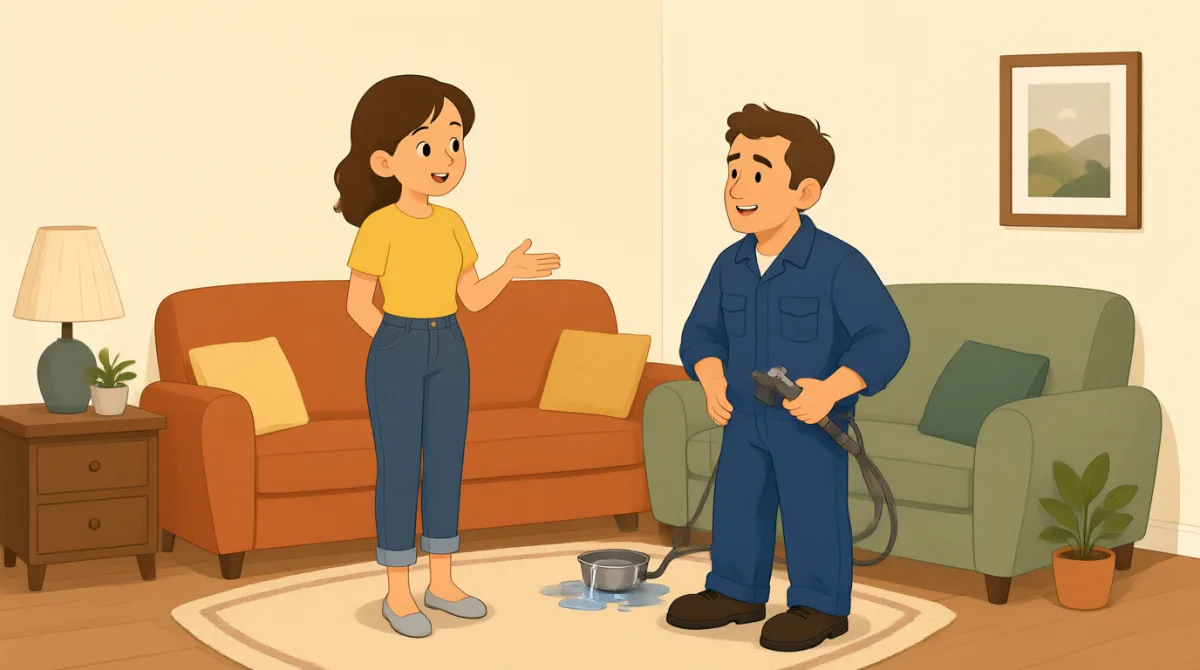

Hi, David. I’m calling about a leak under my kitchen sink.
नमस्ते, डेविड। मैं अपनी रसोई के सिंक के नीचे हुए रिसाव के बारे में फ़ोन कर रहा हूँ।

I can help. When did you first notice the leak?
मैं मदद कर सकता हूँ। आपको पहली बार रिसाव का पता कब चला?
I saw water on the floor this morning. It’s still leaking.
आज सुबह मुझे फ़र्श पर पानी दिखा। अभी भी रिसाव हो रहा है।
Is the water coming from a pipe or the sink itself?
पानी पाइप से आ रहा है या खुद सिंक से?
I’m not sure. It looks like it’s coming from a pipe.
मुझे पक्का नहीं पता। ऐसा लग रहा है कि पानी पाइप से आ रहा है।
Is it a small leak, or is a lot of water coming out?
रिसाव थोड़ा-सा है या बहुत सारा पानी निकल रहा है?
It’s a small leak, but the cabinet is getting wet.
रिसाव थोड़ा-सा है, लेकिन कैबिनेट भीग रहा है।
Can you turn off the water under the sink for now?
क्या आप अभी के लिए सिंक के नीचे पानी की सप्लाई बंद कर सकते हैं?
Yes, I can. I’ll turn it off now. Can you come take a look?
हाँ, कर सकता हूँ। मैं अभी बंद कर देता हूँ। क्या आप आकर देख सकते हैं?
शब्दावली8
- a leakरिसाव
A leak is water that escapes from a pipe or another place. Here, water is coming from under the kitchen sink.
रिसाव तब होता है जब किसी पाइप या दूसरी जगह से पानी बाहर निकलता है। यहाँ, रसोई के सिंक के नीचे से पानी निकल रहा है।
- under my kitchen sinkमेरी रसोई के सिंक के नीचे
This phrase tells where the leak is. Use “under my [place]” to describe a location below something.
यह वाक्यांश बताता है कि रिसाव कहाँ है। किसी चीज़ के नीचे की जगह बताने के लिए “under my [place]” का इस्तेमाल करें।
- notice the leakरिसाव का पता चलना
To notice something means to see or become aware of it. Use “When did you first notice…?” to ask when someone became aware of a problem.
किसी चीज़ को notice करना यानी उसे देखना या उसके बारे में जानना। यह पूछने के लिए कि किसी को समस्या का पता कब चला, “When did you first notice…?” का इस्तेमाल करें।
- on the floorफ़र्श पर
This phrase describes where the water was. Use “on the floor” to talk about something lying or spilling on a floor.
यह वाक्यांश बताता है कि पानी कहाँ था। फ़र्श पर पड़ी या फैली हुई किसी चीज़ के बारे में बताने के लिए “on the floor” का इस्तेमाल करें।
- coming from a pipeपाइप से आ रहा है
This phrase describes the source of the water. You can use “coming from” to say where something is coming from.
यह वाक्यांश पानी के स्रोत के बारे में बताता है। कोई चीज़ कहाँ से आ रही है, यह बताने के लिए “coming from” का इस्तेमाल कर सकते हैं।
- a small leakथोड़ा-सा रिसाव
A small leak means only a little water is escaping. Use “small” to describe a problem that is not serious or large.
“a small leak” का मतलब है कि थोड़ा-सा ही पानी बाहर निकल रहा है। ऐसी समस्या के लिए “small” का इस्तेमाल करें जो गंभीर या बड़ी न हो।
- turn off the waterपानी बंद करना
To turn off the water means to stop it from flowing. Use “turn off” with a device or supply that can be stopped.
पानी बंद करने का मतलब है उसका बहना रोकना। किसी ऐसे उपकरण या सप्लाई को बंद करने के लिए “turn off” का इस्तेमाल करें जिसका चलना रोका जा सकता है।
- take a lookदेखना
To take a look means to examine or check something. You can ask someone to “take a look” when you want them to inspect a problem.
किसी चीज़ को देखने का मतलब है उसकी जाँच करना। जब आप चाहते हैं कि कोई समस्या की जाँच करे, तो उससे “take a look” करने के लिए कह सकते हैं।
मुख्य वाक्य8
- 1
I’m calling about a leak under my kitchen sink.
मैं अपनी रसोई के सिंक के नीचे हुए रिसाव के बारे में फ़ोन कर रहा हूँ।
This is a clear way to explain why you are calling. Replace “a leak under my kitchen sink” with the problem you need help with.
फ़ोन करने की वजह बताने का यह एक साफ़ और आसान तरीका है। “a leak under my kitchen sink” की जगह उस समस्या का नाम रखें जिसके लिए आपको मदद चाहिए।
- 2
When did you first notice the leak?
आपको पहली बार रिसाव का पता कब चला?
This question asks when someone first became aware of a problem. You can use “When did you first notice…?” to ask about other issues too.
यह सवाल पूछता है कि किसी को समस्या का पहली बार पता कब चला। दूसरी समस्याओं के बारे में पूछने के लिए भी “When did you first notice…?” का इस्तेमाल कर सकते हैं।
- 3
I saw water on the floor this morning.
आज सुबह मुझे फ़र्श पर पानी दिखा।
This sentence describes what you saw and when you saw it. Use “I saw [something] [time]” to report what happened.
यह वाक्य बताता है कि आपने क्या और कब देखा। जो हुआ, उसके बारे में बताने के लिए “I saw [something] [time]” का इस्तेमाल करें।
- 4
Is the water coming from a pipe or the sink itself?
पानी पाइप से आ रहा है या खुद सिंक से?
This question asks someone to choose between two possible sources. Use “Is it coming from… or…?” when trying to identify a problem.
इस सवाल में सामने वाले से दो संभावित स्रोतों में से एक चुनने को कहा गया है। समस्या की वजह जानने के लिए “Is it coming from… or…?” का इस्तेमाल करें।
- 5
I’m not sure.
मुझे पक्का नहीं पता।
This is a simple way to say you do not know the answer. You can use it before giving your best guess or asking for help.
यह कहने का आसान तरीका है कि आपको जवाब नहीं पता। अपना सबसे अच्छा अनुमान बताने या मदद माँगने से पहले आप इसका इस्तेमाल कर सकते हैं।
- 6
It’s a small leak, but the cabinet is getting wet.
रिसाव थोड़ा-सा है, लेकिन कैबिनेट भीग रहा है।
This sentence describes the problem and adds a detail with “but.” Use “It’s…, but…” to explain a contrast.
यह वाक्य समस्या बताता है और “but” से एक और बात जोड़ता है। विरोधाभास बताने के लिए “It’s…, but…” का इस्तेमाल करें।
- 7
Can you turn off the water under the sink for now?
क्या आप अभी के लिए सिंक के नीचे पानी की सप्लाई बंद कर सकते हैं?
This is a polite way to ask someone to stop the water temporarily. Use “Can you… for now?” to request a short-term action.
किसी से कुछ समय के लिए पानी रोकने का अनुरोध करने का यह एक विनम्र तरीका है। थोड़ी देर के लिए कोई काम करने का अनुरोध करने हेतु “Can you… for now?” का इस्तेमाल करें।
- 8
Can you come take a look?
क्या आप आकर देख सकते हैं?
This is a natural way to ask someone to come and check a problem. Use “Can you come take a look?” when you need someone to inspect something.
किसी से आकर समस्या देखने को कहने का यह एक स्वाभाविक तरीका है। जब आपको किसी चीज़ की जाँच करवानी हो, तो “Can you come take a look?” का इस्तेमाल करें।