Calling the Plumber
배관공에게 전화하기
Jack calls plumber David and describes the leak. David asks a few simple questions to understand the problem.
잭이 배관공 데이비드에게 전화해 누수 상황을 설명합니다. 데이비드는 문제를 파악하기 위해 몇 가지 간단한 질문을 합니다.
대화9
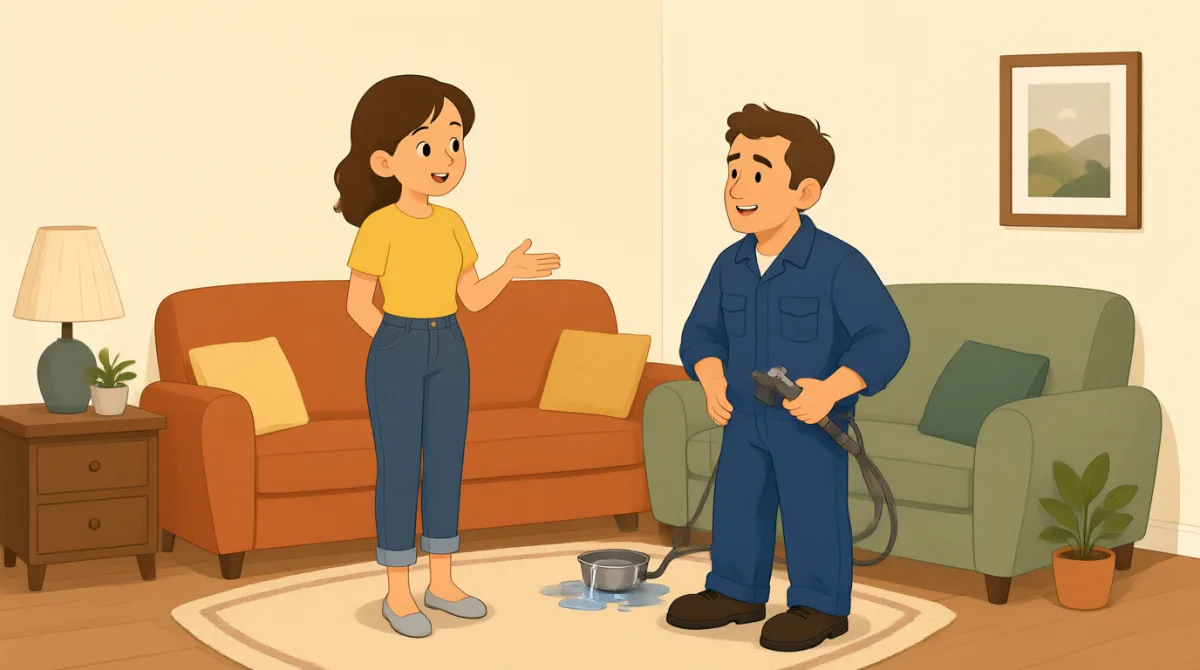

Hi, David. I’m calling about a leak under my kitchen sink.
안녕하세요, 데이비드. 주방 싱크대 아래에서 물이 새서 전화드렸어요.

I can help. When did you first notice the leak?
도와드릴게요. 누수를 처음 발견하신 게 언제인가요?
I saw water on the floor this morning. It’s still leaking.
오늘 아침에 바닥에 물이 있는 걸 봤어요. 아직도 새고 있어요.
Is the water coming from a pipe or the sink itself?
물이 파이프에서 새는 건가요, 아니면 싱크대 자체에서 새는 건가요?
I’m not sure. It looks like it’s coming from a pipe.
잘 모르겠어요. 파이프에서 새는 것 같아요.
Is it a small leak, or is a lot of water coming out?
조금 새는 건가요, 아니면 물이 많이 나오나요?
It’s a small leak, but the cabinet is getting wet.
조금 새지만, 싱크대 아래 수납장이 젖고 있어요.
Can you turn off the water under the sink for now?
일단 싱크대 아래에 있는 밸브를 잠가 주실 수 있나요?
Yes, I can. I’ll turn it off now. Can you come take a look?
네, 할 수 있어요. 지금 잠글게요. 와서 한번 봐주실 수 있나요?
어휘8
- a leak누수
A leak is water that escapes from a pipe or another place. Here, water is coming from under the kitchen sink.
a leak은 파이프나 다른 곳에서 물이 새는 것을 말해요. 여기서는 주방 싱크대 아래에서 물이 새고 있어요.
- under my kitchen sink주방 싱크대 아래
This phrase tells where the leak is. Use “under my [place]” to describe a location below something.
이 표현은 누수가 어디에 있는지 알려 줘요. 무언가 아래쪽에 있는 위치를 설명할 때 “under my [place]”라고 표현할 수 있어요.
- notice the leak누수를 발견하다
To notice something means to see or become aware of it. Use “When did you first notice…?” to ask when someone became aware of a problem.
notice는 무언가를 보거나 알아차린다는 뜻이에요. 누군가가 문제를 언제 알아차렸는지 물을 때 “When did you first notice…?”라고 할 수 있어요.
- on the floor바닥에
This phrase describes where the water was. Use “on the floor” to talk about something lying or spilling on a floor.
이 표현은 물이 어디에 있었는지 설명해요. 바닥에 놓여 있거나 쏟아진 것을 말할 때 “on the floor”라고 해요.
- coming from a pipe파이프에서 나오다
This phrase describes the source of the water. You can use “coming from” to say where something is coming from.
이 표현은 물이 어디에서 나오는지 설명해요. 무언가의 출처를 말할 때 “coming from”을 쓸 수 있어요.
- a small leak조금 새는 것
A small leak means only a little water is escaping. Use “small” to describe a problem that is not serious or large.
a small leak은 물이 조금만 새는 것을 뜻해요. “small”은 심각하거나 큰 문제가 아니라는 점을 나타낼 때 쓸 수 있어요.
- turn off the water물을 잠그다
To turn off the water means to stop it from flowing. Use “turn off” with a device or supply that can be stopped.
turn off the water는 물이 흐르지 않게 잠그거나 차단한다는 뜻이에요. 멈출 수 있는 장치나 공급을 차단할 때 “turn off”를 써요.
- take a look한번 살펴보다
To take a look means to examine or check something. You can ask someone to “take a look” when you want them to inspect a problem.
take a look은 무언가를 살펴보거나 확인한다는 뜻이에요. 누군가에게 문제를 점검해 달라고 할 때 “take a look”이라고 할 수 있어요.
핵심 문장8
- 1
I’m calling about a leak under my kitchen sink.
주방 싱크대 아래에서 물이 새서 전화드렸어요.
This is a clear way to explain why you are calling. Replace “a leak under my kitchen sink” with the problem you need help with.
전화한 이유를 분명하게 설명하는 표현이에요. 도움이 필요한 문제에 맞춰 “a leak under my kitchen sink” 부분을 바꿔 말해 보세요.
- 2
When did you first notice the leak?
누수를 처음 발견하신 게 언제인가요?
This question asks when someone first became aware of a problem. You can use “When did you first notice…?” to ask about other issues too.
이 질문은 누군가가 문제를 처음 알아차린 때를 물어요. 다른 문제에 대해서도 “When did you first notice…?”라고 물어볼 수 있어요.
- 3
I saw water on the floor this morning.
오늘 아침에 바닥에 물이 있는 걸 봤어요.
This sentence describes what you saw and when you saw it. Use “I saw [something] [time]” to report what happened.
이 문장은 무엇을 언제 봤는지 설명해요. 일어난 일을 전할 때 “I saw [something] [time]”을 사용해 보세요.
- 4
Is the water coming from a pipe or the sink itself?
물이 파이프에서 새는 건가요, 아니면 싱크대 자체에서 새는 건가요?
This question asks someone to choose between two possible sources. Use “Is it coming from… or…?” when trying to identify a problem.
이 질문은 두 가지 가능한 원인 중 하나를 고르게 해요. 문제의 원인을 알아보려고 할 때 “Is it coming from… or…?”라고 물을 수 있어요.
- 5
I’m not sure.
잘 모르겠어요.
This is a simple way to say you do not know the answer. You can use it before giving your best guess or asking for help.
답을 모른다고 간단히 말하는 표현이에요. 가장 그럴듯한 답을 말하거나 도움을 요청하기 전에 사용할 수 있어요.
- 6
It’s a small leak, but the cabinet is getting wet.
조금 새지만, 싱크대 아래 수납장이 젖고 있어요.
This sentence describes the problem and adds a detail with “but.” Use “It’s…, but…” to explain a contrast.
이 문장은 문제를 설명한 뒤 “but”으로 세부 내용을 덧붙여요. 서로 대비되는 내용을 설명할 때 “It’s…, but…”을 사용해 보세요.
- 7
Can you turn off the water under the sink for now?
일단 싱크대 아래에 있는 밸브를 잠가 주실 수 있나요?
This is a polite way to ask someone to stop the water temporarily. Use “Can you… for now?” to request a short-term action.
물을 잠시 멈춰 달라고 정중하게 부탁하는 표현이에요. 당장 잠깐 필요한 행동을 요청할 때 “Can you… for now?”라고 할 수 있어요.
- 8
Can you come take a look?
와서 한번 봐주실 수 있나요?
This is a natural way to ask someone to come and check a problem. Use “Can you come take a look?” when you need someone to inspect something.
누군가에게 와서 문제를 확인해 달라고 자연스럽게 부탁하는 표현이에요. 점검이 필요할 때 “Can you come take a look?”이라고 해 보세요.