Explaining Where It Hurts
痛む場所を伝える
At the spa, Emma tells Mia, her therapist, that her shoulders and back feel sore. Mia asks a few simple questions.
スパで、エマはセラピストのミアに、肩と背中が痛むと伝えます。ミアはいくつか簡単な質問をします。
会話8
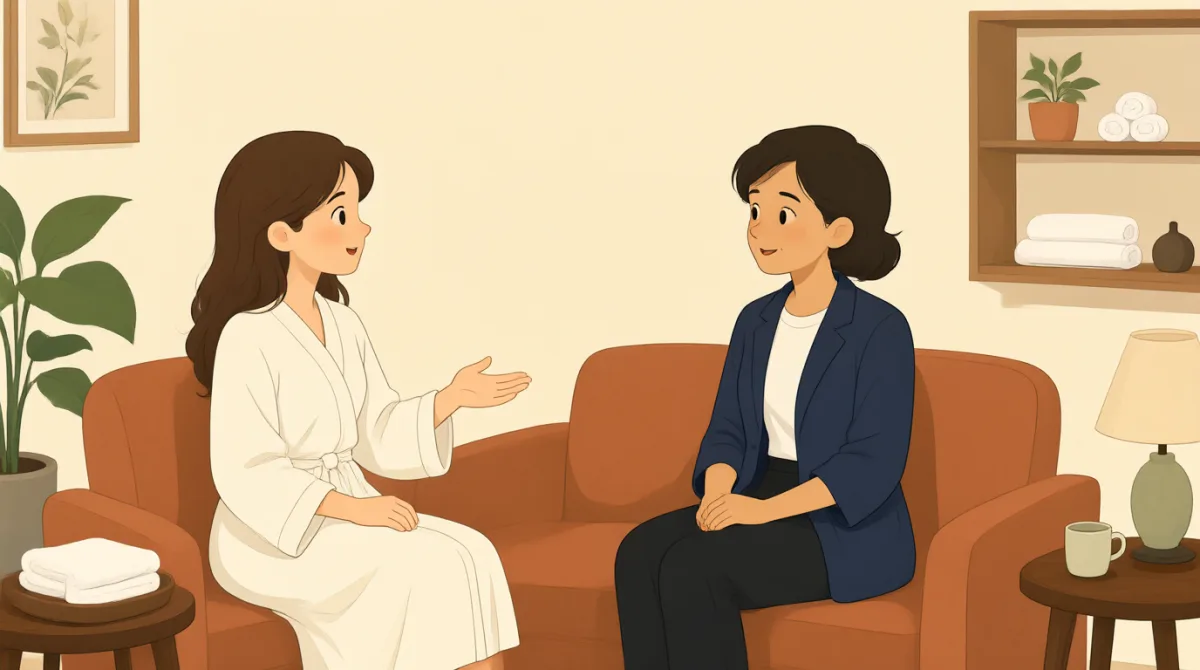

Hi, Mia. My shoulders and upper back feel sore today.
こんにちは、ミア。今日は肩と背中の上のほうが痛むんです。

I’m sorry to hear that. When did the soreness start?
それは大変ですね。痛みはいつから始まりましたか?
It started yesterday after I worked at my desk all day.
昨日、一日中デスクで仕事をしたあとに始まりました。
Does the pain feel sharp, or is it more like a dull ache?
痛みは鋭い感じですか?それとも鈍くうずく感じですか?
It’s a dull ache, mostly around my shoulders and neck.
鈍くうずく感じで、主に肩と首のあたりが痛みます。
Okay. Do you have any pain or injuries I should know about?
わかりました。把握しておいたほうがいい痛みやけがはありますか?
No injuries. My lower back feels a little tight, too.
けがはありません。腰のあたりも少し張っています。
Thanks for telling me. I’ll check in with you during the massage.
教えてくださってありがとうございます。マッサージ中も様子を伺いますね。
語彙7
- feel sore痛む
To feel sore means to have pain or discomfort in your body. Use it to describe aching muscles.
“feel sore”は、体に痛みや不快感があるという意味です。筋肉がうずくように痛むときに使います。
- soreness痛み
Soreness is pain or discomfort in part of your body. You can say when the soreness started.
“soreness”は、体の一部にある痛みや不快感のことです。痛みがいつ始まったかを伝えるときにも使えます。
- dull ache鈍い痛み
A dull ache is a steady, mild pain. Use this phrase to describe what your pain feels like.
“dull ache”は、ずっと続く穏やかな痛みのことです。どんな痛みかを伝えるときに使います。
- sharp鋭い
Sharp describes a sudden, strong kind of pain. You can use it to explain how pain feels.
“sharp”は、突然感じる強い痛みを表します。痛みがどんな感じかを説明するときに使えます。
- lower back腰
Your lower back is the part of your back near your waist. Use this phrase to say where you feel pain or tightness.
“lower back”は、腰のあたりにある背中の部分です。痛みや張りを感じる場所を伝えるときに使います。
- tight張った
When a muscle feels tight, it feels stiff or tense. You can use this word to describe how your back or shoulders feel.
筋肉が“tight”だというと、こわばっていたり、張っていたりする状態です。背中や肩の状態を説明するときに使えます。
- check in with you様子を伺う
To check in with someone means to ask how they are doing. A therapist can check in with you during a massage.
“check in with you”は、相手の調子を尋ねるという意味です。セラピストはマッサージ中に様子を伺うことがあります。
重要な文8
- 1
My shoulders and upper back feel sore today.
My shoulders and upper back feel sore today.
Use this sentence to tell someone which parts of your body hurt. You can replace the body parts or change “today” to another time.
体のどの部分が痛むかを伝える文です。体の部分を入れ替えたり、“today”を別の時を表す言葉に変えたりできます。
- 2
When did the soreness start?
When did the soreness start?
This is a simple way to ask when someone’s pain began. You can replace “the soreness” with another problem, such as “the headache.”
相手の痛みがいつ始まったのかを尋ねる簡単な表現です。“the soreness”を“the headache”のような別の症状に置き換えられます。
- 3
It started yesterday after I worked at my desk all day.
It started yesterday after I worked at my desk all day.
Use this sentence to explain when a problem began and what happened before it. Replace “yesterday” and the activity with your own details.
問題がいつ始まり、その前に何があったかを伝える文です。“yesterday”や活動の部分を、自分の状況に合わせて変えてみましょう。
- 4
Does the pain feel sharp, or is it more like a dull ache?
Does the pain feel sharp, or is it more like a dull ache?
This question asks someone to describe their pain. You can use “Does it feel sharp?” to ask about a different kind of pain.
相手に痛みの種類を説明してもらう質問です。別の種類の痛みについて尋ねるなら、“Does it feel sharp?”(鋭い痛みですか?)と言えます。
- 5
It’s a dull ache, mostly around my shoulders and neck.
It’s a dull ache, mostly around my shoulders and neck.
Use this sentence to describe both the kind and location of your pain. Replace the pain description or body parts as needed.
痛みの種類と場所の両方を説明する文です。必要に応じて、痛みの表現や体の部分を入れ替えましょう。
- 6
Do you have any pain or injuries I should know about?
Do you have any pain or injuries I should know about?
This is a useful question when asking about someone’s health before an activity. You can replace “pain or injuries” with other important information.
何かをする前に、相手の健康状態について尋ねるときに便利な質問です。“pain or injuries”を、確認しておきたい別の情報に置き換えられます。
- 7
My lower back feels a little tight, too.
My lower back feels a little tight, too.
Use this sentence to mention another body part that feels stiff or tense. Replace “my lower back” with a different body part.
こわばりや張りを感じる別の体の部分について伝える文です。“my lower back”を別の体の部分に置き換えられます。
- 8
I’ll check in with you during the massage.
I’ll check in with you during the massage.
Use this sentence to tell someone you will ask how they are feeling later. Replace “during the massage” with another activity or time.
あとで相手の調子を尋ねると伝える文です。“during the massage”を別の活動や時間に置き換えましょう。