Explaining Where It Hurts
อธิบายว่าปวดตรงไหน
At the spa, Emma tells Mia, her therapist, that her shoulders and back feel sore. Mia asks a few simple questions.
ที่สปา เอมมาบอกมีอา นักบำบัดของเธอ ว่ารู้สึกปวดเมื่อยที่ไหล่และหลัง มีอาถามคำถามง่าย ๆ สองสามข้อ
บทสนทนา8
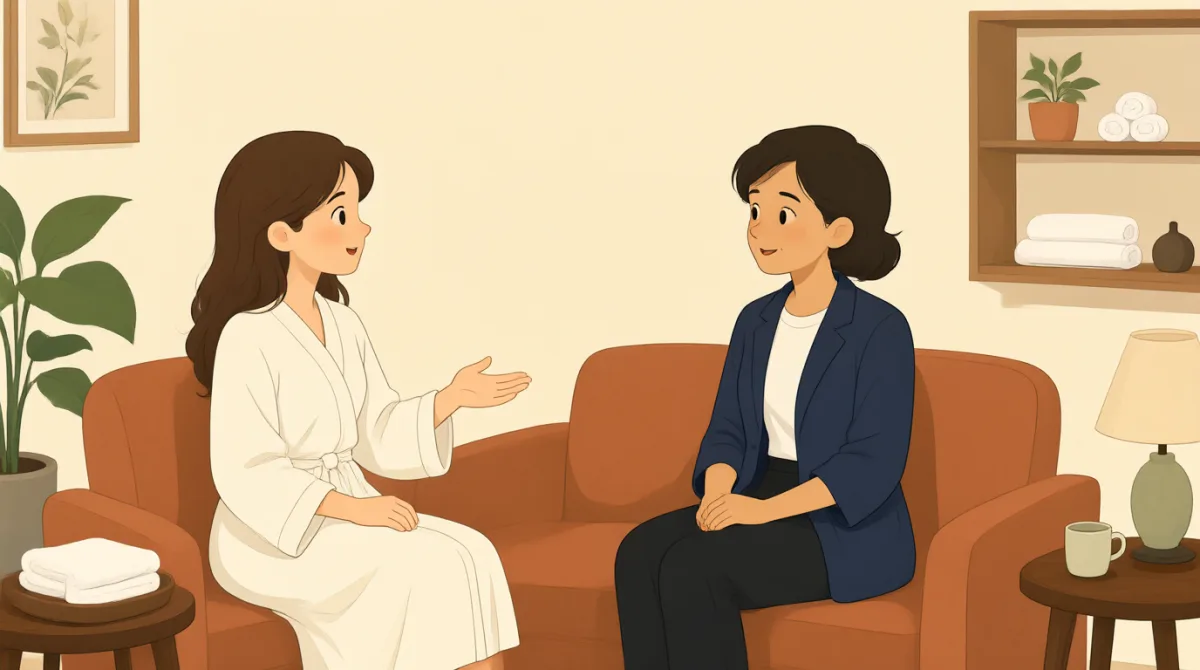

Hi, Mia. My shoulders and upper back feel sore today.
สวัสดี มีอา วันนี้ฉันปวดเมื่อยไหล่กับหลังส่วนบน

I’m sorry to hear that. When did the soreness start?
เสียใจด้วยนะคะ เริ่มปวดเมื่อยตั้งแต่เมื่อไหร่คะ
It started yesterday after I worked at my desk all day.
เริ่มปวดเมื่อวาน หลังจากนั่งทำงานที่โต๊ะทั้งวันค่ะ
Does the pain feel sharp, or is it more like a dull ache?
อาการปวดจี๊ด ๆ หรือปวดตื้อ ๆ มากกว่าคะ
It’s a dull ache, mostly around my shoulders and neck.
ปวดตื้อ ๆ ค่ะ ส่วนใหญ่แถวไหล่กับคอ
Okay. Do you have any pain or injuries I should know about?
ค่ะ มีอาการปวดหรือบาดเจ็บอะไรที่ฉันควรรู้ไหมคะ
No injuries. My lower back feels a little tight, too.
ไม่มีอาการบาดเจ็บค่ะ แต่หลังส่วนล่างก็ตึงนิดหน่อยด้วย
Thanks for telling me. I’ll check in with you during the massage.
ขอบคุณที่บอกนะคะ ระหว่างนวดฉันจะคอยถามว่าเป็นยังไงบ้างค่ะ
คำศัพท์7
- feel soreปวดเมื่อย
To feel sore means to have pain or discomfort in your body. Use it to describe aching muscles.
“feel sore” หมายถึงรู้สึกเจ็บหรือไม่สบายตัว ใช้พูดถึงอาการปวดเมื่อยกล้ามเนื้อได้ค่ะ
- sorenessอาการปวดเมื่อย
Soreness is pain or discomfort in part of your body. You can say when the soreness started.
“soreness” คืออาการเจ็บหรือไม่สบายบริเวณใดบริเวณหนึ่งของร่างกาย คุณสามารถบอกได้ว่าอาการปวดเมื่อยเริ่มขึ้นเมื่อไหร่ค่ะ
- dull acheอาการปวดตื้อ ๆ
A dull ache is a steady, mild pain. Use this phrase to describe what your pain feels like.
“dull ache” คืออาการปวดต่อเนื่องแต่ไม่รุนแรง ใช้คำนี้อธิบายลักษณะอาการปวดของคุณได้ค่ะ
- sharpปวดจี๊ด ๆ
Sharp describes a sudden, strong kind of pain. You can use it to explain how pain feels.
“sharp” ใช้อธิบายอาการปวดที่เกิดขึ้นฉับพลันและรุนแรง คุณใช้คำนี้บอกลักษณะอาการปวดได้ค่ะ
- lower backหลังส่วนล่าง
Your lower back is the part of your back near your waist. Use this phrase to say where you feel pain or tightness.
“lower back” คือบริเวณหลังใกล้กับเอว ใช้คำนี้บอกว่าคุณปวดหรือตึงตรงไหนค่ะ
- tightตึง
When a muscle feels tight, it feels stiff or tense. You can use this word to describe how your back or shoulders feel.
เมื่อกล้ามเนื้อรู้สึก “tight” ก็จะรู้สึกตึงหรือเกร็ง คุณใช้คำนี้อธิบายความรู้สึกที่หลังหรือไหล่ได้ค่ะ
- check in with youคอยถามไถ่
To check in with someone means to ask how they are doing. A therapist can check in with you during a massage.
“check in with you” หมายถึงถามไถ่ว่าอีกฝ่ายเป็นอย่างไรบ้าง นักบำบัดอาจคอยถามไถ่คุณระหว่างนวดค่ะ
ประโยคสำคัญ8
- 1
My shoulders and upper back feel sore today.
วันนี้ฉันปวดเมื่อยไหล่กับหลังส่วนบน
Use this sentence to tell someone which parts of your body hurt. You can replace the body parts or change “today” to another time.
ใช้ประโยคนี้บอกใครสักคนว่าร่างกายส่วนไหนของคุณเจ็บ คุณเปลี่ยนส่วนของร่างกาย หรือเปลี่ยน “today” เป็นช่วงเวลาอื่นได้ค่ะ
- 2
When did the soreness start?
เริ่มปวดเมื่อยตั้งแต่เมื่อไหร่คะ
This is a simple way to ask when someone’s pain began. You can replace “the soreness” with another problem, such as “the headache.”
นี่เป็นวิธีง่าย ๆ ในการถามว่าอาการปวดของใครสักคนเริ่มขึ้นเมื่อไหร่ คุณเปลี่ยน “the soreness” เป็นปัญหาอย่างอื่นได้ เช่น “the headache” ค่ะ
- 3
It started yesterday after I worked at my desk all day.
เริ่มปวดเมื่อวาน หลังจากนั่งทำงานที่โต๊ะทั้งวันค่ะ
Use this sentence to explain when a problem began and what happened before it. Replace “yesterday” and the activity with your own details.
ใช้ประโยคนี้อธิบายว่าปัญหาเริ่มขึ้นเมื่อไหร่และก่อนหน้านั้นเกิดอะไรขึ้น คุณเปลี่ยน “yesterday” และกิจกรรมเป็นรายละเอียดของตัวเองได้ค่ะ
- 4
Does the pain feel sharp, or is it more like a dull ache?
อาการปวดจี๊ด ๆ หรือปวดตื้อ ๆ มากกว่าคะ
This question asks someone to describe their pain. You can use “Does it feel sharp?” to ask about a different kind of pain.
คำถามนี้ใช้ถามให้ใครสักคนอธิบายอาการปวด คุณใช้ “Does it feel sharp?” เพื่อถามถึงอาการปวดแบบอื่นได้ค่ะ
- 5
It’s a dull ache, mostly around my shoulders and neck.
ปวดตื้อ ๆ ค่ะ ส่วนใหญ่แถวไหล่กับคอ
Use this sentence to describe both the kind and location of your pain. Replace the pain description or body parts as needed.
ใช้ประโยคนี้อธิบายทั้งลักษณะและตำแหน่งที่ปวด คุณเปลี่ยนคำบอกอาการหรือส่วนของร่างกายได้ตามต้องการค่ะ
- 6
Do you have any pain or injuries I should know about?
มีอาการปวดหรือบาดเจ็บอะไรที่ฉันควรรู้ไหมคะ
This is a useful question when asking about someone’s health before an activity. You can replace “pain or injuries” with other important information.
นี่เป็นคำถามที่มีประโยชน์เมื่อถามเรื่องสุขภาพของใครสักคนก่อนทำกิจกรรม คุณเปลี่ยน “pain or injuries” เป็นข้อมูลสำคัญอย่างอื่นได้ค่ะ
- 7
My lower back feels a little tight, too.
หลังส่วนล่างก็ตึงนิดหน่อยด้วยค่ะ
Use this sentence to mention another body part that feels stiff or tense. Replace “my lower back” with a different body part.
ใช้ประโยคนี้พูดถึงส่วนอื่นของร่างกายที่รู้สึกตึงหรือเกร็ง คุณเปลี่ยน “my lower back” เป็นส่วนอื่นของร่างกายได้ค่ะ
- 8
I’ll check in with you during the massage.
ระหว่างนวดฉันจะคอยถามว่าเป็นยังไงบ้างค่ะ
Use this sentence to tell someone you will ask how they are feeling later. Replace “during the massage” with another activity or time.
ใช้ประโยคนี้บอกใครสักคนว่าคุณจะถามภายหลังว่าเขารู้สึกอย่างไร คุณเปลี่ยน “during the massage” เป็นกิจกรรมหรือช่วงเวลาอื่นได้ค่ะ