Getting Instructions
説明を聞く
Mia tells Emma about her child's meals, bedtime, and house rules before leaving. Emma asks a few questions to make sure she understands.
出かける前に、ミアがエマに子どもの食事や寝る時間、家のルールについて伝えます。エマはいくつか質問して、ちゃんと理解できたか確認します。
会話8
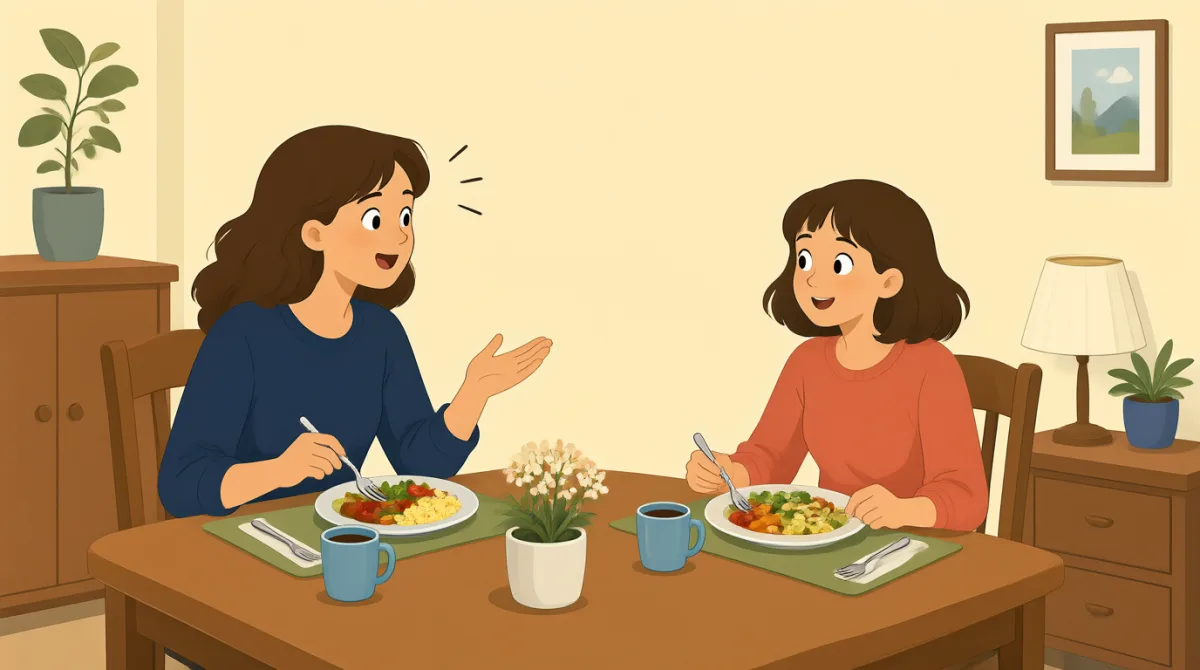

Thanks for watching my child tonight. Dinner is at six, and she likes pasta.
今夜、うちの子を見ててくれてありがとう。夕飯は6時で、パスタが好きなんだ。

Sure. Should I heat up the pasta in the fridge?
もちろん。冷蔵庫にあるパスタを温めればいい?
Yes, please. She can have some fruit after dinner, but no sweets.
うん、お願い。夕飯のあとに果物を少し食べてもいいけど、お菓子はダメだよ。
Got it. What time should she go to bed?
わかった。何時に寝かせればいい?
At eight. Please help her brush her teeth and read one short story.
8時だよ。歯みがきを手伝って、短いお話をひとつ読んであげてね。
Okay. Can she watch TV before bed?
わかった。寝る前にテレビを見てもいい?
No TV tonight. And please keep the front door locked.
今夜はテレビなしね。それから、玄関のドアには鍵をかけておいてね。
Understood. I’ll lock the door and call you if I need anything.
わかった。ドアに鍵をかけて、何かあったら電話するね。
語彙8
- watching my child子どもの面倒を見る
Here, it means taking care of Mia’s child for a short time. You can use “watching” to talk about caring for someone’s child.
ここでは、ミアの子どもをしばらく預かって世話をするという意味です。“watching” は、誰かの子どもの面倒を見ることを表すときにも使えます。
- heat up温める
To heat up food is to make it warm before eating. You can ask, “Should I heat up the dinner?”
食べ物を “heat up” するとは、食べる前に温めることです。“Should I heat up the dinner?”(夕飯を温めようか?)のように聞けます。
- in the fridge冷蔵庫の中に
This means inside the refrigerator, where food is kept cold. You can say, “The milk is in the fridge.”
食べ物を冷やしておく冷蔵庫の中、という意味です。“The milk is in the fridge.”(牛乳は冷蔵庫に入ってるよ)のように言えます。
- after dinner夕飯のあと
This means once the evening meal is finished. You can use it to say when something will happen, such as “We’ll have dessert after dinner.”
夕食が終わったあと、という意味です。“We’ll have dessert after dinner.”(夕飯のあとにデザートを食べるよ)のように、何かが起きるタイミングを表せます。
- go to bed寝る
This means to get into bed and prepare to sleep. You can ask, “What time do you usually go to bed?”
ベッドに入って、眠る準備をするという意味です。“What time do you usually go to bed?”(いつも何時に寝るの?)と聞けます。
- brush her teeth歯をみがく
This means clean her teeth with a toothbrush. You can use “brush your teeth” when reminding someone about this daily routine.
歯ブラシで歯をきれいにすることです。毎日の習慣を促すときは、“brush your teeth” と言えます。
- keep the front door locked玄関のドアに鍵をかけておく
This means make sure the main entrance stays locked. You can use “keep the door locked” as a safety instruction.
家の出入り口のドアに、鍵がかかった状態を保つという意味です。“keep the door locked” は、安全のための指示として使えます。
- if I need anything何か必要になったら
This means if I need help or something else. You can use this phrase when telling someone you will contact them if a problem comes up.
助けや何か別のものが必要になったら、という意味です。困ったことが起きたら連絡すると伝えるときに使えます。
重要な文7
- 1
Should I heat up the pasta in the fridge?
冷蔵庫にあるパスタを温めればいい?
Use “Should I…?” to check what someone wants you to do. You can change the action and food, as in “Should I warm up the soup?”
“Should I…?” は、何をすればいいか相手に確認するときに使います。動作や食べ物を変えて、“Should I warm up the soup?”(スープを温めようか?)のように言えます。
- 2
She can have some fruit after dinner, but no sweets.
夕飯のあとに果物を少し食べてもいいけど、お菓子はダメだよ。
This sentence gives permission and then adds a limit. You can use “can have…, but no…” to explain what someone may and may not eat.
この文は、何かを食べていいと伝えてから、制限を加えています。“can have…, but no…” を使うと、食べていいものとダメなものを説明できます。
- 3
What time should she go to bed?
何時に寝かせればいい?
This is a polite way to ask about someone’s bedtime. You can replace “she” with another person, such as “What time should the children go to bed?”
相手の就寝時間を尋ねる丁寧な言い方です。“she” を別の人に変えて、“What time should the children go to bed?”(子どもたちは何時に寝ればいい?)のように言えます。
- 4
Please help her brush her teeth and read one short story.
歯みがきを手伝って、短いお話をひとつ読んであげてね。
Use “Please” to give a polite instruction. You can list two simple tasks with “and.”
“Please” は、丁寧に指示を伝えるときに使います。“and” を使えば、簡単な用事をふたつ並べて伝えられます。
- 5
Can she watch TV before bed?
寝る前にテレビを見てもいい?
Use “Can she…?” to ask whether something is allowed. You can replace the activity, for example, “Can she play outside before dinner?”
“Can she…?” は、何かをしてもいいかどうか尋ねるときに使います。たとえば、活動を変えて、“Can she play outside before dinner?”(夕飯の前に外で遊んでもいい?)と言えます。
- 6
Please keep the front door locked.
玄関のドアには鍵をかけておいてね。
This is a polite way to give an important safety instruction. You can use “Please keep…” for other rules, such as “Please keep the gate closed.”
大切な安全上の指示を丁寧に伝える言い方です。“Please keep…” は、ほかのルールにも使えます。“Please keep the gate closed.”(門は閉めたままにしてね)のように言えます。
- 7
I’ll lock the door and call you if I need anything.
ドアに鍵をかけて、何かあったら電話するね。
Use “I’ll” to say what you plan to do. The phrase “if I need anything” explains when you will call.
“I’ll” は、これからするつもりのことを伝えるときに使います。“if I need anything” は、どんなときに電話するのかを説明しています。