Getting Instructions
Talimatları Alma
Mia tells Emma about her child's meals, bedtime, and house rules before leaving. Emma asks a few questions to make sure she understands.
Mia, evden çıkmadan önce Emma’ya çocuğunun yemeklerini, yatma saatini ve ev kurallarını anlatır. Emma da her şeyi anladığından emin olmak için birkaç soru sorar.
Diyalog8
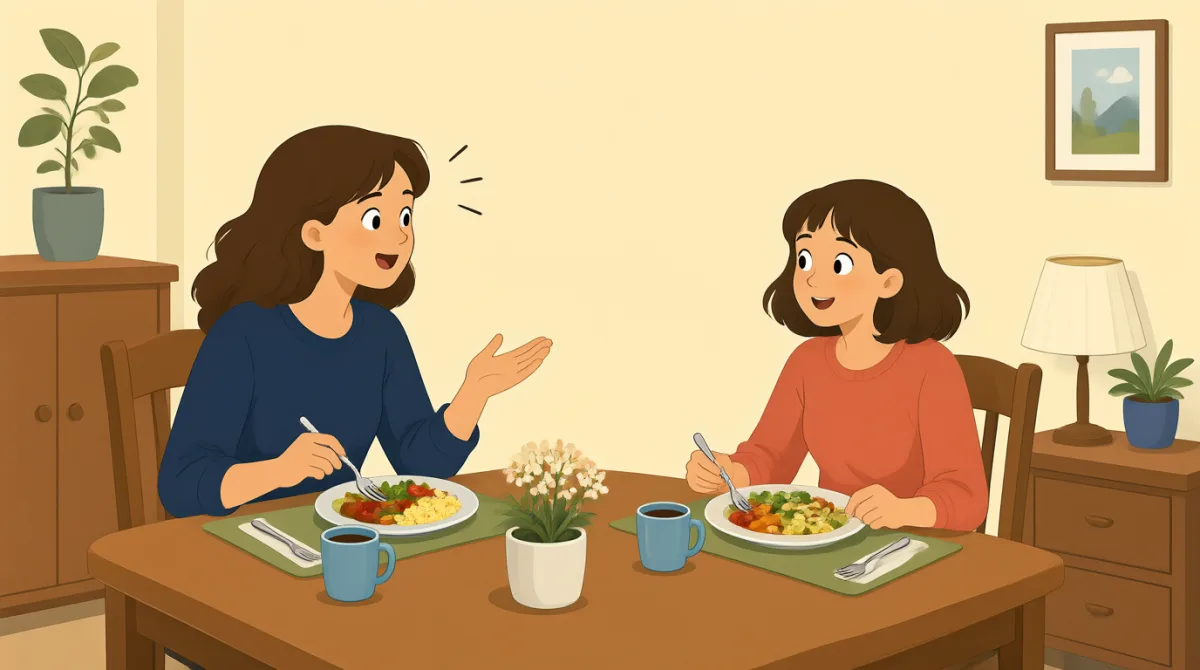

Thanks for watching my child tonight. Dinner is at six, and she likes pasta.
Bu akşam çocuğuma baktığın için teşekkürler. Akşam yemeği altıda, makarnayı sever.

Sure. Should I heat up the pasta in the fridge?
Tabii. Buzdolabındaki makarnayı ısıtayım mı?
Yes, please. She can have some fruit after dinner, but no sweets.
Evet, lütfen. Akşam yemeğinden sonra biraz meyve yiyebilir ama tatlı yemesin.
Got it. What time should she go to bed?
Anladım. Saat kaçta yatmalı?
At eight. Please help her brush her teeth and read one short story.
Sekizde. Lütfen dişlerini fırçalamasına yardım et ve ona kısa bir hikâye oku.
Okay. Can she watch TV before bed?
Tamam. Yatmadan önce televizyon izleyebilir mi?
No TV tonight. And please keep the front door locked.
Bu akşam televizyon yok. Bir de lütfen dış kapıyı kilitli tut.
Understood. I’ll lock the door and call you if I need anything.
Anladım. Kapıyı kilitlerim, bir şeye ihtiyacım olursa seni ararım.
Kelime Bilgisi8
- watching my childçocuğuma bakmak
Here, it means taking care of Mia’s child for a short time. You can use “watching” to talk about caring for someone’s child.
Burada Mia’nın çocuğuna kısa süreliğine bakmak anlamına geliyor. Birinin çocuğuyla ilgilenmekten söz ederken “watching” diyebilirsin.
- heat upısıtmak
To heat up food is to make it warm before eating. You can ask, “Should I heat up the dinner?”
Yiyeceği “heat up” etmek, yemeden önce ısıtmak demektir. “Should I heat up the dinner?” diye sorabilirsin.
- in the fridgebuzdolabında
This means inside the refrigerator, where food is kept cold. You can say, “The milk is in the fridge.”
Yiyeceklerin soğuk tutulduğu buzdolabının içinde demektir. “The milk is in the fridge.” diyebilirsin.
- after dinnerakşam yemeğinden sonra
This means once the evening meal is finished. You can use it to say when something will happen, such as “We’ll have dessert after dinner.”
Akşam yemeği bittikten sonra demektir. Bir şeyin ne zaman olacağını söylemek için kullanabilirsin. Örneğin: “We’ll have dessert after dinner.”
- go to bedyatmak
This means to get into bed and prepare to sleep. You can ask, “What time do you usually go to bed?”
Yatağa girip uyumaya hazırlanmak demektir. “What time do you usually go to bed?” diye sorabilirsin.
- brush her teethdişlerini fırçalamak
This means clean her teeth with a toothbrush. You can use “brush your teeth” when reminding someone about this daily routine.
Dişlerini diş fırçasıyla temizlemek demektir. Birine bu günlük rutinini hatırlatırken “brush your teeth” diyebilirsin.
- keep the front door lockeddış kapıyı kilitli tutmak
This means make sure the main entrance stays locked. You can use “keep the door locked” as a safety instruction.
Ana giriş kapısının kilitli kaldığından emin olmak demektir. Güvenlikle ilgili bir talimat verirken “keep the door locked” diyebilirsin.
- if I need anythingbir şeye ihtiyacım olursa
This means if I need help or something else. You can use this phrase when telling someone you will contact them if a problem comes up.
Yardıma ya da başka bir şeye ihtiyacım olursa demektir. Bir sorun çıkarsa o kişiye ulaşacağını söylerken bu ifadeyi kullanabilirsin.
Önemli Cümleler7
- 1
Should I heat up the pasta in the fridge?
Buzdolabındaki makarnayı ısıtayım mı?
Use “Should I…?” to check what someone wants you to do. You can change the action and food, as in “Should I warm up the soup?”
Birinin senden ne yapmanı istediğini öğrenmek için “Should I…?” kalıbını kullan. “Should I warm up the soup?” örneğindeki gibi yapılacak şeyi ve yiyeceği değiştirebilirsin.
- 2
She can have some fruit after dinner, but no sweets.
Akşam yemeğinden sonra biraz meyve yiyebilir ama tatlı yemesin.
This sentence gives permission and then adds a limit. You can use “can have…, but no…” to explain what someone may and may not eat.
Bu cümle önce izin verir, ardından bir kısıtlama ekler. Birinin ne yiyip yiyemeyeceğini açıklamak için “can have…, but no…” kalıbını kullanabilirsin.
- 3
What time should she go to bed?
Saat kaçta yatmalı?
This is a polite way to ask about someone’s bedtime. You can replace “she” with another person, such as “What time should the children go to bed?”
Birinin yatma saatini sormanın kibar bir yoludur. “She” yerine başka birini koyabilirsin; örneğin: “What time should the children go to bed?”
- 4
Please help her brush her teeth and read one short story.
Lütfen dişlerini fırçalamasına yardım et ve ona kısa bir hikâye oku.
Use “Please” to give a polite instruction. You can list two simple tasks with “and.”
Kibarca talimat vermek için “Please” kullan. “And” ile iki basit işi sıralayabilirsin.
- 5
Can she watch TV before bed?
Yatmadan önce televizyon izleyebilir mi?
Use “Can she…?” to ask whether something is allowed. You can replace the activity, for example, “Can she play outside before dinner?”
Bir şeye izin verilip verilmediğini sormak için “Can she…?” kalıbını kullan. Etkinliği değiştirebilirsin; örneğin: “Can she play outside before dinner?”
- 6
Please keep the front door locked.
Lütfen dış kapıyı kilitli tut.
This is a polite way to give an important safety instruction. You can use “Please keep…” for other rules, such as “Please keep the gate closed.”
Bu, önemli bir güvenlik talimatını kibarca vermenin yoludur. “Please keep…” kalıbını başka kurallar için de kullanabilirsin; örneğin: “Please keep the gate closed.”
- 7
I’ll lock the door and call you if I need anything.
Kapıyı kilitlerim, bir şeye ihtiyacım olursa seni ararım.
Use “I’ll” to say what you plan to do. The phrase “if I need anything” explains when you will call.
Ne yapmayı planladığını söylemek için “I’ll” kullan. “if I need anything” ifadesi, ne zaman arayacağını açıklar.