The Parents Come Home
両親が帰ってくる
Mia and Jack come home and ask Emma how the evening went. Emma tells them what the child ate, what they played, and how bedtime went.
ミアとジャックが帰宅し、エマに夜の様子を尋ねます。エマは、子どもが何を食べたか、何をして遊んだか、寝る前はどうだったかを話します。
会話8
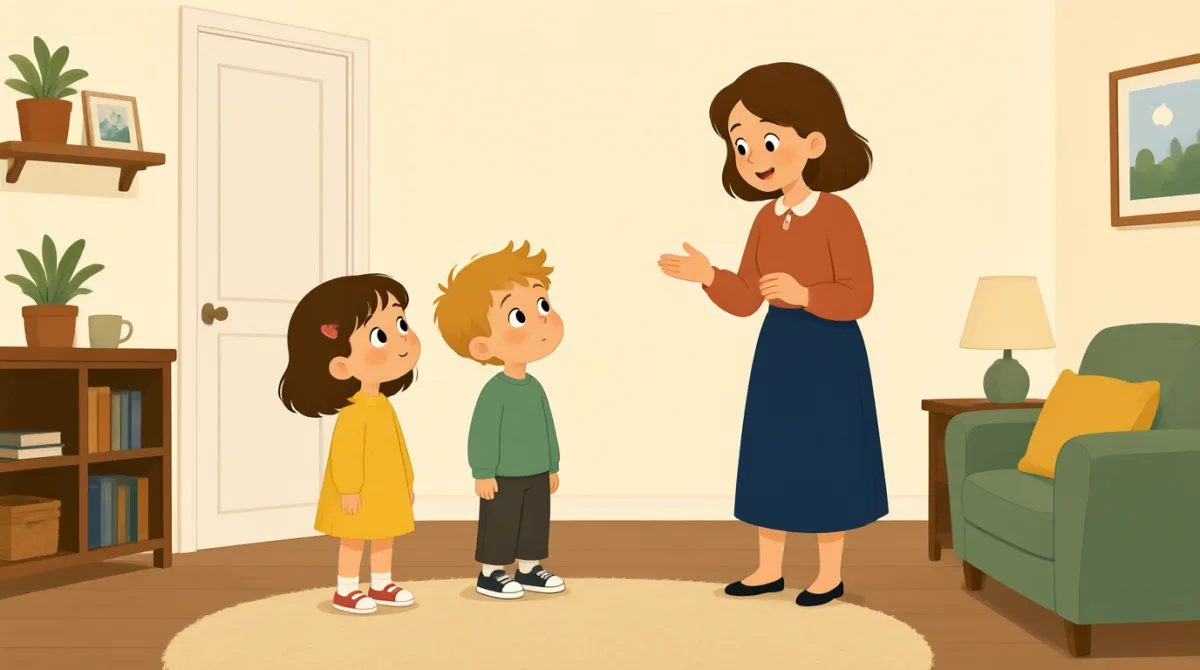

Thanks for staying with her, Emma. How did the evening go?
エマ、あの子と一緒にいてくれてありがとう。夜はどうだった?

It went well. She ate some pasta and asked for more.
順調だったよ。パスタを食べて、おかわりもしたんだ。

Great. What did you two do after dinner?
よかった。夕食のあと、二人で何をしたの?
We played a simple card game. She was excited, but took turns.
簡単なカードゲームをしたよ。夢中になってたけど、ちゃんと順番を守ってた。
And bedtime? She sometimes says she isn't tired.
寝るときはどうだった?あの子、ときどき疲れてないって言うのよね。
She said that tonight, too. I read her a short story, and she settled down.
今夜もそう言ってたよ。短いお話を読んであげたら、落ち着いてくれた。
Thanks for handling everything so well. Was she asleep when you left?
いろいろうまくやってくれてありがとう。帰るとき、あの子は寝てた?
Yes, she was asleep. I left the light on in the hallway, like you asked.
うん、寝てたよ。言われたとおり、廊下の電気はつけたままにしておいたよ。
語彙6
- staying with her一緒にいて世話をする
This means taking care of her while her parents are away. You can say, “Thanks for staying with my dog.”
親が留守のあいだ、その子の面倒を見るという意味です。「Thanks for staying with my dog.(うちの犬と一緒にいてくれてありがとう)」のようにも言えます。
- went well順調にいった
This means that something happened successfully, without serious problems. You can use it to describe how a meeting, trip, or evening was.
大きな問題もなく、物事がうまく進んだという意味です。会議や旅行、夜の過ごし方について話すときに使えます。
- asked for moreおかわりを頼んだ
This means she wanted another serving of food. You can also say, “He asked for more water.”
食べ物をもう一人前ほしいと言った、という意味です。「He asked for more water.(彼は水をもっとほしいと言った)」のようにも言えます。
- settled down落ち着いた
Here, this means she became calm and ready to sleep. You can also use it when someone becomes quiet after being excited.
ここでは、落ち着いて眠る準備ができたという意味です。興奮していた人が静かになったときにも使えます。
- handling everythingすべてに対応する
This means taking care of all the tasks or problems. You can say, “Thanks for handling everything while I was away.”
やるべきことや問題をすべて処理する、という意味です。「Thanks for handling everything while I was away.(私が留守のあいだ、いろいろやってくれてありがとう)」のように言えます。
- left the light on電気をつけたままにした
This means Emma did not turn off the light when she left. You can say, “I left the kitchen light on.”
エマが帰るとき、電気を消さなかったという意味です。「I left the kitchen light on.(キッチンの電気をつけたままにした)」のように言えます。
重要な文8
- 1
How did the evening go?
夜はどうだった?
This is a friendly way to ask how an event or activity went. You can use it after a visit, meeting, or day out.
出来事や活動がどうだったかを尋ねる、親しみのある言い方です。訪問や会議、お出かけのあとなどに使えます。
- 2
It went well.
順調だったよ。
This is a short, common way to say that something was successful. You can use it to answer questions about how an event went.
何かがうまくいったことを伝える、短くてよく使われる表現です。出来事がどうだったか聞かれたときに答えとして使えます。
- 3
What did you two do after dinner?
夕食のあと、二人で何をしたの?
Use this question to ask what two people did after an event or meal. You can change “after dinner” to “after school” or “after work.”
出来事や食事のあとに、二人が何をしたか尋ねる表現です。「after dinner」を「after school」や「after work」に変えることもできます。
- 4
We played a simple card game.
簡単なカードゲームをしたよ。
This sentence tells someone what activity you did. You can replace “a simple card game” with another activity, such as “a board game.”
自分がした活動を相手に伝える文です。「a simple card game」を「a board game(ボードゲーム)」のような別の活動に置き換えられます。
- 5
She said that tonight, too.
今夜もそう言ってたよ。
This means she said the same thing tonight as she has said before. You can use “too” to show that something happened again.
以前にも言ったことを、今夜も同じように言ったという意味です。「too」を使うと、同じことがまた起きたと伝えられます。
- 6
I read her a short story, and she settled down.
短いお話を読んであげたら、落ち着いてくれた。
This explains what you did and what happened next. You can use this pattern to describe how one action helped someone become calm.
自分がしたことと、そのあとに起きたことを説明する文です。この形を使うと、ある行動によって相手が落ち着いた様子を伝えられます。
- 7
Was she asleep when you left?
帰るとき、あの子は寝てた?
This is a yes-or-no question about what was happening at the time someone left. You can use the same pattern to ask, “Was he home when you called?”
誰かが帰ったとき、ある状態だったかどうかを尋ねる、はい・いいえで答えられる質問です。同じ形で「Was he home when you called?(電話したとき、彼は家にいた?)」とも聞けます。
- 8
I left the light on in the hallway, like you asked.
言われたとおり、廊下の電気はつけたままにしておいたよ。
This tells someone you followed their request. You can change “left the light on” to another action, such as “locked the door.”
相手の頼みを実行したことを伝える文です。「left the light on」を「locked the door(ドアに鍵をかけた)」のような別の行動に変えられます。