Getting Instructions
নির্দেশনা নেওয়া
Mia tells Emma about her child's meals, bedtime, and house rules before leaving. Emma asks a few questions to make sure she understands.
চলে যাওয়ার আগে মিয়া এমাকে তার সন্তানের খাবার, ঘুমানোর সময় এবং বাড়ির নিয়মকানুন জানায়। সবকিছু ঠিকমতো বুঝেছে কি না নিশ্চিত হতে এমা কয়েকটি প্রশ্ন করে।
সংলাপ8
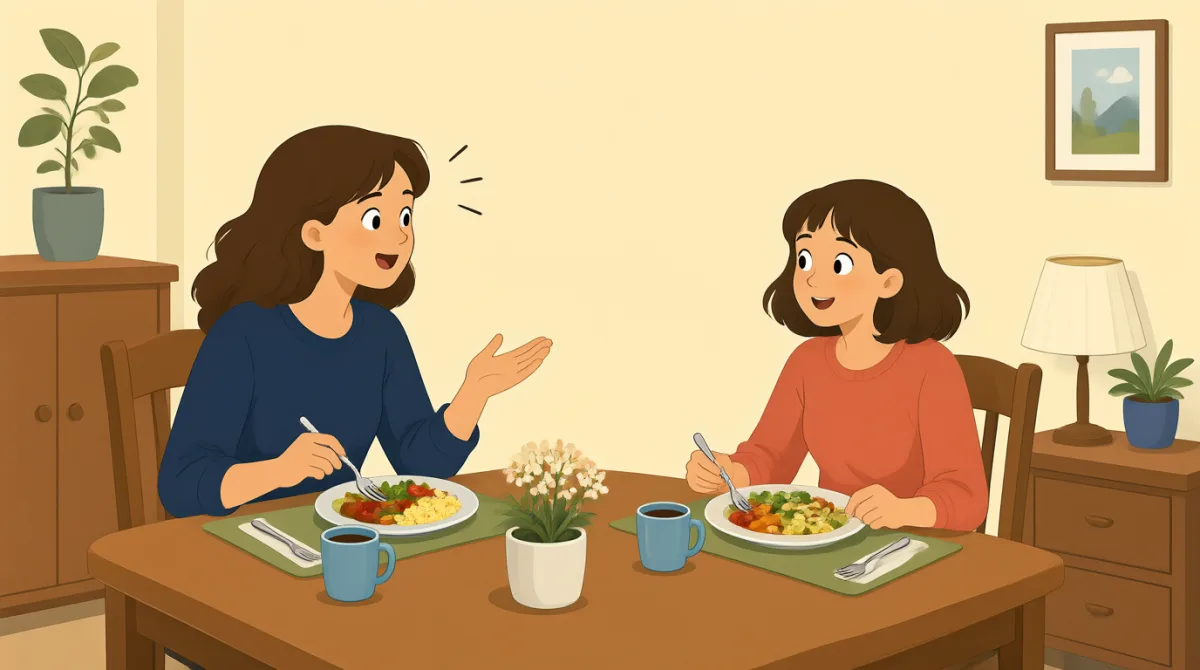

Thanks for watching my child tonight. Dinner is at six, and she likes pasta.
আজ রাতে আমার সন্তানের দেখাশোনা করার জন্য ধন্যবাদ। রাতের খাবার ছয়টায়, আর ও পাস্তা পছন্দ করে।

Sure. Should I heat up the pasta in the fridge?
ঠিক আছে। ফ্রিজে রাখা পাস্তাটা কি গরম করে দেব?
Yes, please. She can have some fruit after dinner, but no sweets.
হ্যাঁ, দিও। রাতের খাবারের পর ও কিছু ফল খেতে পারে, তবে মিষ্টি নয়।
Got it. What time should she go to bed?
বুঝেছি। ওর কখন ঘুমাতে যাওয়া উচিত?
At eight. Please help her brush her teeth and read one short story.
আটটায়। ওকে দাঁত ব্রাশ করতে সাহায্য কোরো আর একটা ছোট গল্প পড়ে শোনাও।
Okay. Can she watch TV before bed?
ঠিক আছে। ঘুমানোর আগে ও কি টিভি দেখতে পারে?
No TV tonight. And please keep the front door locked.
আজ রাতে টিভি নয়। আর সামনের দরজাটা তালাবদ্ধ রেখো, প্লিজ।
Understood. I’ll lock the door and call you if I need anything.
বুঝেছি। দরজায় তালা দেব, আর কিছু দরকার হলে তোমাকে ফোন করব।
শব্দভান্ডার8
- watching my childআমার সন্তানের দেখাশোনা করা
Here, it means taking care of Mia’s child for a short time. You can use “watching” to talk about caring for someone’s child.
এখানে এর মানে হলো অল্প সময়ের জন্য মিয়ার সন্তানের যত্ন নেওয়া। কারও সন্তানের দেখাশোনা করার কথা বলতে “watching” ব্যবহার করতে পারো।
- heat upগরম করা
To heat up food is to make it warm before eating. You can ask, “Should I heat up the dinner?”
খাবার “heat up” করা মানে খাওয়ার আগে সেটাকে গরম করা। তুমি জিজ্ঞেস করতে পারো, “Should I heat up the dinner?” (আমি কি রাতের খাবারটা গরম করব?)
- in the fridgeফ্রিজে
This means inside the refrigerator, where food is kept cold. You can say, “The milk is in the fridge.”
এর মানে রেফ্রিজারেটরের ভেতরে, যেখানে খাবার ঠান্ডা রাখা হয়। তুমি বলতে পারো, “The milk is in the fridge.” (দুধ ফ্রিজে আছে।)
- after dinnerরাতের খাবারের পর
This means once the evening meal is finished. You can use it to say when something will happen, such as “We’ll have dessert after dinner.”
এর মানে সন্ধ্যার খাবার শেষ হওয়ার পরে। কোনো কিছু কখন ঘটবে তা বলতে এটি ব্যবহার করতে পারো, যেমন “We’ll have dessert after dinner.” (রাতের খাবারের পর আমরা মিষ্টি খাব।)
- go to bedঘুমাতে যাওয়া
This means to get into bed and prepare to sleep. You can ask, “What time do you usually go to bed?”
এর মানে বিছানায় শুয়ে ঘুমানোর প্রস্তুতি নেওয়া। তুমি জিজ্ঞেস করতে পারো, “What time do you usually go to bed?” (তুমি সাধারণত কখন ঘুমাতে যাও?)
- brush her teethওর দাঁত ব্রাশ করা
This means clean her teeth with a toothbrush. You can use “brush your teeth” when reminding someone about this daily routine.
এর মানে টুথব্রাশ দিয়ে ওর দাঁত পরিষ্কার করা। এই দৈনন্দিন কাজটির কথা মনে করিয়ে দিতে “brush your teeth” ব্যবহার করতে পারো।
- keep the front door lockedসামনের দরজাটা তালাবদ্ধ রাখা
This means make sure the main entrance stays locked. You can use “keep the door locked” as a safety instruction.
এর মানে নিশ্চিত করা যে মূল প্রবেশদ্বারটি তালাবদ্ধ থাকে। নিরাপত্তার নির্দেশ দিতে “keep the door locked” ব্যবহার করতে পারো।
- if I need anythingআমার কিছু দরকার হলে
This means if I need help or something else. You can use this phrase when telling someone you will contact them if a problem comes up.
এর মানে আমার সাহায্য বা অন্য কিছু দরকার হলে। কোনো সমস্যা হলে যোগাযোগ করবে—এ কথা কাউকে জানাতে এই বাক্যাংশটি ব্যবহার করতে পারো।
গুরুত্বপূর্ণ বাক্য7
- 1
Should I heat up the pasta in the fridge?
ফ্রিজে রাখা পাস্তাটা কি গরম করে দেব?
Use “Should I…?” to check what someone wants you to do. You can change the action and food, as in “Should I warm up the soup?”
কেউ তোমাকে কী করতে চান তা জানতে “Should I…?” ব্যবহার করো। কাজ বা খাবারের নাম বদলাতে পারো, যেমন “Should I warm up the soup?” (আমি কি স্যুপটা গরম করব?)
- 2
She can have some fruit after dinner, but no sweets.
রাতের খাবারের পর ও কিছু ফল খেতে পারে, তবে মিষ্টি নয়।
This sentence gives permission and then adds a limit. You can use “can have…, but no…” to explain what someone may and may not eat.
এই বাক্যে প্রথমে অনুমতি দেওয়া হয়েছে, তারপর একটি সীমা জানানো হয়েছে। কেউ কী খেতে পারে আর কী খেতে পারে না, তা বোঝাতে “can have…, but no…” ব্যবহার করতে পারো।
- 3
What time should she go to bed?
ওর কখন ঘুমাতে যাওয়া উচিত?
This is a polite way to ask about someone’s bedtime. You can replace “she” with another person, such as “What time should the children go to bed?”
কারও ঘুমানোর সময় জানতে এটি ভদ্রভাবে প্রশ্ন করার উপায়। “she”-এর বদলে অন্য কাউকে বসাতে পারো, যেমন “What time should the children go to bed?” (বাচ্চাদের কখন ঘুমাতে যাওয়া উচিত?)
- 4
Please help her brush her teeth and read one short story.
ওকে দাঁত ব্রাশ করতে সাহায্য কোরো আর একটা ছোট গল্প পড়ে শোনাও।
Use “Please” to give a polite instruction. You can list two simple tasks with “and.”
ভদ্রভাবে নির্দেশ দিতে “Please” ব্যবহার করো। “and” দিয়ে দুটি সহজ কাজ একসঙ্গে বলতে পারো।
- 5
Can she watch TV before bed?
ঘুমানোর আগে ও কি টিভি দেখতে পারে?
Use “Can she…?” to ask whether something is allowed. You can replace the activity, for example, “Can she play outside before dinner?”
কোনো কিছু করার অনুমতি আছে কি না জানতে “Can she…?” ব্যবহার করো। কাজটি বদলে বলতে পারো, যেমন “Can she play outside before dinner?” (রাতের খাবারের আগে ও কি বাইরে খেলতে পারে?)
- 6
Please keep the front door locked.
সামনের দরজাটা তালাবদ্ধ রেখো, প্লিজ।
This is a polite way to give an important safety instruction. You can use “Please keep…” for other rules, such as “Please keep the gate closed.”
গুরুত্বপূর্ণ নিরাপত্তার নির্দেশ ভদ্রভাবে দেওয়ার উপায় এটি। অন্য নিয়মের কথা বলতেও “Please keep…” ব্যবহার করতে পারো, যেমন “Please keep the gate closed.” (ফটকটা বন্ধ রেখো, প্লিজ।)
- 7
I’ll lock the door and call you if I need anything.
দরজায় তালা দেব, আর কিছু দরকার হলে তোমাকে ফোন করব।
Use “I’ll” to say what you plan to do. The phrase “if I need anything” explains when you will call.
তুমি কী করার পরিকল্পনা করছ তা বলতে “I’ll” ব্যবহার করো। “if I need anything” বাক্যাংশটি বোঝায় কখন তুমি ফোন করবে।