Getting Instructions
निर्देश लेना
Mia tells Emma about her child's meals, bedtime, and house rules before leaving. Emma asks a few questions to make sure she understands.
जाने से पहले, Mia अपनी बच्ची के खाने, सोने के समय और घर के नियमों के बारे में Emma को बताती है। Emma यह पक्का करने के लिए कुछ सवाल पूछती है कि उसे सब समझ आ गया है।
संवाद8
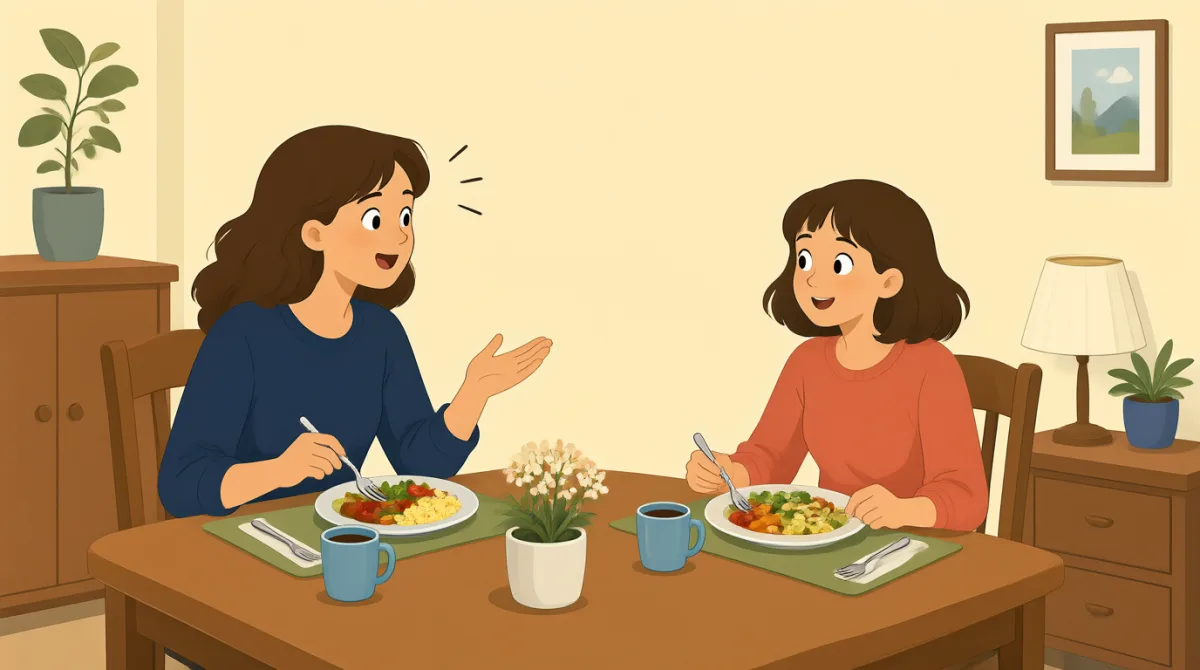

Thanks for watching my child tonight. Dinner is at six, and she likes pasta.
आज रात मेरी बच्ची का ध्यान रखने के लिए शुक्रिया। रात का खाना छह बजे है, और उसे पास्ता पसंद है।

Sure. Should I heat up the pasta in the fridge?
ज़रूर। क्या मैं फ्रिज में रखा पास्ता गरम कर दूँ?
Yes, please. She can have some fruit after dinner, but no sweets.
हाँ, प्लीज़। रात के खाने के बाद वह थोड़ा फल खा सकती है, लेकिन मिठाई नहीं।
Got it. What time should she go to bed?
समझ गई। उसे कितने बजे सोने जाना चाहिए?
At eight. Please help her brush her teeth and read one short story.
आठ बजे। प्लीज़ उसके दाँत साफ़ करवाने में मदद करना और एक छोटी-सी कहानी पढ़ना।
Okay. Can she watch TV before bed?
ठीक है। क्या वह सोने से पहले टीवी देख सकती है?
No TV tonight. And please keep the front door locked.
आज रात टीवी नहीं। और प्लीज़ मुख्य दरवाज़ा बंद करके रखना।
Understood. I’ll lock the door and call you if I need anything.
समझ गई। मैं दरवाज़ा बंद रखूँगी और अगर मुझे किसी चीज़ की ज़रूरत हुई तो तुम्हें फ़ोन करूँगी।
शब्दावली8
- watching my childमेरी बच्ची का ध्यान रखना
Here, it means taking care of Mia’s child for a short time. You can use “watching” to talk about caring for someone’s child.
यहाँ इसका मतलब है कुछ समय के लिए Mia की बच्ची की देखभाल करना। किसी के बच्चे की देखभाल करने के लिए आप “watching” कह सकते हैं।
- heat upगरम करना
To heat up food is to make it warm before eating. You can ask, “Should I heat up the dinner?”
खाने को गरम करने का मतलब है उसे खाने से पहले गर्म करना। आप पूछ सकते हैं, “Should I heat up the dinner?”
- in the fridgeफ्रिज में
This means inside the refrigerator, where food is kept cold. You can say, “The milk is in the fridge.”
इसका मतलब है रेफ़्रिजरेटर के अंदर, जहाँ खाना ठंडा रखा जाता है। आप कह सकते हैं, “The milk is in the fridge.”
- after dinnerरात के खाने के बाद
This means once the evening meal is finished. You can use it to say when something will happen, such as “We’ll have dessert after dinner.”
इसका मतलब है शाम का खाना खत्म होने के बाद। किसी काम का समय बताने के लिए आप इसका इस्तेमाल कर सकते हैं, जैसे “We’ll have dessert after dinner.”
- go to bedसोने जाना
This means to get into bed and prepare to sleep. You can ask, “What time do you usually go to bed?”
इसका मतलब है बिस्तर पर जाकर सोने की तैयारी करना। आप पूछ सकते हैं, “What time do you usually go to bed?”
- brush her teethउसके दाँत साफ़ करना
This means clean her teeth with a toothbrush. You can use “brush your teeth” when reminding someone about this daily routine.
इसका मतलब है टूथब्रश से उसके दाँत साफ़ करना। किसी को रोज़ की यह आदत याद दिलाते समय आप “brush your teeth” कह सकते हैं।
- keep the front door lockedमुख्य दरवाज़ा बंद रखना
This means make sure the main entrance stays locked. You can use “keep the door locked” as a safety instruction.
इसका मतलब है यह पक्का करना कि घर का मुख्य दरवाज़ा बंद रहे। सुरक्षा के लिए निर्देश देते समय आप “keep the door locked” कह सकते हैं।
- if I need anythingअगर मुझे किसी चीज़ की ज़रूरत हुई
This means if I need help or something else. You can use this phrase when telling someone you will contact them if a problem comes up.
इसका मतलब है कि अगर मुझे मदद या किसी और चीज़ की ज़रूरत हुई। किसी समस्या के आने पर संपर्क करने की बात बताते समय आप इस वाक्यांश का इस्तेमाल कर सकते हैं।
मुख्य वाक्य7
- 1
Should I heat up the pasta in the fridge?
क्या मैं फ्रिज में रखा पास्ता गरम कर दूँ?
Use “Should I…?” to check what someone wants you to do. You can change the action and food, as in “Should I warm up the soup?”
किसी से यह पूछने के लिए कि वह आपसे क्या करवाना चाहता है, “Should I…?” का इस्तेमाल करें। आप काम और खाने की चीज़ बदलकर कह सकते हैं, “Should I warm up the soup?”
- 2
She can have some fruit after dinner, but no sweets.
वह रात के खाने के बाद थोड़ा फल खा सकती है, लेकिन मिठाई नहीं।
This sentence gives permission and then adds a limit. You can use “can have…, but no…” to explain what someone may and may not eat.
इस वाक्य में पहले अनुमति दी गई है और फिर एक पाबंदी बताई गई है। किसी को क्या खाने की अनुमति है और क्या नहीं, यह बताने के लिए “can have…, but no…” का इस्तेमाल करें।
- 3
What time should she go to bed?
उसे कितने बजे सोने जाना चाहिए?
This is a polite way to ask about someone’s bedtime. You can replace “she” with another person, such as “What time should the children go to bed?”
किसी के सोने के समय के बारे में पूछने का यह एक विनम्र तरीका है। आप “she” की जगह किसी और व्यक्ति का ज़िक्र कर सकते हैं, जैसे “What time should the children go to bed?”
- 4
Please help her brush her teeth and read one short story.
प्लीज़ उसके दाँत साफ़ करवाने में मदद करना और एक छोटी-सी कहानी पढ़ना।
Use “Please” to give a polite instruction. You can list two simple tasks with “and.”
विनम्रता से निर्देश देने के लिए “Please” का इस्तेमाल करें। “and” से आप दो आसान काम एक साथ बता सकते हैं।
- 5
Can she watch TV before bed?
क्या वह सोने से पहले टीवी देख सकती है?
Use “Can she…?” to ask whether something is allowed. You can replace the activity, for example, “Can she play outside before dinner?”
यह पूछने के लिए कि किसी काम की अनुमति है या नहीं, “Can she…?” का इस्तेमाल करें। आप गतिविधि बदलकर, उदाहरण के लिए, “Can she play outside before dinner?” पूछ सकते हैं।
- 6
Please keep the front door locked.
प्लीज़ मुख्य दरवाज़ा बंद करके रखना।
This is a polite way to give an important safety instruction. You can use “Please keep…” for other rules, such as “Please keep the gate closed.”
सुरक्षा से जुड़ा ज़रूरी निर्देश विनम्रता से देने का यह एक तरीका है। आप दूसरे नियमों के लिए भी “Please keep…” कह सकते हैं, जैसे “Please keep the gate closed.”
- 7
I’ll lock the door and call you if I need anything.
मैं दरवाज़ा बंद रखूँगी और अगर मुझे किसी चीज़ की ज़रूरत हुई तो तुम्हें फ़ोन करूँगी।
Use “I’ll” to say what you plan to do. The phrase “if I need anything” explains when you will call.
आप क्या करने की योजना बना रहे हैं, यह बताने के लिए “I’ll” का इस्तेमाल करें। “if I need anything” बताता है कि आप कब फ़ोन करेंगे।