Getting Instructions
รับคำแนะนำ
Mia tells Emma about her child's meals, bedtime, and house rules before leaving. Emma asks a few questions to make sure she understands.
ก่อนออกไป มีอาบอกเอ็มมาเกี่ยวกับมื้ออาหาร เวลาเข้านอน และกฎต่าง ๆ ในบ้านของลูก เอ็มมาถามสองสามข้อเพื่อให้แน่ใจว่าเข้าใจทุกอย่าง
บทสนทนา8
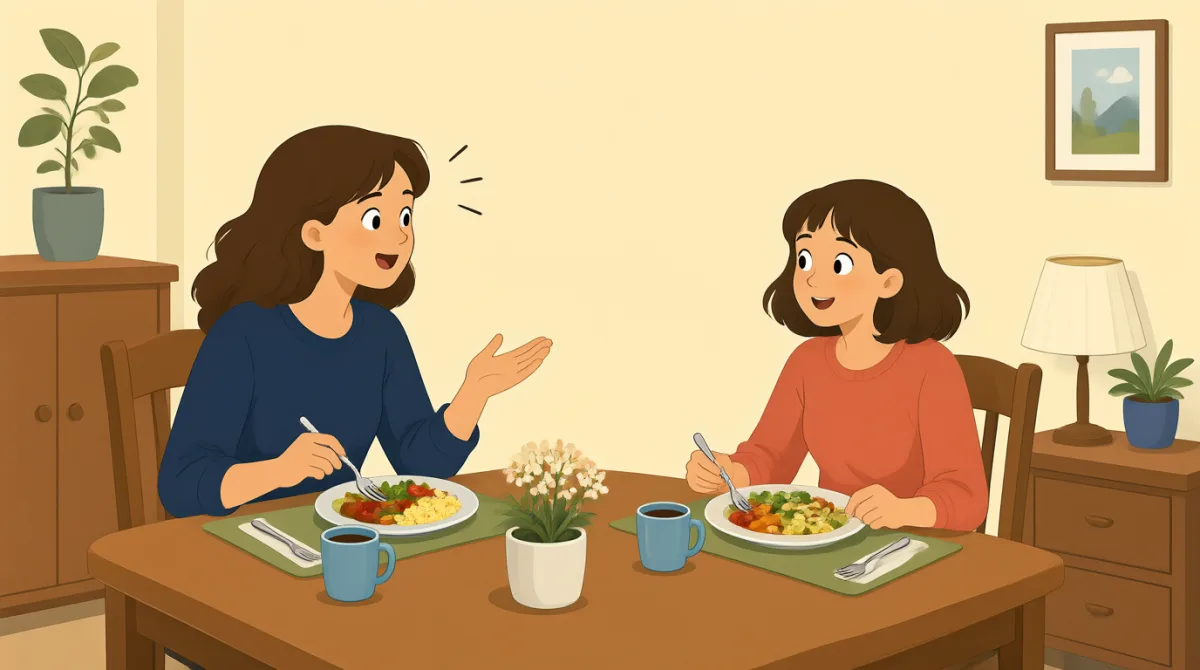

Thanks for watching my child tonight. Dinner is at six, and she likes pasta.
ขอบใจนะที่คืนนี้ช่วยดูแลลูกให้ มื้อเย็นกินตอนหกโมง เธอชอบพาสต้า

Sure. Should I heat up the pasta in the fridge?
ได้เลย ให้ฉันอุ่นพาสต้าที่อยู่ในตู้เย็นไหม
Yes, please. She can have some fruit after dinner, but no sweets.
จ้ะ หลังมื้อเย็นให้กินผลไม้ได้บ้าง แต่อย่าให้กินขนมนะ
Got it. What time should she go to bed?
เข้าใจแล้ว เธอควรเข้านอนกี่โมงเหรอ
At eight. Please help her brush her teeth and read one short story.
สองทุ่มนะ ช่วยแปรงฟันให้เธอ แล้วอ่านนิทานสั้น ๆ ให้ฟังสักเรื่องด้วย
Okay. Can she watch TV before bed?
โอเค ก่อนนอนเธอดูทีวีได้ไหม
No TV tonight. And please keep the front door locked.
คืนนี้ห้ามดูทีวีนะ แล้วก็ช่วยล็อกประตูหน้าบ้านไว้ด้วย
Understood. I’ll lock the door and call you if I need anything.
เข้าใจแล้ว ฉันจะล็อกประตู แล้วจะโทรหาเธอถ้าต้องการอะไร
คำศัพท์8
- watching my childช่วยดูแลลูกให้
Here, it means taking care of Mia’s child for a short time. You can use “watching” to talk about caring for someone’s child.
ในที่นี้หมายถึงการดูแลลูกของมีอาเป็นเวลาสั้น ๆ ใช้ “watching” พูดถึงการดูแลลูกของคนอื่นได้
- heat upอุ่น
To heat up food is to make it warm before eating. You can ask, “Should I heat up the dinner?”
การ heat up อาหารคือทำให้อาหารอุ่นก่อนกิน คุณถามได้ว่า “Should I heat up the dinner?” (ให้ฉันอุ่นมื้อเย็นไหม)
- in the fridgeในตู้เย็น
This means inside the refrigerator, where food is kept cold. You can say, “The milk is in the fridge.”
หมายถึงอยู่ในตู้เย็น ซึ่งเป็นที่เก็บอาหารให้เย็น คุณพูดได้ว่า “The milk is in the fridge.” (นมอยู่ในตู้เย็น)
- after dinnerหลังมื้อเย็น
This means once the evening meal is finished. You can use it to say when something will happen, such as “We’ll have dessert after dinner.”
หมายถึงเมื่อกินมื้อเย็นเสร็จแล้ว ใช้บอกได้ว่าสิ่งหนึ่งจะเกิดขึ้นเมื่อไร เช่น “We’ll have dessert after dinner.” (เราจะกินของหวานหลังมื้อเย็น)
- go to bedเข้านอน
This means to get into bed and prepare to sleep. You can ask, “What time do you usually go to bed?”
หมายถึงขึ้นเตียงและเตรียมตัวนอน คุณถามได้ว่า “What time do you usually go to bed?” (ปกติเธอเข้านอนกี่โมง)
- brush her teethแปรงฟันให้เธอ
This means clean her teeth with a toothbrush. You can use “brush your teeth” when reminding someone about this daily routine.
หมายถึงทำความสะอาดฟันของเธอด้วยแปรงสีฟัน ใช้ “brush your teeth” เตือนใครสักคนให้ทำกิจวัตรประจำวันอย่างการแปรงฟันได้
- keep the front door lockedล็อกประตูหน้าบ้านไว้
This means make sure the main entrance stays locked. You can use “keep the door locked” as a safety instruction.
หมายถึงดูให้แน่ใจว่าประตูทางเข้าหลักยังล็อกอยู่ ใช้ “keep the door locked” เพื่อบอกให้ทำตามกฎเพื่อความปลอดภัยได้
- if I need anythingถ้าฉันต้องการอะไร
This means if I need help or something else. You can use this phrase when telling someone you will contact them if a problem comes up.
หมายถึงถ้าฉันต้องการความช่วยเหลือหรืออย่างอื่น ใช้สำนวนนี้บอกใครสักคนว่าคุณจะติดต่อเขาหากเกิดปัญหาขึ้น
ประโยคสำคัญ7
- 1
Should I heat up the pasta in the fridge?
ให้ฉันอุ่นพาสต้าที่อยู่ในตู้เย็นไหม
Use “Should I…?” to check what someone wants you to do. You can change the action and food, as in “Should I warm up the soup?”
ใช้ “Should I…?” เพื่อถามให้แน่ใจว่าอีกฝ่ายอยากให้คุณทำอะไร คุณเปลี่ยนกิจกรรมและอาหารได้ เช่น “Should I warm up the soup?”
- 2
She can have some fruit after dinner, but no sweets.
หลังมื้อเย็นเธอกินผลไม้ได้บ้าง แต่ห้ามกินขนม
This sentence gives permission and then adds a limit. You can use “can have…, but no…” to explain what someone may and may not eat.
ประโยคนี้อนุญาตให้ทำสิ่งหนึ่ง แล้วเพิ่มข้อจำกัดตามมา ใช้ “can have…, but no…” เพื่ออธิบายว่าใครกินอะไรได้และกินอะไรไม่ได้
- 3
What time should she go to bed?
เธอควรเข้านอนกี่โมงเหรอ
This is a polite way to ask about someone’s bedtime. You can replace “she” with another person, such as “What time should the children go to bed?”
นี่เป็นวิธีสุภาพในการถามเวลาเข้านอนของใครสักคน คุณเปลี่ยน “she” เป็นคนอื่นได้ เช่น “What time should the children go to bed?”
- 4
Please help her brush her teeth and read one short story.
ช่วยแปรงฟันให้เธอ แล้วอ่านนิทานสั้น ๆ ให้ฟังสักเรื่องด้วยนะ
Use “Please” to give a polite instruction. You can list two simple tasks with “and.”
ใช้ “Please” เพื่อบอกให้ทำอะไรอย่างสุภาพ คุณบอกงานง่าย ๆ สองอย่างต่อกันได้ด้วย “and”
- 5
Can she watch TV before bed?
ก่อนนอนเธอดูทีวีได้ไหม
Use “Can she…?” to ask whether something is allowed. You can replace the activity, for example, “Can she play outside before dinner?”
ใช้ “Can she…?” เพื่อถามว่าอนุญาตให้ทำอะไรหรือไม่ คุณเปลี่ยนกิจกรรมได้ เช่น “Can she play outside before dinner?”
- 6
Please keep the front door locked.
ช่วยล็อกประตูหน้าบ้านไว้ด้วยนะ
This is a polite way to give an important safety instruction. You can use “Please keep…” for other rules, such as “Please keep the gate closed.”
นี่เป็นวิธีสุภาพในการบอกให้ทำตามคำแนะนำสำคัญเพื่อความปลอดภัย คุณใช้ “Please keep…” กับกฎอื่น ๆ ได้ เช่น “Please keep the gate closed.”
- 7
I’ll lock the door and call you if I need anything.
ฉันจะล็อกประตู แล้วโทรหาเธอถ้าต้องการอะไร
Use “I’ll” to say what you plan to do. The phrase “if I need anything” explains when you will call.
ใช้ “I’ll” เพื่อบอกสิ่งที่คุณตั้งใจจะทำ ส่วน “if I need anything” อธิบายว่าคุณจะโทรหาเมื่อไร