Getting Instructions
تلقي التعليمات
Mia tells Emma about her child's meals, bedtime, and house rules before leaving. Emma asks a few questions to make sure she understands.
تخبر ميا إيما بمواعيد وجبات طفلها وموعد نومه وقواعد المنزل قبل أن تغادر. وتطرح إيما بعض الأسئلة للتأكد من أنها فهمت.
حوار8
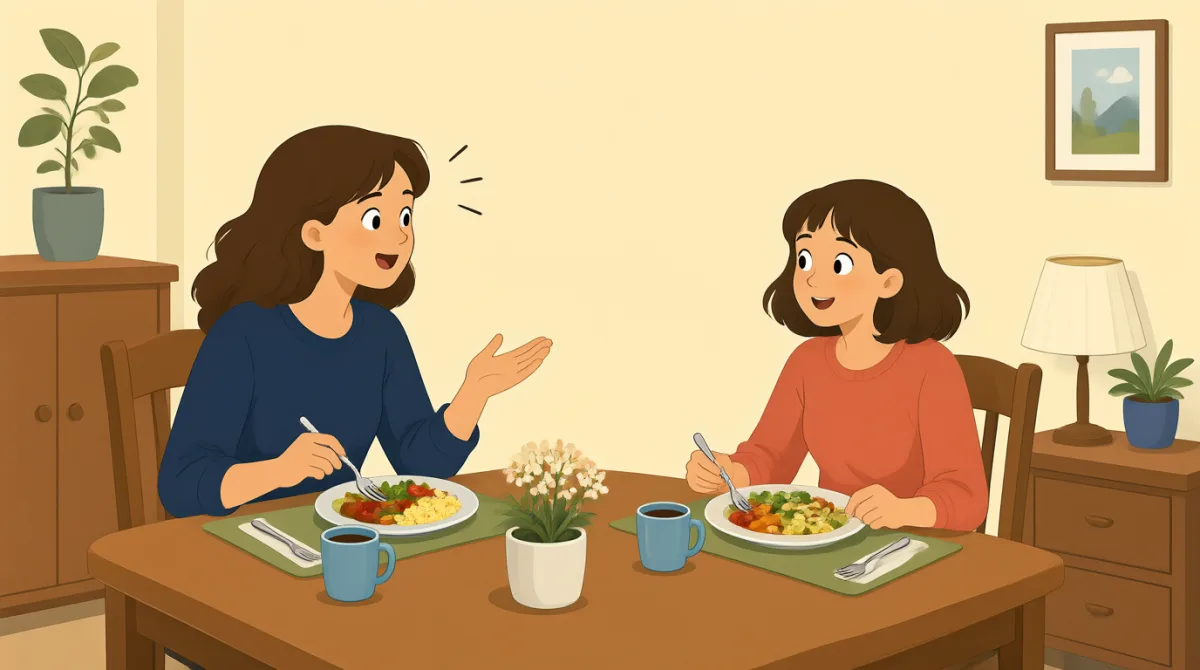

Thanks for watching my child tonight. Dinner is at six, and she likes pasta.
شكرًا على رعاية طفلتي الليلة. العشاء في السادسة، وهي تحب المعكرونة.

Sure. Should I heat up the pasta in the fridge?
أكيد. هل أسخّن المعكرونة الموجودة في الثلاجة؟
Yes, please. She can have some fruit after dinner, but no sweets.
نعم، من فضلك. يمكنها تناول بعض الفاكهة بعد العشاء، لكن لا حلويات.
Got it. What time should she go to bed?
حسنًا، فهمت. في أي وقت ينبغي أن تذهب إلى النوم؟
At eight. Please help her brush her teeth and read one short story.
في الثامنة. من فضلك ساعديها على تنظيف أسنانها واقرئي لها قصة قصيرة واحدة.
Okay. Can she watch TV before bed?
حسنًا. هل يمكنها مشاهدة التلفاز قبل النوم؟
No TV tonight. And please keep the front door locked.
لا تلفاز الليلة. ومن فضلك أبقي الباب الأمامي مغلقًا بالمفتاح.
Understood. I’ll lock the door and call you if I need anything.
مفهوم. سأقفل الباب وأتصل بك إذا احتجت إلى أي شيء.
المفردات8
- watching my childرعاية طفلي
Here, it means taking care of Mia’s child for a short time. You can use “watching” to talk about caring for someone’s child.
المقصود هنا الاعتناء بطفل ميا لفترة قصيرة. يمكنك استخدام “watching” للحديث عن رعاية طفل شخص ما.
- heat upيسخّن
To heat up food is to make it warm before eating. You can ask, “Should I heat up the dinner?”
تسخين الطعام يعني جعله دافئًا قبل تناوله. يمكنك أن تسأل: “Should I heat up the dinner?”
- in the fridgeفي الثلاجة
This means inside the refrigerator, where food is kept cold. You can say, “The milk is in the fridge.”
تعني داخل الثلاجة، حيث يُحفظ الطعام باردًا. يمكنك أن تقول: “The milk is in the fridge.”
- after dinnerبعد العشاء
This means once the evening meal is finished. You can use it to say when something will happen, such as “We’ll have dessert after dinner.”
تعني بعد الانتهاء من وجبة المساء. يمكنك استخدامها لتوضيح موعد حدوث شيء ما، مثل: “We’ll have dessert after dinner.”
- go to bedيذهب إلى النوم
This means to get into bed and prepare to sleep. You can ask, “What time do you usually go to bed?”
تعني أن يستلقي في السرير ويتهيأ للنوم. يمكنك أن تسأل: “What time do you usually go to bed?”
- brush her teethتنظّف أسنانها
This means clean her teeth with a toothbrush. You can use “brush your teeth” when reminding someone about this daily routine.
تعني تنظيف أسنانها بفرشاة الأسنان. يمكنك استخدام “brush your teeth” لتذكير شخص بهذا الروتين اليومي.
- keep the front door lockedيُبقي الباب الأمامي مغلقًا بالمفتاح
This means make sure the main entrance stays locked. You can use “keep the door locked” as a safety instruction.
تعني التأكد من أن المدخل الرئيسي يظل مقفلًا. يمكنك استخدام “keep the door locked” لإعطاء تعليمات تتعلق بالسلامة.
- if I need anythingإذا احتجت إلى أي شيء
This means if I need help or something else. You can use this phrase when telling someone you will contact them if a problem comes up.
تعني إذا احتجت إلى مساعدة أو إلى شيء آخر. يمكنك استخدام هذه العبارة لتخبر شخصًا أنك ستتواصل معه إذا طرأت مشكلة.
الجمل الأساسية7
- 1
Should I heat up the pasta in the fridge?
هل أسخّن المعكرونة الموجودة في الثلاجة؟
Use “Should I…?” to check what someone wants you to do. You can change the action and food, as in “Should I warm up the soup?”
استخدم “Should I…?” لتسأل عمّا يريدك شخص ما أن تفعله. يمكنك تغيير الفعل والطعام، مثل: “Should I warm up the soup?”
- 2
She can have some fruit after dinner, but no sweets.
يمكنها تناول بعض الفاكهة بعد العشاء، لكن لا حلويات.
This sentence gives permission and then adds a limit. You can use “can have…, but no…” to explain what someone may and may not eat.
تسمح هذه الجملة بشيء، ثم تضيف قيدًا. يمكنك استخدام “can have…, but no…” لتوضيح ما يجوز لشخص أن يأكله وما لا يجوز.
- 3
What time should she go to bed?
في أي وقت ينبغي أن تذهب إلى النوم؟
This is a polite way to ask about someone’s bedtime. You can replace “she” with another person, such as “What time should the children go to bed?”
هذه طريقة مهذبة للسؤال عن موعد نوم شخص ما. يمكنك استبدال “she” بشخص آخر، مثل: “What time should the children go to bed?”
- 4
Please help her brush her teeth and read one short story.
من فضلك ساعديها على تنظيف أسنانها واقرئي لها قصة قصيرة واحدة.
Use “Please” to give a polite instruction. You can list two simple tasks with “and.”
استخدم “Please” لإعطاء تعليمات بطريقة مهذبة. ويمكنك ذكر مهمتين بسيطتين باستخدام “and.”
- 5
Can she watch TV before bed?
هل يمكنها مشاهدة التلفاز قبل النوم؟
Use “Can she…?” to ask whether something is allowed. You can replace the activity, for example, “Can she play outside before dinner?”
استخدم “Can she…?” للسؤال عمّا إذا كان شيء ما مسموحًا. يمكنك تغيير النشاط، مثل: “Can she play outside before dinner?”
- 6
Please keep the front door locked.
من فضلك أبقي الباب الأمامي مغلقًا بالمفتاح.
This is a polite way to give an important safety instruction. You can use “Please keep…” for other rules, such as “Please keep the gate closed.”
هذه طريقة مهذبة لإعطاء تعليمات مهمة تتعلق بالسلامة. يمكنك استخدام “Please keep…” لقواعد أخرى، مثل: “Please keep the gate closed.”
- 7
I’ll lock the door and call you if I need anything.
سأقفل الباب وأتصل بك إذا احتجت إلى أي شيء.
Use “I’ll” to say what you plan to do. The phrase “if I need anything” explains when you will call.
استخدم “I’ll” للتعبير عما تنوي فعله. وتوضح عبارة “if I need anything” متى ستتصل.