Blocking Someone's Way Momentarily
किसी का रास्ता थोड़ी देर के लिए रोकना
Someone unintentionally blocks a doorway or path for a brief moment, preventing another person from passing, and apologizes upon realizing.
कोई अनजाने में थोड़ी देर के लिए दरवाज़े या रास्ते में आ जाता है, जिससे दूसरा व्यक्ति आगे नहीं जा पाता। एहसास होते ही वह माफ़ी माँगता है।
संवाद4
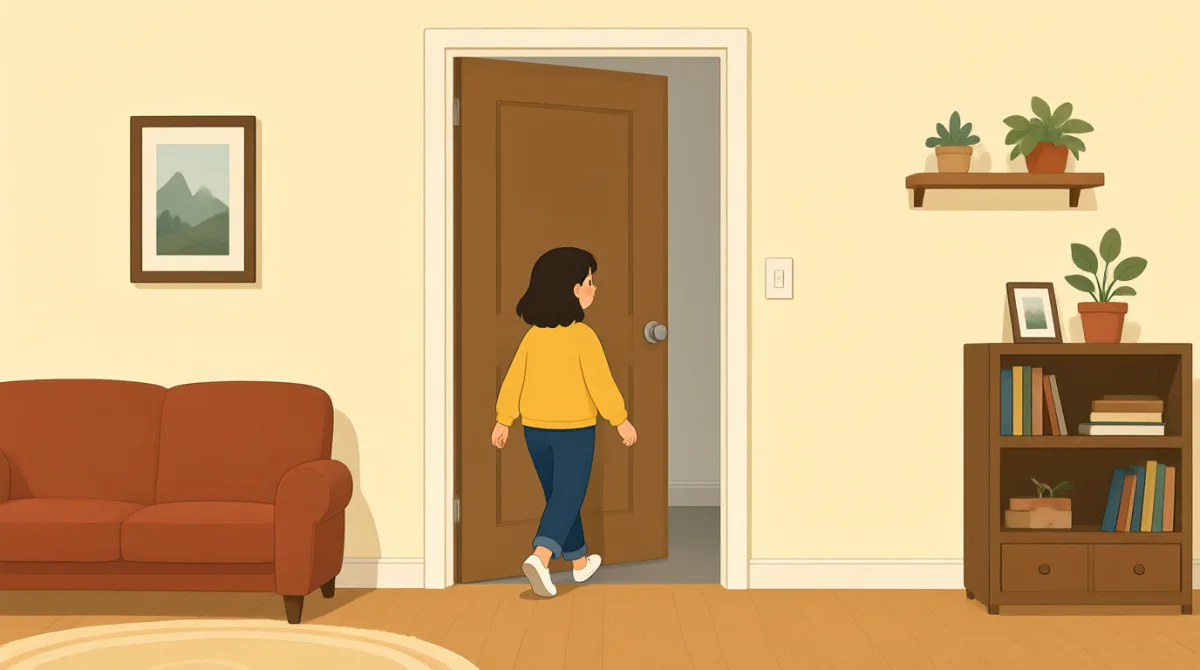

Oh, excuse me! I'm so sorry, I totally blocked your way.
ओह, माफ़ कीजिए! मुझे बहुत अफ़सोस है, मैंने आपका रास्ता पूरी तरह रोक दिया।

No worries at all! I just needed to get by.
कोई बात नहीं! मुझे बस वहाँ से निकलना था।
My bad. I wasn't paying attention.
मेरी गलती थी। मैं ध्यान नहीं दे रहा था।
It happens! No problem.
ऐसा हो जाता है! कोई बात नहीं।
शब्दावली7
- excuse meमाफ़ कीजिए
A polite phrase used to apologize for accidentally getting in someone's way or interrupting them briefly.
किसी का रास्ता गलती से रोकने या थोड़ी देर के लिए बीच में बोलने पर माफ़ी माँगने के लिए इस्तेमाल होने वाला विनम्र वाक्यांश।
- blockedरास्ता रोक दिया
Past tense of 'block,' meaning to obstruct or stop someone from passing through a path or doorway.
'block' का भूतकाल, जिसका अर्थ है किसी को रास्ते या दरवाज़े से गुज़रने से रोकना।
- no worriesकोई बात नहीं
An informal way to say 'don't worry' or 'it's okay,' used to reassure someone that a small mistake is not a problem.
'चिंता मत करो' या 'सब ठीक है' कहने का अनौपचारिक तरीका। इससे सामने वाले को भरोसा दिलाया जाता है कि छोटी-सी गलती कोई बड़ी बात नहीं है।
- get byवहाँ से निकलना
A phrasal verb meaning to pass through or move past something or someone, often used in everyday situations like walking.
एक वाक्यांश क्रिया जिसका अर्थ है किसी जगह से होकर या किसी चीज़ या व्यक्ति के पास से गुज़रना। इसे रोज़मर्रा की स्थितियों में, जैसे पैदल चलते समय, इस्तेमाल किया जाता है।
- my badमेरी गलती
Slang for admitting a mistake, short for 'my fault' or 'it's my mistake,' common in casual conversations.
अपनी गलती मानने के लिए इस्तेमाल होने वाला अनौपचारिक बोलचाल का वाक्यांश। यह 'मेरी गलती थी' का छोटा रूप है और आम बातचीत में सुनने को मिलता है।
- paying attentionध्यान देना
Being focused or noticing what's happening around you; the opposite is being distracted.
किसी चीज़ पर ध्यान केंद्रित करना या अपने आसपास हो रही बातों को देखना। इसका उलटा है ध्यान भटकना।
- it happensऐसा हो जाता है
A casual expression meaning that small accidents or mistakes are common and not unusual.
एक अनौपचारिक वाक्यांश, जिसका मतलब है कि छोटी-मोटी दुर्घटनाएँ या गलतियाँ आम हैं और कोई अनोखी बात नहीं।
मुख्य वाक्य4
- 1
Oh, excuse me! I'm so sorry, I totally blocked your way.
ओह, माफ़ कीजिए! मुझे बहुत अफ़सोस है, मैंने आपका रास्ता पूरी तरह रोक दिया।
This sentence is a polite apology for accidentally obstructing someone's path. 'Totally' adds emphasis to the mistake, making it sound sincere. Use it in everyday situations like bumping into someone or blocking a door; it's useful for intermediate learners to practice natural apology patterns.
यह किसी का रास्ता गलती से रोक देने पर माफ़ी माँगने का विनम्र तरीका है। 'Totally' गलती पर ज़ोर देता है और माफ़ी को सच्चा बनाता है। किसी से टकरा जाने या दरवाज़ा रोक लेने जैसी रोज़मर्रा की स्थितियों में इसका इस्तेमाल करें। इससे स्वाभाविक ढंग से माफ़ी माँगने का अभ्यास होता है।
- 2
No worries at all! I just needed to get by.
कोई बात नहीं! मुझे बस वहाँ से निकलना था।
A reassuring response to an apology, meaning it's not a big deal. 'No worries at all' is an idiomatic way to forgive quickly, and 'get by' shows simple movement. This is practical for responding kindly in minor accident scenarios, teaching informal reassurance.
यह माफ़ी के जवाब में सामने वाले को भरोसा दिलाने का तरीका है कि कोई बड़ी बात नहीं हुई। 'No worries at all' कहकर तुरंत बता सकते हैं कि सब ठीक है, और 'get by' यहाँ साधारण रूप से आगे निकलने की बात करता है। छोटी-मोटी दुर्घटनाओं के बाद विनम्रता से जवाब देने के लिए यह उपयोगी है।
- 3
My bad. I wasn't paying attention.
मेरी गलती थी। मैं ध्यान नहीं दे रहा था।
A casual admission of fault. 'My bad' is slang for taking responsibility, and 'wasn't paying attention' explains the reason using past continuous tense for ongoing action. Use this in informal settings to apologize briefly; it helps learners with slang and tense usage.
यह अपनी गलती मानने का अनौपचारिक तरीका है। 'My bad' गलती की ज़िम्मेदारी लेने के लिए इस्तेमाल होने वाला बोलचाल का वाक्यांश है। 'Wasn't paying attention' बताता है कि ऐसा क्यों हुआ; इसमें बीते समय में जारी क्रिया का रूप है। अनौपचारिक बातचीत में संक्षेप में माफ़ी माँगने के लिए इसका इस्तेमाल करें।
- 4
It happens! No problem.
ऐसा हो जाता है! कोई बात नहीं।
This dismisses the apology positively. 'It happens' uses present simple for general truths about common events, and 'no problem' is a simple way to say everything is fine. Ideal for ending conversations politely; teaches how to respond to apologies without making the other person feel bad.
इस तरह आप सामने वाले की माफ़ी को सकारात्मक ढंग से स्वीकार करते हैं। 'It happens' का इस्तेमाल आम तौर पर होने वाली बातों के बारे में कहने के लिए किया जाता है, और 'no problem' कहने का आसान तरीका है कि सब ठीक है। बातचीत को विनम्रता से ख़त्म करने और सामने वाले को बुरा महसूस कराए बिना माफ़ी स्वीकार करने के लिए ये उपयोगी वाक्यांश हैं।