Bumping into Someone Accidentally
गलती से किसी से टकरा जाना
Someone accidentally bumps into another person in a public space, like a hallway or street, and immediately apologizes.
किसी सार्वजनिक जगह, जैसे गलियारे या सड़क पर, कोई गलती से दूसरे व्यक्ति से टकरा जाता है और तुरंत माफ़ी माँगता है।
संवाद6
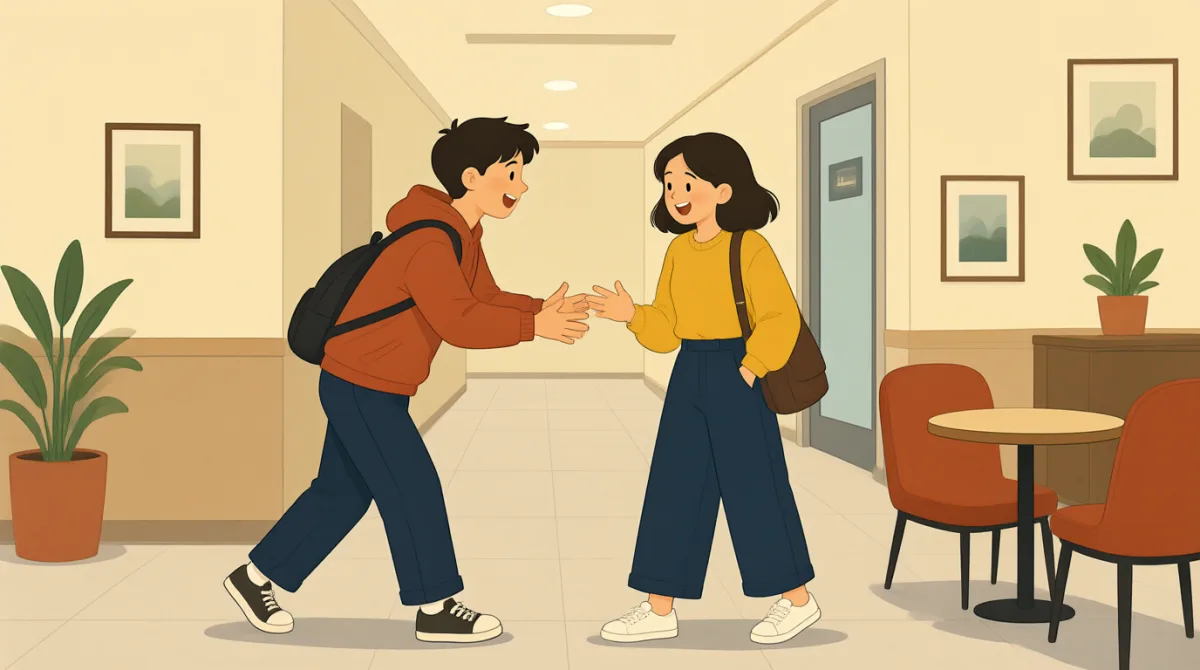

Oh! I'm so sorry! Are you okay?
ओह! मुझे बहुत माफ़ कीजिए! आप ठीक हैं?

Oh, I'm fine, thanks. Just a little surprised.
ओह, मैं ठीक हूँ, शुक्रिया। बस थोड़ा चौंक गई।
My apologies, I wasn't looking where I was going.
माफ़ कीजिए, मैं ध्यान नहीं दे रहा था कि कहाँ जा रहा हूँ।
No worries! It happens.
कोई बात नहीं! ऐसा हो जाता है।
Still, my fault. Have a good day!
फिर भी, गलती मेरी थी। आपका दिन अच्छा रहे!
You too!
आपका भी!
शब्दावली5
- sorryमाफ़ कीजिए
A common word to express regret or apology for a small mistake, like bumping into someone. Use it right after the accident to show politeness.
छोटी-सी गलती के लिए अफ़सोस जताने या माफ़ी माँगने का यह आम शब्द है, जैसे किसी से टकरा जाना। विनम्रता दिखाने के लिए हादसे के तुरंत बाद इसका इस्तेमाल करें।
- apologiesमाफ़ी
A more formal way to say 'sorry' for your mistake. It's useful in casual situations to sound sincere without being too casual.
अपनी गलती के लिए 'sorry' कहने का यह थोड़ा औपचारिक तरीका है। अनौपचारिक स्थितियों में भी अपनी बात को सच्चा और विनम्र दिखाने के लिए इसका इस्तेमाल कर सकते हैं।
- surprisedचौंका हुआ
Means feeling shocked or unexpected. In apologies, it describes how the other person might feel after a bump, helping to acknowledge their reaction.
इसका मतलब है अचानक हैरान या चकित महसूस करना। माफ़ी के संदर्भ में, यह बताता है कि टकराने के बाद दूसरे व्यक्ति को कैसा महसूस हो सकता है और आप उनकी प्रतिक्रिया को समझते हैं।
- worriesचिंताएँ
Short for 'no worries,' meaning it's not a problem and no need to feel bad. It's a friendly way to accept an apology and move on.
'no worries' में इस शब्द का मतलब है कि कोई समस्या नहीं है और बुरा महसूस करने की ज़रूरत नहीं। माफ़ी स्वीकार करके बात आगे बढ़ाने का यह दोस्ताना तरीका है।
- faultगलती
Means the responsibility for a mistake. Admitting 'my fault' shows you take blame, which is polite in English culture for small errors.
इसका मतलब है किसी गलती की ज़िम्मेदारी। 'my fault' मानने से पता चलता है कि आप अपनी गलती स्वीकार कर रहे हैं। छोटी-मोटी गलतियों के लिए अंग्रेज़ी में ऐसा करना विनम्र माना जाता है।
मुख्य वाक्य5
- 1
Oh! I'm so sorry! Are you okay?
ओह! मुझे बहुत माफ़ कीजिए! आप ठीक हैं?
This is a quick apology with a question to check on the other person. 'So sorry' adds emphasis; use it immediately after a minor accident to show concern. The grammar is simple: exclamation for surprise, then a yes/no question.
यह तुरंत माफ़ी माँगने के साथ दूसरे व्यक्ति का हाल पूछने का तरीका है। 'So sorry' से माफ़ी पर ज़ोर आता है; छोटी दुर्घटना के तुरंत बाद चिंता जताने के लिए इसका इस्तेमाल करें। वाक्य की बनावट सरल है: पहले हैरानी जताने वाला उद्गार, फिर हाँ-या-नहीं में जवाब देने वाला सवाल।
- 2
I'm fine, thanks. Just a little surprised.
मैं ठीक हूँ, शुक्रिया। बस थोड़ा चौंक गई।
A polite response to an apology, reassuring the person you're okay. 'Just a little' softens the feeling; useful for everyday interactions. It uses basic sentence structure with 'thanks' for gratitude.
माफ़ी के जवाब में यह विनम्रता से बताता है कि आप ठीक हैं। 'Just a little' भावना को हल्का करके कहता है; रोज़मर्रा की बातचीत में यह काम आता है। इसमें वाक्य की सरल बनावट के साथ आभार जताने के लिए 'thanks' है।
- 3
My apologies, I wasn't looking where I was going.
माफ़ कीजिए, मैं ध्यान नहीं दे रहा था कि कहाँ जा रहा हूँ।
Explains the mistake while apologizing. 'My apologies' is formal; the past continuous 'wasn't looking' describes the action. Use this to give a reason without excuses in casual apologies.
इस वाक्य में माफ़ी माँगते हुए गलती की वजह बताई जाती है। 'My apologies' थोड़ा औपचारिक है; भूतकाल में जारी काम बताने वाला 'wasn't looking' यहाँ ध्यान न देने की बात कहता है। अनौपचारिक माफ़ी में बिना बहाना बनाए वजह बताने के लिए इसका इस्तेमाल करें।
- 4
No worries! It happens.
कोई बात नहीं! ऐसा हो जाता है।
A casual way to forgive and end the conversation positively. 'No worries' means don't worry about it; 'it happens' shows it's common. Great for intermediate learners to respond kindly in public spaces.
माफ़ी स्वीकार करके बातचीत को अच्छे ढंग से खत्म करने का यह सहज तरीका है। 'No worries' का मतलब है कि चिंता करने की बात नहीं; 'it happens' बताता है कि ऐसा आम तौर पर हो जाता है। सार्वजनिक जगहों पर किसी को प्यार से जवाब देने के लिए यह बढ़िया वाक्य है।
- 5
Still, my fault. Have a good day!
फिर भी, गलती मेरी थी। आपका दिन अच्छा रहे!
Insists on taking blame politely, then ends nicely. 'Still' means even so; 'my fault' admits error. Use this to wrap up an apology warmly, with a common greeting.
इसमें विनम्रता से अपनी गलती की ज़िम्मेदारी ली जाती है और फिर अच्छे ढंग से विदा ली जाती है। 'Still' का मतलब है फिर भी; 'my fault' से गलती स्वीकार की जाती है। माफ़ी की बात को गर्मजोशी से खत्म करने के लिए, दिन की शुभकामना देने वाले इस आम वाक्य का इस्तेमाल करें।