Interrupting Someone Briefly
बीच में थोड़ी देर के लिए टोकना
Someone unintentionally interrupts another person mid-sentence or in the middle of a conversation and quickly apologizes for the interruption.
कोई अनजाने में किसी की बात या बातचीत के बीच में बोल पड़ता है और तुरंत टोकने के लिए माफ़ी माँगता है।
संवाद7
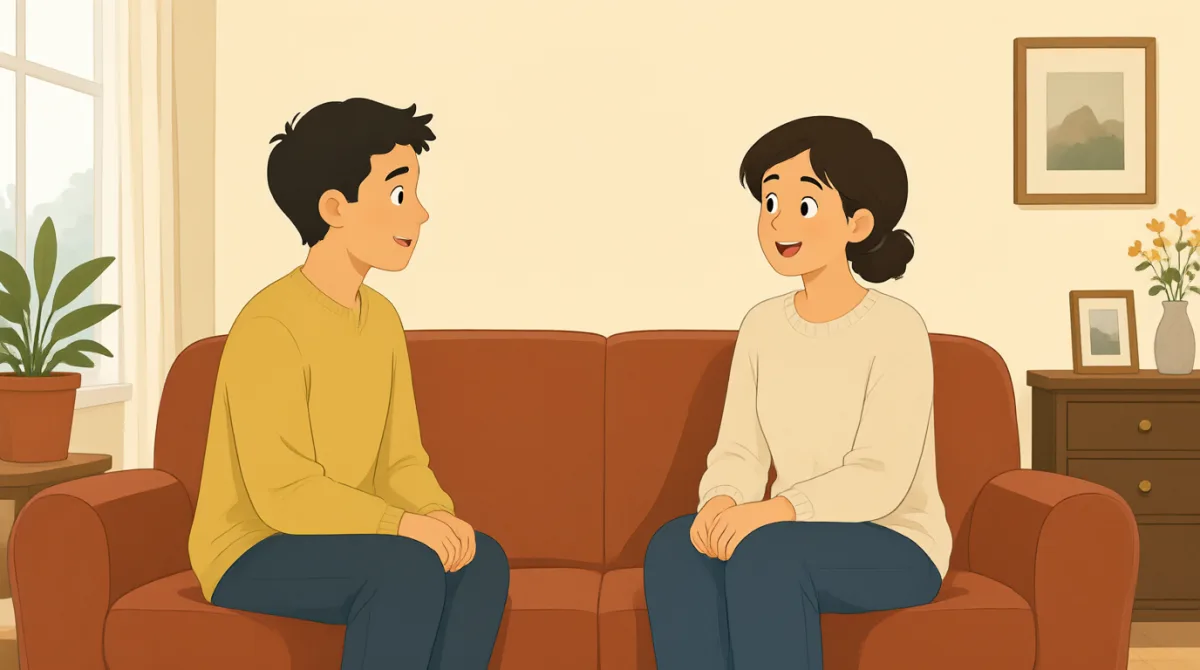

So, I was thinking about...
तो, मैं सोच रही थी कि...

Excuse me, sorry to interrupt. Was that for me?
सुनो, माफ़ करना, बीच में टोक रही हूँ। क्या तुम मुझसे कह रही थीं?
Oh, no, no, I was just talking to myself actually. What's up?
अरे नहीं, नहीं, मैं तो बस खुद से बात कर रही थी। क्या हुआ?
My bad. I thought you were addressing me. I just wanted to ask if you've seen my keys?
मेरी गलती। मुझे लगा तुम मुझसे बात कर रही थीं। बस पूछना था कि तुम्हें मेरी चाबियाँ दिखी हैं क्या?
Keys? No, I haven't. Sorry.
चाबियाँ? नहीं, मुझे नहीं दिखीं। माफ़ करना।
No worries. Thanks anyway. Sorry again for cutting you off.
कोई बात नहीं। फिर भी शुक्रिया। तुम्हारी बात बीच में काटने के लिए फिर से माफ़ करना।
No problem at all!
अरे, कोई बात नहीं!
शब्दावली6
- interruptबीच में टोकना
To interrupt means to stop someone from speaking or doing something, often by speaking yourself. Use it when you accidentally break into a conversation.
"interrupt" का मतलब है किसी को बोलने या कुछ करने से रोक देना, अक्सर खुद बोलकर। बातचीत में गलती से बीच में बोल पड़ने पर इस शब्द का इस्तेमाल करें।
- excuse meमाफ़ कीजिए
'Excuse me' is a polite phrase to get someone's attention or apologize for a small interruption. It's very common in everyday English.
"Excuse me" किसी का ध्यान खींचने या थोड़ी देर के लिए बीच में टोकने पर माफ़ी माँगने का विनम्र तरीका है। रोज़मर्रा की अंग्रेज़ी में यह बहुत आम है।
- my badमेरी गलती
'My bad' is an informal way to apologize for a small mistake, like misunderstanding something. It's casual and used among friends.
"My bad" छोटी-सी गलती के लिए माफ़ी माँगने का अनौपचारिक तरीका है, जैसे किसी बात को गलत समझ लेना। दोस्तों के बीच इसका इस्तेमाल होता है।
- addressingकिसी से सीधे बात करना
Addressing someone means speaking directly to them. Use it when you think a comment is meant for you.
किसी को "addressing" करने का मतलब है उससे सीधे बात करना। जब आपको लगे कि कोई बात आपसे कही जा रही है, तब इस शब्द का इस्तेमाल करें।
- cutting offबात बीच में काटना
Cutting someone off means interrupting them suddenly, like stopping their sentence. It's a phrasal verb for brief apologies in conversations.
"Cutting someone off" का मतलब है किसी की बात अचानक बीच में रोक देना, जैसे उसका वाक्य पूरा न होने देना। बातचीत में थोड़ी देर के लिए माफ़ी माँगते समय इस phrasal verb का इस्तेमाल होता है।
- no worriesकोई बात नहीं
'No worries' means 'it's okay' or 'don't worry about it.' It's a relaxed way to accept an apology.
"No worries" का मतलब है कि कोई बात नहीं या इसकी चिंता मत करो। माफ़ी स्वीकार करने का यह सहज तरीका है।
मुख्य वाक्य5
- 1
Excuse me, sorry to interrupt.
सुनो, माफ़ करना, बीच में टोक रही हूँ।
This sentence is a polite way to apologize for breaking into someone's talk. It's useful for brief interruptions; 'excuse me' gets attention, and 'sorry to interrupt' shows regret. Use it in casual or formal settings.
किसी की बात के बीच में बोल पड़ने पर माफ़ी माँगने का यह विनम्र तरीका है। थोड़ी देर के लिए टोकने में यह काम आता है; "excuse me" ध्यान खींचता है और "sorry to interrupt" अफ़सोस जताता है। इसे दोस्तों के साथ या औपचारिक माहौल में इस्तेमाल कर सकते हैं।
- 2
My bad. I thought you were addressing me.
मेरी गलती। मुझे लगा तुम मुझसे बात कर रही थीं।
'My bad' admits a small error informally. The full sentence explains the mistake. It's practical for quick apologies when you misunderstand; no complex grammar, just simple past tense.
"My bad" छोटी-सी गलती मानने का अनौपचारिक तरीका है। पूरा वाक्य गलती की वजह बताता है। कुछ गलत समझ लेने पर तुरंत माफ़ी माँगने के लिए यह उपयोगी है; इसमें कोई पेचीदा व्याकरण नहीं, बस simple past tense है।
- 3
No worries. Thanks anyway. Sorry again for cutting you off.
कोई बात नहीं। फिर भी शुक्रिया। तुम्हारी बात बीच में काटने के लिए फिर से माफ़ करना।
This combines acceptance ('no worries') with gratitude and another apology. Useful for polite conversations; 'anyway' softens the response. Practice for smooth, natural English flow.
इसमें माफ़ी स्वीकार करना ("no worries"), शुक्रिया कहना और दोबारा माफ़ी माँगना शामिल है। विनम्र बातचीत में यह उपयोगी है; "anyway" जवाब को थोड़ा नरम बनाता है। सहज और स्वाभाविक अंग्रेज़ी बोलने के लिए इसका अभ्यास करें।
- 4
No problem at all!
अरे, कोई बात नहीं!
A friendly way to say an apology is accepted. It's emphatic with 'at all' for extra reassurance. Use it to end interactions positively; simple structure, no special grammar.
माफ़ी स्वीकार करने का यह दोस्ताना तरीका है। "at all" जोड़ने से बात पर ज़ोर आता है और सामने वाले को भरोसा मिलता है। बातचीत को अच्छे ढंग से खत्म करने के लिए इसका इस्तेमाल करें; इसकी बनावट आसान है और इसमें कोई खास व्याकरण नहीं है।
- 5
I was just talking to myself actually.
दरअसल, मैं तो बस खुद से बात कर रही थी।
This clarifies a misunderstanding casually. 'Actually' adds emphasis or correction. Helpful for explaining situations; present continuous tense shows ongoing action.
यह वाक्य अनौपचारिक ढंग से गलतफ़हमी दूर करता है। "Actually" बात को ज़ोर देकर कहता है या सुधारता है। हालात समझाने में यह काम आता है; present continuous tense से पता चलता है कि काम उसी समय जारी था।