Blocking Someone's Way Momentarily
暫時擋住別人的路
Someone unintentionally blocks a doorway or path for a brief moment, preventing another person from passing, and apologizes upon realizing.
無意中暫時擋住了門口或通道,阻礙了別人透過,意識到後立即道歉。
對話4
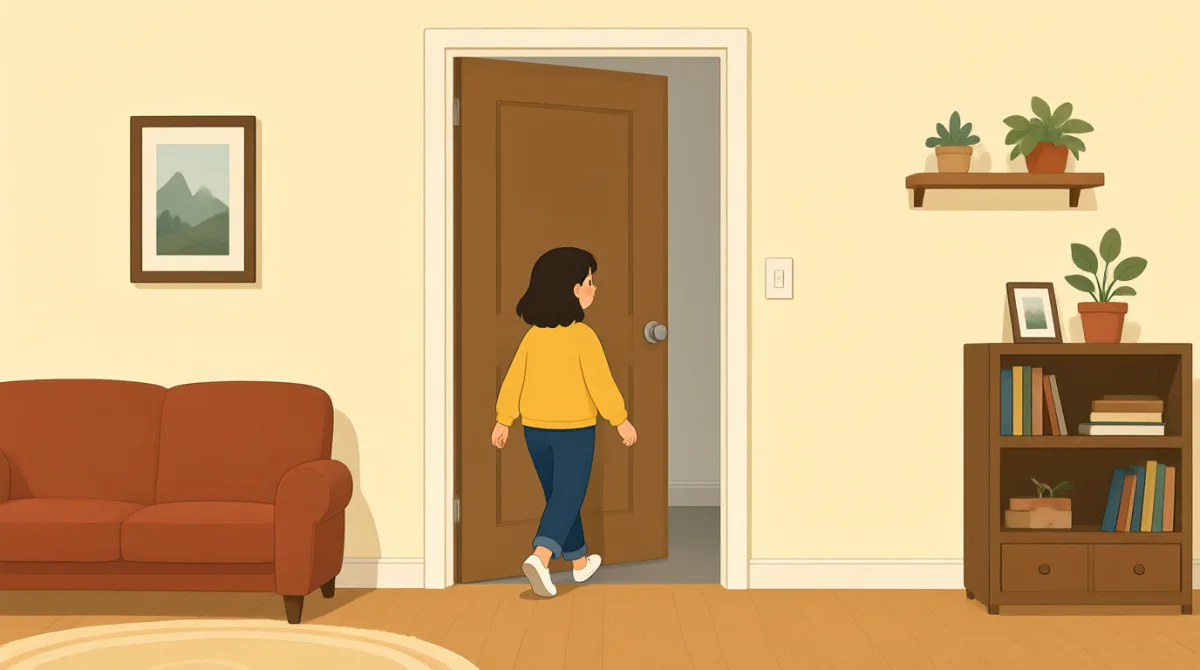

Oh, excuse me! I'm so sorry, I totally blocked your way.
哦,對不起!真抱歉,我完全擋住你的路了。

No worries at all! I just needed to get by.
沒關係!我只是想過去。
My bad. I wasn't paying attention.
我的錯。我沒注意看。
It happens! No problem.
常有的事!沒問題。
詞彙7
- excuse me不好意思
A polite phrase used to apologize for accidentally getting in someone's way or interrupting them briefly.
這是一個禮貌用語,可以用來為不小心擋了別人的路或短暫打斷別人而道歉。
- blocked擋住了
Past tense of 'block,' meaning to obstruct or stop someone from passing through a path or doorway.
'blocked' 是 'block' 的過去式,意思是擋住或阻止別人透過一條路或門口。
- no worries沒關係
An informal way to say 'don't worry' or 'it's okay,' used to reassure someone that a small mistake is not a problem.
這是一種非正式的說法,表示“不用擔心”或“沒關係”,用來安慰對方,告訴對方這點小失誤不礙事。
- get by過去
A phrasal verb meaning to pass through or move past something or someone, often used in everyday situations like walking.
'get by' 是一個短語動詞,意思是從某人或某物旁邊經過或穿過,常用於走路等日常情境。
- my bad我的錯
Slang for admitting a mistake, short for 'my fault' or 'it's my mistake,' common in casual conversations.
這是承認自己犯錯的俚語,相當於 'my fault' 或 'it's my mistake',常用於輕鬆隨意的對話中。
- paying attention留意
Being focused or noticing what's happening around you; the opposite is being distracted.
指專心觀察或注意周圍發生的事;反義情況就是分心。
- it happens這種事難免
A casual expression meaning that small accidents or mistakes are common and not unusual.
這是一種隨意的說法,意思是小意外或小失誤很常見,並不稀奇。
關鍵句4
- 1
Oh, excuse me! I'm so sorry, I totally blocked your way.
哦,不好意思!真抱歉,我完全擋住你的路了。
This sentence is a polite apology for accidentally obstructing someone's path. 'Totally' adds emphasis to the mistake, making it sound sincere. Use it in everyday situations like bumping into someone or blocking a door; it's useful for intermediate learners to practice natural apology patterns.
這句話是為不小心擋住別人的路而禮貌道歉。'Totally' 用來強調自己的失誤,讓道歉聽起來更真誠。可以在撞到別人或擋住門口等日常情境中使用,適合練習自然的道歉表達。
- 2
No worries at all! I just needed to get by.
完全沒關係!我只是想過去。
A reassuring response to an apology, meaning it's not a big deal. 'No worries at all' is an idiomatic way to forgive quickly, and 'get by' shows simple movement. This is practical for responding kindly in minor accident scenarios, teaching informal reassurance.
這是一種安慰對方的回應,表示這不是什麼大事。'No worries at all' 是一種習慣說法,表示很快就原諒對方;'get by' 則表示簡單地從旁邊經過。這種說法適合在小意外後友善地回應別人,也能幫你學習非正式的安慰表達。
- 3
My bad. I wasn't paying attention.
我的錯。我剛才沒留意。
A casual admission of fault. 'My bad' is slang for taking responsibility, and 'wasn't paying attention' explains the reason using past continuous tense for ongoing action. Use this in informal settings to apologize briefly; it helps learners with slang and tense usage.
這是一種隨意的認錯方式。'My bad' 是表示承擔責任的俚語,而 'wasn't paying attention' 則用過去進行時解釋原因,表示當時沒有留意。可以在非正式場合簡短道歉,藉此學習俚語和時態用法。
- 4
It happens! No problem.
這種事難免!沒關係。
This dismisses the apology positively. 'It happens' uses present simple for general truths about common events, and 'no problem' is a simple way to say everything is fine. Ideal for ending conversations politely; teaches how to respond to apologies without making the other person feel bad.
這句話以積極的方式帶過對方的道歉。'It happens' 用一般現在時表達常見情況,'no problem' 則簡單地表示一切都好。適合用來友好地結束對話,也能幫你學習如何回應道歉,讓對方不覺得難為情。