Asking About the Last Ferry Back
پرسیدن دربارهٔ آخرین کشتی برگشت
Before boarding, Emma asks when the last ferry back leaves. Jack helps her check the return time.
اما پیش از سوارشدن میپرسد آخرین کشتی برگشت چه ساعتی حرکت میکند. جک کمک میکند زمان برگشت را بررسی کند.
گفتوگو8
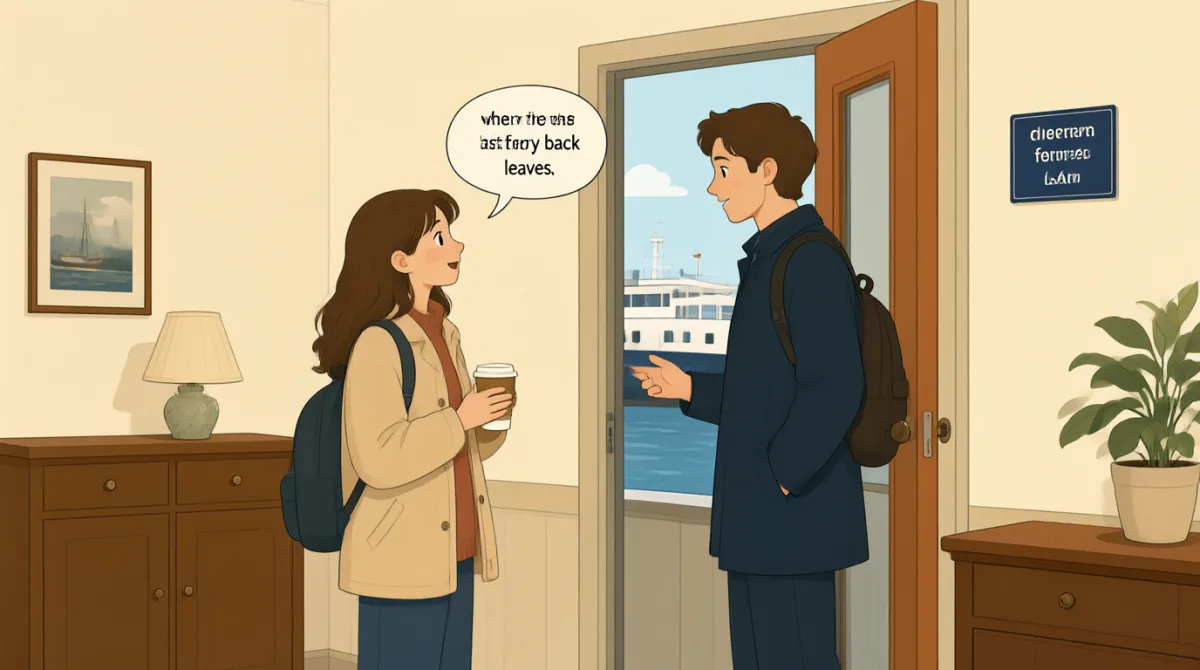

Before we get on, what time is the last ferry back to the mainland?
قبل از اینکه سوار بشیم، آخرین کشتی به سمت خشکی اصلی چه ساعتی برمیگرده؟

Let me check the schedule. I think it leaves around six.
بذار برنامهٔ حرکت رو بررسی کنم. فکر کنم حدود ساعت شش حرکت میکنه.
Could we miss it if we stay for dinner?
اگه برای شام بمونیم، ممکنه ازش جا بمونیم؟
The schedule says the last ferry leaves at six thirty.
طبق برنامهٔ حرکت، آخرین کشتی ساعت ششونیم حرکت میکنه.
Good. How early should we get back to the dock?
خوبه. چقدر زودتر باید به اسکله برگردیم؟
Let's get there by six. The line can get long.
بیایم تا ساعت شش برسیم. ممکنه صف طولانی بشه.
I'll set an alarm so we don't lose track of time.
زنگ هشدار میذارم که گذر زمان از دستمون در نره.
Good idea. Let's take a photo of the schedule, too.
فکر خوبیه. از برنامهٔ حرکت هم یه عکس بگیریم.
واژگان8
- get onسوار شدن
To get on a ferry means to board it. You can also use this phrase for buses and trains.
«get on» یعنی سوار کشتی شدن. این عبارت را برای اتوبوس و قطار هم به کار میبریم.
- the last ferry backآخرین کشتی برگشت
This means the final ferry that returns to the place you started from. You can say, “What time is the last bus back?”
یعنی آخرین کشتیای که به جایی که از آن راه افتادهاید برمیگردد. میتوانید بگویید: “What time is the last bus back?” (آخرین اتوبوس برگشت چه ساعتی حرکت میکند؟)
- mainlandخشکی اصلی
The mainland is the large main area of land, not an island. Here, it is where Emma and Jack are returning.
«mainland» به بخش اصلی و وسیع خشکی گفته میشود، نه یک جزیره. اینجا منظور جایی است که اما و جک به آن برمیگردند.
- scheduleبرنامهٔ حرکت
A schedule shows the times when ferries leave. You can check a schedule to plan a trip.
«schedule» زمان حرکت کشتیها را نشان میدهد. میتوانید برای برنامهریزی سفر، برنامهٔ حرکت را بررسی کنید.
- get back toبرگشتن به
To get back to a place means to return there. You can say, “We should get back to the hotel by five.”
«get back to» یعنی به جایی برگشتن. میتوانید بگویید: “We should get back to the hotel by five.” (باید تا ساعت پنج به هتل برگردیم.)
- the line can get longممکن است صف طولانی شود
This means many people may be waiting in line. “Can” describes something that may happen.
یعنی ممکن است افراد زیادی در صف منتظر باشند. «can» برای چیزی به کار میرود که ممکن است اتفاق بیفتد.
- set an alarmزنگ هشدار گذاشتن
To set an alarm means to arrange for a phone or clock to make a sound at a certain time. It can help you remember when to do something.
«set an alarm» یعنی گوشی یا ساعت را طوری تنظیم کردن که در زمان مشخصی صدا بدهد. این کار میتواند کمک کند زمان انجام کاری را به یاد داشته باشید.
- lose track of timeاز گذر زمان غافل شدن
To lose track of time means to stop noticing how much time has passed. You might do this when you are having fun.
«lose track of time» یعنی دیگر متوجه نشدن که چقدر زمان گذشته است. ممکن است وقتی سرگرم هستید این اتفاق برایتان بیفتد.
جملات کلیدی7
- 1
Before we get on, what time is the last ferry back to the mainland?
قبل از اینکه سوار بشیم، آخرین کشتی به سمت خشکی اصلی چه ساعتی برمیگرده؟
Use this to ask when the final ferry returns. You can replace “ferry” with another kind of transport, such as “bus” or “train.”
از این جمله برای پرسیدن زمان برگشت آخرین کشتی استفاده کنید. میتوانید «ferry» را با نوع دیگری از وسیلهٔ نقلیه، مثل «bus» یا «train»، عوض کنید.
- 2
Let me check the schedule.
بذار برنامهٔ حرکت رو بررسی کنم.
This is a useful way to say you will look up information before answering. You can use it when checking a timetable or appointment.
این راه کاربردیای است برای اینکه بگویید پیش از جواب دادن، اطلاعاتی را بررسی میکنید. میتوانید هنگام بررسی جدول حرکت یا وقت قرار از آن استفاده کنید.
- 3
Could we miss it if we stay for dinner?
اگه برای شام بمونیم، ممکنه ازش جا بمونیم؟
Use “Could we… if…?” to ask whether a possible choice may cause a problem. You can change the activity, for example, “Could we miss it if we stop for coffee?”
از “Could we… if…?” برای پرسیدن دربارهٔ احتمال اینکه انتخابی باعث مشکل شود استفاده کنید. میتوانید فعالیت را عوض کنید؛ مثلاً بگویید: “Could we miss it if we stop for coffee?” (اگر برای قهوه توقف کنیم، ممکن است ازش جا بمانیم؟)
- 4
How early should we get back to the dock?
چقدر زودتر باید به اسکله برگردیم؟
This asks how much time to allow before the ferry leaves. You can use “How early should we get back to…?” with other places, like a station or airport.
این جمله میپرسد پیش از حرکت کشتی چقدر زودتر باید برگردید. میتوانید از “How early should we get back to…?” برای جاهای دیگری مثل ایستگاه یا فرودگاه هم استفاده کنید.
- 5
Let's get there by six.
بیایم تا ساعت شش برسیم.
Use “Let’s” to suggest doing something together, and “by six” means no later than six. You can change the time to make a plan.
از “Let’s” برای پیشنهاد انجام کاری با هم استفاده کنید و “by six” یعنی حداکثر تا ساعت شش. برای برنامهریزی میتوانید زمان را عوض کنید.
- 6
I'll set an alarm so we don't lose track of time.
زنگ هشدار میذارم که گذر زمان از دستمون در نره.
This explains a plan and its purpose: “so” connects the action to the result you want. You can use it to talk about setting a reminder for any important event.
این جمله یک برنامه و هدف آن را بیان میکند: “so” کار را به نتیجهای که میخواهید وصل میکند. برای گفتن اینکه میخواهید برای هر رویداد مهمی یادآور تنظیم کنید، میتوانید از آن استفاده کنید.
- 7
Let's take a photo of the schedule, too.
از برنامهٔ حرکت هم یه عکس بگیریم.
Use this sentence to suggest taking a picture for later. “Too” means you want to do this in addition to something else.
از این جمله برای پیشنهاد عکس گرفتن برای استفادهٔ بعدی کمک بگیرید. “Too” یعنی میخواهید این کار را علاوه بر کار دیگری انجام دهید.