Asking About the Last Ferry Back
Son Feribotun Dönüş Saatini Sorma
Before boarding, Emma asks when the last ferry back leaves. Jack helps her check the return time.
Feribota binmeden önce Emma, dönüş yapan son feribotun ne zaman kalktığını sorar. Jack dönüş saatini kontrol etmesine yardım eder.
Diyalog8
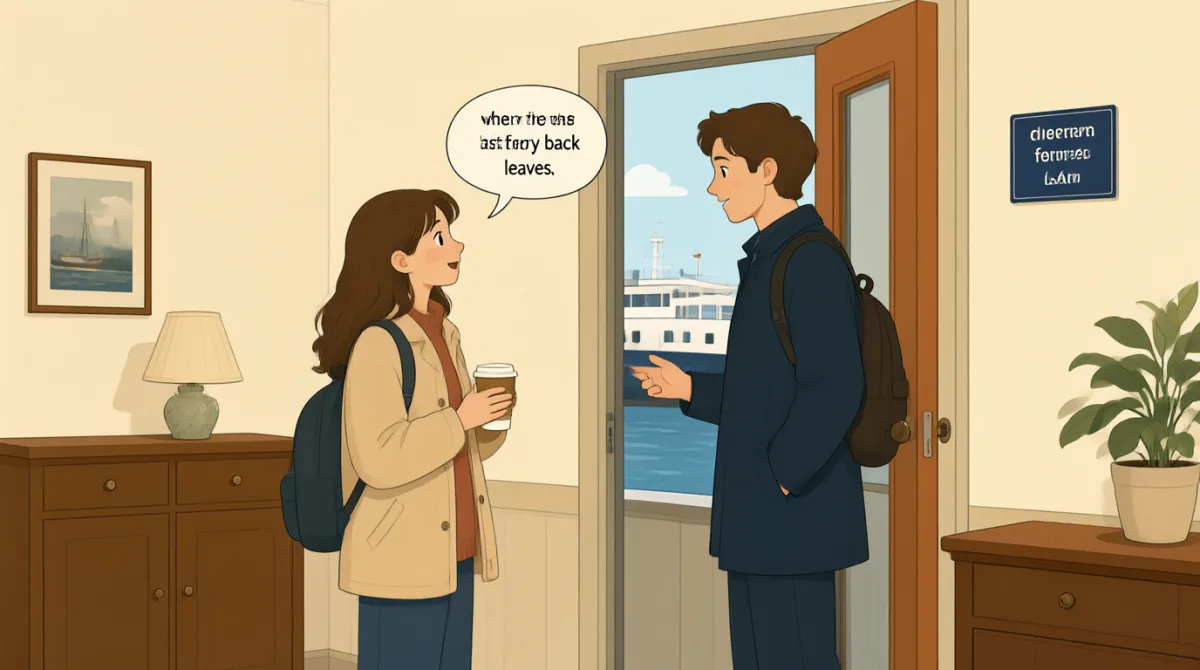

Before we get on, what time is the last ferry back to the mainland?
Binmeden önce, ana karaya dönen son feribot saat kaçta?

Let me check the schedule. I think it leaves around six.
Bir sefer tarifesine bakayım. Sanırım altı civarında kalkıyor.
Could we miss it if we stay for dinner?
Akşam yemeği için kalırsak feribotu kaçırabilir miyiz?
The schedule says the last ferry leaves at six thirty.
Sefer tarifesinde son feribotun altı buçukta kalktığı yazıyor.
Good. How early should we get back to the dock?
İyi. İskeleye ne kadar erken dönmeliyiz?
Let's get there by six. The line can get long.
Saat altıya kadar oraya gidelim. Sıra uzayabilir.
I'll set an alarm so we don't lose track of time.
Zamanı unutmamak için alarm kuracağım.
Good idea. Let's take a photo of the schedule, too.
İyi fikir. Sefer tarifesinin de fotoğrafını çekelim.
Kelime Bilgisi8
- get onbinmek
To get on a ferry means to board it. You can also use this phrase for buses and trains.
“get on”, feribota binmek anlamına gelir. Bu ifadeyi otobüs ve tren için de kullanabilirsin.
- the last ferry backdönüş yapan son feribot
This means the final ferry that returns to the place you started from. You can say, “What time is the last bus back?”
Bu ifade, yola çıktığın yere dönen son feribot anlamına gelir. “What time is the last bus back?” (Dönüş yapan son otobüs saat kaçta?) diye de sorabilirsin.
- mainlandana kara
The mainland is the large main area of land, not an island. Here, it is where Emma and Jack are returning.
“mainland”, bir ada olmayan geniş ana kara parçasıdır. Burada Emma ve Jack'in döneceği yeri anlatır.
- schedulesefer tarifesi
A schedule shows the times when ferries leave. You can check a schedule to plan a trip.
“schedule”, feribotların kalkış saatlerini gösteren sefer tarifesidir. Bir yolculuğu planlamak için tarifeye bakabilirsin.
- get back togeri dönmek
To get back to a place means to return there. You can say, “We should get back to the hotel by five.”
“get back to”, bir yere geri dönmek anlamına gelir. “We should get back to the hotel by five.” (Saat beşe kadar otele dönmeliyiz.) diyebilirsin.
- the line can get longsıra uzayabilir
This means many people may be waiting in line. “Can” describes something that may happen.
Bu, sırada bekleyen çok kişi olabileceği anlamına gelir. “Can”, bir şeyin olma ihtimalini anlatır.
- set an alarmalarm kurmak
To set an alarm means to arrange for a phone or clock to make a sound at a certain time. It can help you remember when to do something.
“set an alarm”, telefonun ya da saatin belirli bir saatte ses çıkarmasını ayarlamak anlamına gelir. Bir şeyi yapman gerektiğini hatırlamana yardımcı olabilir.
- lose track of timezamanın nasıl geçtiğini anlamamak
To lose track of time means to stop noticing how much time has passed. You might do this when you are having fun.
“lose track of time”, ne kadar zaman geçtiğini fark etmemek anlamına gelir. Eğlenirken zamanın nasıl geçtiğini anlamayabilirsin.
Önemli Cümleler7
- 1
Before we get on, what time is the last ferry back to the mainland?
Binmeden önce, ana karaya dönen son feribot saat kaçta?
Use this to ask when the final ferry returns. You can replace “ferry” with another kind of transport, such as “bus” or “train.”
Son feribotun ne zaman döndüğünü sormak için bu cümleyi kullan. “ferry” yerine “bus” (otobüs) ya da “train” (tren) gibi başka bir ulaşım aracı söyleyebilirsin.
- 2
Let me check the schedule.
Bir sefer tarifesine bakayım.
This is a useful way to say you will look up information before answering. You can use it when checking a timetable or appointment.
Bu, cevap vermeden önce bilgiye bakacağını söylemenin kullanışlı bir yoludur. Sefer saatlerini ya da randevunu kontrol ederken kullanabilirsin.
- 3
Could we miss it if we stay for dinner?
Akşam yemeği için kalırsak feribotu kaçırabilir miyiz?
Use “Could we… if…?” to ask whether a possible choice may cause a problem. You can change the activity, for example, “Could we miss it if we stop for coffee?”
“Could we… if…?” kalıbını, olası bir seçimin sorun yaratıp yaratmayacağını sormak için kullan. Etkinliği değiştirerek “Could we miss it if we stop for coffee?” (Kahve içmek için durursak kaçırabilir miyiz?) diyebilirsin.
- 4
How early should we get back to the dock?
İskeleye ne kadar erken dönmeliyiz?
This asks how much time to allow before the ferry leaves. You can use “How early should we get back to…?” with other places, like a station or airport.
Bu soru, feribot kalkmadan ne kadar önce orada olmanız gerektiğini sorar. “How early should we get back to…?” kalıbını istasyon ya da havaalanı gibi başka yerlerle de kullanabilirsin.
- 5
Let's get there by six.
Saat altıya kadar oraya gidelim.
Use “Let’s” to suggest doing something together, and “by six” means no later than six. You can change the time to make a plan.
“Let’s” birlikte bir şey yapmayı önermek için kullanılır; “by six” ise en geç saat altıya kadar demektir. Plan yaparken saati değiştirebilirsin.
- 6
I'll set an alarm so we don't lose track of time.
Zamanı unutmamak için alarm kuracağım.
This explains a plan and its purpose: “so” connects the action to the result you want. You can use it to talk about setting a reminder for any important event.
Bu cümle bir planı ve amacını anlatır: “so”, yapılan eylemi istenen sonuca bağlar. Önemli bir etkinlik için hatırlatıcı kurmaktan söz ederken kullanabilirsin.
- 7
Let's take a photo of the schedule, too.
Sefer tarifesinin de fotoğrafını çekelim.
Use this sentence to suggest taking a picture for later. “Too” means you want to do this in addition to something else.
Daha sonra bakmak üzere fotoğraf çekmeyi önermek için bu cümleyi kullan. “Too”, başka bir şeye ek olarak bunu da yapmak istediğini belirtir.