Asking About the Last Ferry Back
돌아가는 마지막 페리 시간 묻기
Before boarding, Emma asks when the last ferry back leaves. Jack helps her check the return time.
배에 타기 전, 에마가 돌아가는 마지막 페리가 몇 시에 출발하는지 물어봐요. 잭이 돌아가는 시간을 확인해 줘요.
대화8
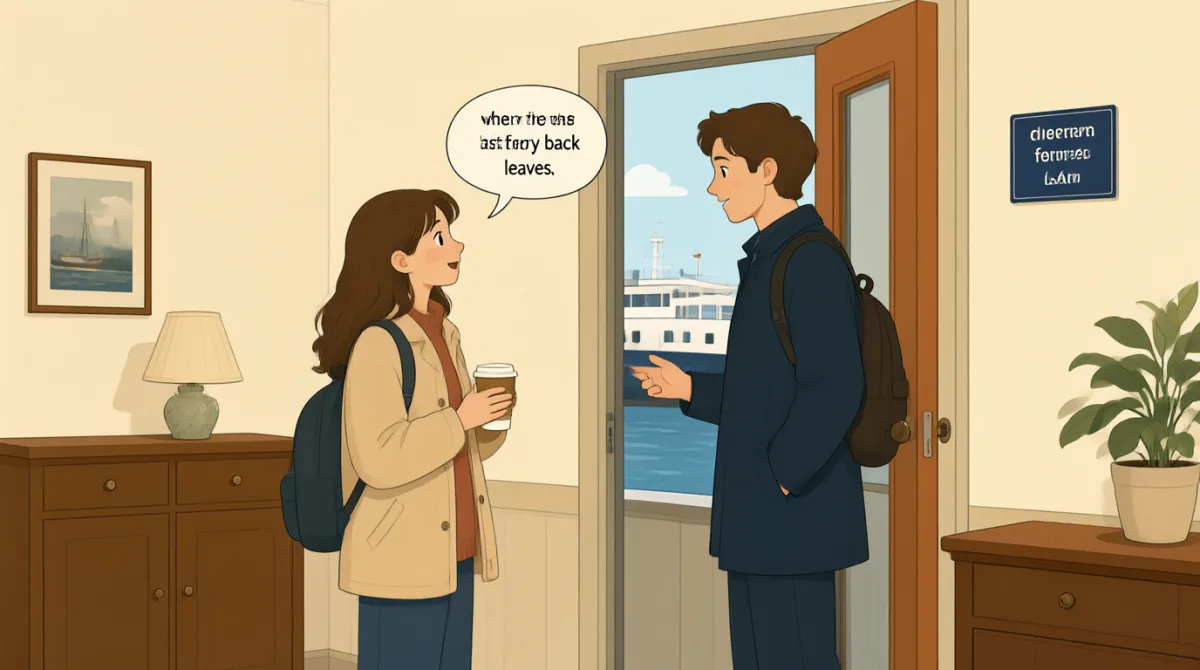

Before we get on, what time is the last ferry back to the mainland?
우리 타기 전에, 본토로 돌아가는 마지막 페리는 몇 시야?

Let me check the schedule. I think it leaves around six.
시간표 확인해 볼게. 한 6시쯤 출발하는 것 같아.
Could we miss it if we stay for dinner?
저녁 먹고 있으면 놓칠 수도 있을까?
The schedule says the last ferry leaves at six thirty.
시간표에는 마지막 페리가 6시 30분에 출발한다고 나와 있어.
Good. How early should we get back to the dock?
다행이다. 부두에 얼마나 일찍 돌아가야 해?
Let's get there by six. The line can get long.
6시까지 가자. 줄이 길어질 수도 있어.
I'll set an alarm so we don't lose track of time.
시간 가는 걸 놓치지 않게 알람 맞춰 둘게.
Good idea. Let's take a photo of the schedule, too.
좋은 생각이야. 시간표 사진도 찍어 두자.
어휘8
- get on타다
To get on a ferry means to board it. You can also use this phrase for buses and trains.
“get on”은 페리에 올라탄다는 뜻이에요. 버스나 기차를 탈 때도 쓸 수 있어요.
- the last ferry back돌아가는 마지막 페리
This means the final ferry that returns to the place you started from. You can say, “What time is the last bus back?”
“the last ferry back”은 처음 출발한 곳으로 돌아가는 마지막 페리를 뜻해요. “What time is the last bus back?”(돌아가는 마지막 버스는 몇 시예요?)처럼 말할 수도 있어요.
- mainland본토
The mainland is the large main area of land, not an island. Here, it is where Emma and Jack are returning.
“mainland”는 섬이 아닌 넓은 본토를 말해요. 여기서는 에마와 잭이 돌아가는 곳이에요.
- schedule시간표
A schedule shows the times when ferries leave. You can check a schedule to plan a trip.
“schedule”에는 페리가 출발하는 시간이 나와 있어요. 여행 계획을 세울 때 시간표를 확인할 수 있어요.
- get back to다시 돌아가다
To get back to a place means to return there. You can say, “We should get back to the hotel by five.”
“get back to”는 어떤 장소로 돌아간다는 뜻이에요. “We should get back to the hotel by five.”(5시까지 호텔로 돌아가야 해.)라고 말할 수 있어요.
- the line can get long줄이 길어질 수도 있다
This means many people may be waiting in line. “Can” describes something that may happen.
“the line can get long”은 줄을 서서 기다리는 사람이 많아질 수도 있다는 뜻이에요. “can”은 일어날 가능성이 있는 일을 나타내요.
- set an alarm알람을 맞추다
To set an alarm means to arrange for a phone or clock to make a sound at a certain time. It can help you remember when to do something.
“set an alarm”은 휴대폰이나 시계가 정해진 시간에 소리를 내도록 설정한다는 뜻이에요. 무언가를 해야 할 때를 기억하는 데 도움이 돼요.
- lose track of time시간 가는 줄 모르다
To lose track of time means to stop noticing how much time has passed. You might do this when you are having fun.
“lose track of time”은 시간이 얼마나 지났는지 알아차리지 못한다는 뜻이에요. 즐거운 시간을 보내다 보면 그럴 수 있어요.
핵심 문장7
- 1
Before we get on, what time is the last ferry back to the mainland?
우리 타기 전에, 본토로 돌아가는 마지막 페리는 몇 시야?
Use this to ask when the final ferry returns. You can replace “ferry” with another kind of transport, such as “bus” or “train.”
마지막 페리가 언제 돌아오는지 물을 때 쓰는 표현이에요. “ferry”를 “bus”(버스)나 “train”(기차)처럼 다른 교통수단으로 바꿔 쓸 수 있어요.
- 2
Let me check the schedule.
시간표 확인해 볼게.
This is a useful way to say you will look up information before answering. You can use it when checking a timetable or appointment.
대답하기 전에 정보를 찾아보겠다고 말할 때 유용한 표현이에요. 시간표나 예약 시간을 확인할 때 쓸 수 있어요.
- 3
Could we miss it if we stay for dinner?
저녁 먹고 있으면 놓칠 수도 있을까?
Use “Could we… if…?” to ask whether a possible choice may cause a problem. You can change the activity, for example, “Could we miss it if we stop for coffee?”
“Could we… if…?”는 어떤 선택을 하면 문제가 생길 수 있는지 물을 때 써요. 활동을 바꿔 “Could we miss it if we stop for coffee?”(커피 마시러 들르면 놓칠 수도 있을까?)처럼 말할 수 있어요.
- 4
How early should we get back to the dock?
부두에 얼마나 일찍 돌아가야 해?
This asks how much time to allow before the ferry leaves. You can use “How early should we get back to…?” with other places, like a station or airport.
페리가 출발하기 전에 얼마나 여유를 두고 가야 하는지 묻는 표현이에요. “How early should we get back to…?” 뒤에 역이나 공항 같은 장소를 넣어 쓸 수도 있어요.
- 5
Let's get there by six.
6시까지 가자.
Use “Let’s” to suggest doing something together, and “by six” means no later than six. You can change the time to make a plan.
“Let’s”는 함께 무언가를 하자고 제안할 때 써요. “by six”는 늦어도 6시까지라는 뜻이에요. 시간을 바꿔 계획을 세울 수 있어요.
- 6
I'll set an alarm so we don't lose track of time.
시간 가는 걸 놓치지 않게 알람 맞춰 둘게.
This explains a plan and its purpose: “so” connects the action to the result you want. You can use it to talk about setting a reminder for any important event.
이 문장은 계획과 그 목적을 함께 설명해요. “so”는 어떤 행동과 원하는 결과를 연결해요. 중요한 일정에 맞춰 알림을 설정할 때 쓸 수 있어요.
- 7
Let's take a photo of the schedule, too.
시간표 사진도 찍어 두자.
Use this sentence to suggest taking a picture for later. “Too” means you want to do this in addition to something else.
나중에 보려고 사진을 찍자고 제안할 때 쓰는 문장이에요. “too”는 다른 일에 더해 이것도 하고 싶다는 뜻이에요.