Asking About the Last Ferry Back
आखिरी वापसी वाली फेरी के बारे में पूछना
Before boarding, Emma asks when the last ferry back leaves. Jack helps her check the return time.
सवार होने से पहले, एमा पूछती है कि मुख्य भू-भाग के लिए आखिरी फेरी कब रवाना होती है। जैक वापसी का समय पता करने में उसकी मदद करता है।
संवाद8
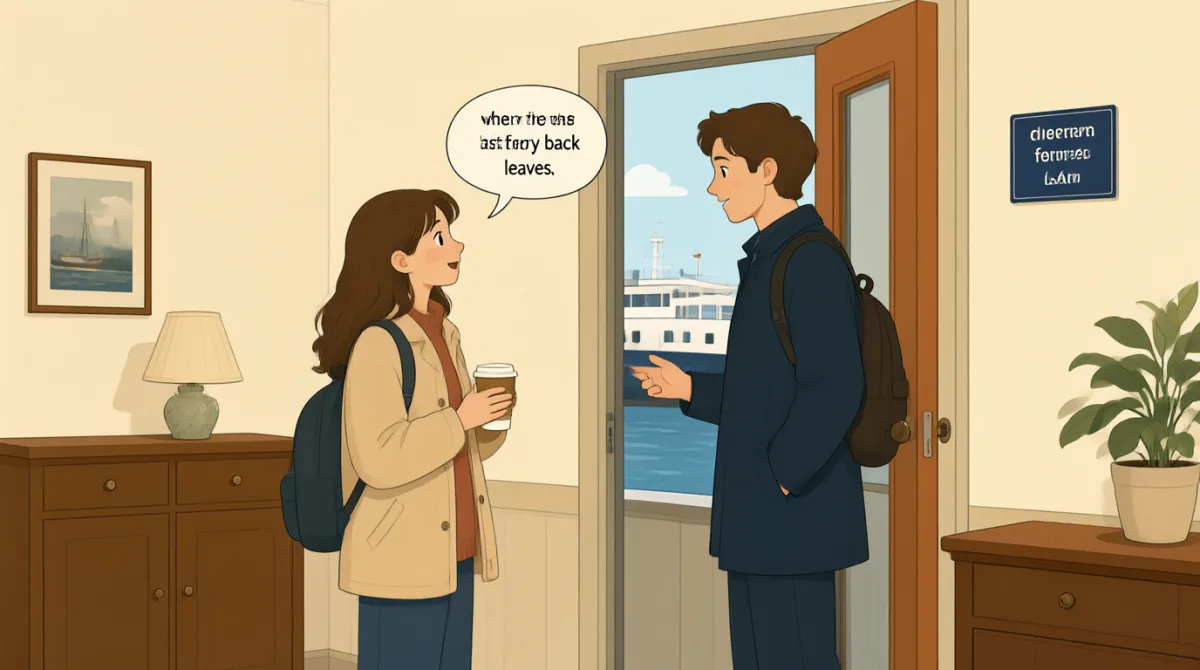

Before we get on, what time is the last ferry back to the mainland?
हम सवार होने से पहले, मुख्य भू-भाग के लिए आखिरी फेरी कितने बजे है?

Let me check the schedule. I think it leaves around six.
मैं समय-सारिणी देखता हूँ। मुझे लगता है, यह करीब छह बजे जाती है।
Could we miss it if we stay for dinner?
अगर हम रात के खाने के लिए रुकें, तो क्या हमारी फेरी छूट सकती है?
The schedule says the last ferry leaves at six thirty.
समय-सारिणी में लिखा है कि आखिरी फेरी साढ़े छह बजे जाती है।
Good. How early should we get back to the dock?
अच्छा। हमें घाट पर कितनी जल्दी वापस पहुँचना चाहिए?
Let's get there by six. The line can get long.
चलो, छह बजे तक वहाँ पहुँच जाते हैं। लाइन लंबी हो सकती है।
I'll set an alarm so we don't lose track of time.
मैं अलार्म लगा दूँगी, ताकि हमें समय का ध्यान रहे।
Good idea. Let's take a photo of the schedule, too.
अच्छा विचार है। चलो, समय-सारिणी की एक तस्वीर भी ले लेते हैं।
शब्दावली8
- get onसवार होना / चढ़ना
To get on a ferry means to board it. You can also use this phrase for buses and trains.
किसी फेरी पर सवार होने का मतलब है उस पर चढ़ना। इस वाक्यांश का इस्तेमाल बसों और ट्रेनों के लिए भी कर सकते हैं।
- the last ferry backवापसी वाली आखिरी फेरी
This means the final ferry that returns to the place you started from. You can say, “What time is the last bus back?”
इसका मतलब है वह आखिरी फेरी जो आपको उस जगह वापस ले जाती है जहाँ से आपने यात्रा शुरू की थी। आप “What time is the last bus back?” भी कह सकते हैं।
- mainlandमुख्य भू-भाग
The mainland is the large main area of land, not an island. Here, it is where Emma and Jack are returning.
मुख्य भू-भाग ज़मीन का बड़ा मुख्य हिस्सा होता है, जो किसी द्वीप से अलग होता है। यहाँ एमा और जैक वहीं वापस जा रहे हैं।
- scheduleसमय-सारिणी
A schedule shows the times when ferries leave. You can check a schedule to plan a trip.
समय-सारिणी में फेरी के रवाना होने के समय दिए होते हैं। यात्रा की योजना बनाने के लिए आप समय-सारिणी देख सकते हैं।
- get back toवापस पहुँचना
To get back to a place means to return there. You can say, “We should get back to the hotel by five.”
किसी जगह वापस पहुँचने का मतलब है वहाँ लौटना। आप “We should get back to the hotel by five.” कह सकते हैं।
- the line can get longलाइन लंबी हो सकती है
This means many people may be waiting in line. “Can” describes something that may happen.
इसका मतलब है कि बहुत से लोग लाइन में इंतज़ार कर रहे हो सकते हैं। “Can” ऐसी बात बताता है जो हो सकती है।
- set an alarmअलार्म लगाना
To set an alarm means to arrange for a phone or clock to make a sound at a certain time. It can help you remember when to do something.
अलार्म लगाने का मतलब है फोन या घड़ी को किसी निश्चित समय पर आवाज़ करने के लिए सेट करना। इससे आपको कोई काम करने का समय याद रखने में मदद मिल सकती है।
- lose track of timeसमय का ध्यान खो देना
To lose track of time means to stop noticing how much time has passed. You might do this when you are having fun.
समय का ध्यान खो देने का मतलब है यह ध्यान न रहना कि कितना समय बीत चुका है। मज़े करते समय आपके साथ ऐसा हो सकता है।
मुख्य वाक्य7
- 1
Before we get on, what time is the last ferry back to the mainland?
हम सवार होने से पहले, मुख्य भू-भाग के लिए आखिरी फेरी कितने बजे है?
Use this to ask when the final ferry returns. You can replace “ferry” with another kind of transport, such as “bus” or “train.”
आखिरी फेरी कब वापस आती है, यह पूछने के लिए इस वाक्य का इस्तेमाल करें। आप “ferry” की जगह किसी और परिवहन के साधन का नाम रख सकते हैं, जैसे “bus” या “train।”
- 2
Let me check the schedule.
मैं समय-सारिणी देखता हूँ।
This is a useful way to say you will look up information before answering. You can use it when checking a timetable or appointment.
यह कहने का एक उपयोगी तरीका है कि जवाब देने से पहले आप जानकारी देखेंगे। समय-सारिणी या अपॉइंटमेंट की जाँच करते समय भी आप इसका इस्तेमाल कर सकते हैं।
- 3
Could we miss it if we stay for dinner?
अगर हम रात के खाने के लिए रुकें, तो क्या हमारी फेरी छूट सकती है?
Use “Could we… if…?” to ask whether a possible choice may cause a problem. You can change the activity, for example, “Could we miss it if we stop for coffee?”
यह पूछने के लिए “Could we… if…?” का इस्तेमाल करें कि कोई संभावित विकल्प परेशानी पैदा कर सकता है या नहीं। आप गतिविधि बदल सकते हैं; उदाहरण के लिए, “Could we miss it if we stop for coffee?” कह सकते हैं।
- 4
How early should we get back to the dock?
हमें घाट पर कितनी जल्दी वापस पहुँचना चाहिए?
This asks how much time to allow before the ferry leaves. You can use “How early should we get back to…?” with other places, like a station or airport.
इसमें पूछा जाता है कि फेरी के रवाना होने से पहले कितना समय रखना चाहिए। आप दूसरे स्थानों, जैसे स्टेशन या हवाई अड्डे, के साथ भी “How early should we get back to…?” का इस्तेमाल कर सकते हैं।
- 5
Let's get there by six.
चलो, छह बजे तक वहाँ पहुँच जाते हैं।
Use “Let’s” to suggest doing something together, and “by six” means no later than six. You can change the time to make a plan.
साथ मिलकर कुछ करने का सुझाव देने के लिए “Let’s” का इस्तेमाल करें। “by six” का मतलब है छह बजे से देर नहीं। योजना बनाने के लिए आप समय बदल सकते हैं।
- 6
I'll set an alarm so we don't lose track of time.
मैं अलार्म लगा दूँगी, ताकि हमें समय का ध्यान रहे।
This explains a plan and its purpose: “so” connects the action to the result you want. You can use it to talk about setting a reminder for any important event.
इसमें किसी योजना और उसके उद्देश्य को बताया गया है: “so” काम को उस नतीजे से जोड़ता है जो आप चाहते हैं। किसी भी ज़रूरी कार्यक्रम के लिए रिमाइंडर लगाने की बात करते समय आप इसका इस्तेमाल कर सकते हैं।
- 7
Let's take a photo of the schedule, too.
चलो, समय-सारिणी की एक तस्वीर भी ले लेते हैं।
Use this sentence to suggest taking a picture for later. “Too” means you want to do this in addition to something else.
बाद में देखने के लिए तस्वीर लेने का सुझाव देने के लिए इस वाक्य का इस्तेमाल करें। “Too” का मतलब है कि आप यह काम किसी और काम के अलावा भी करना चाहते हैं।