Asking About the Last Ferry Back
السؤال عن موعد آخر عبّارة للعودة
Before boarding, Emma asks when the last ferry back leaves. Jack helps her check the return time.
قبل صعود العبّارة، تسأل إيما عن موعد انطلاق آخر عبّارة للعودة. ويساعدها جاك في التحقق من موعد العودة.
حوار8
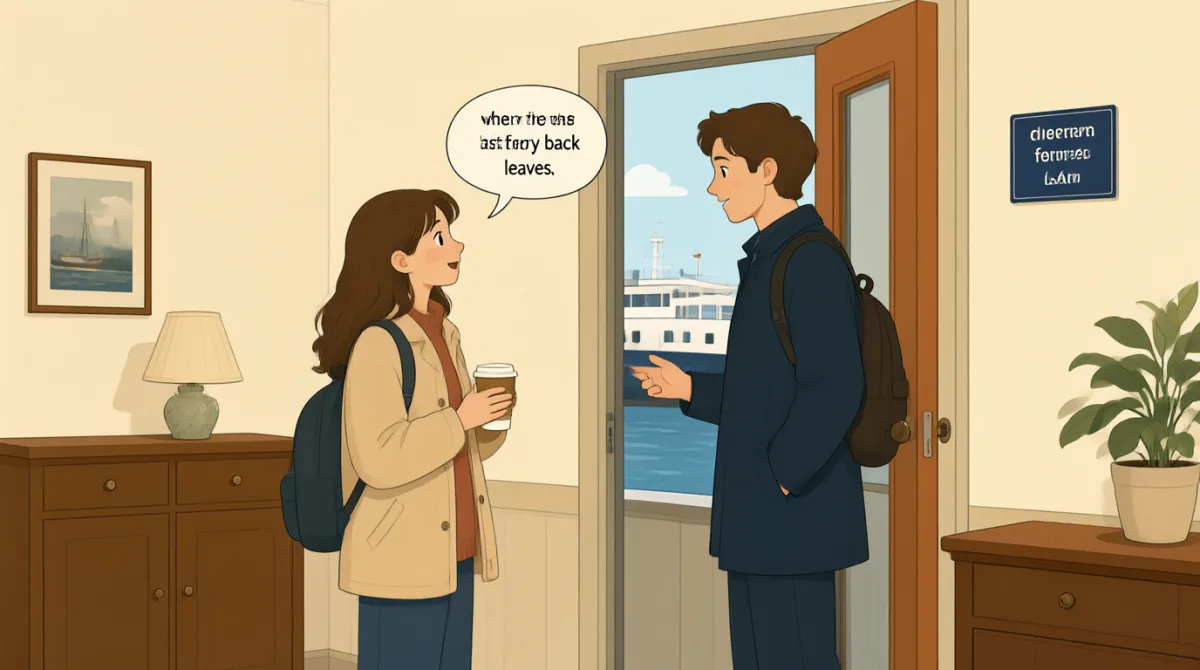

Before we get on, what time is the last ferry back to the mainland?
قبل أن نصعد، في أي ساعة تنطلق آخر عبّارة إلى البرّ الرئيسي؟

Let me check the schedule. I think it leaves around six.
دعيني أتحقق من الجدول. أظن أنها تنطلق نحو السادسة.
Could we miss it if we stay for dinner?
هل يمكن أن تفوتنا إذا بقينا لتناول العشاء؟
The schedule says the last ferry leaves at six thirty.
يقول الجدول إن آخر عبّارة تنطلق في السادسة والنصف.
Good. How early should we get back to the dock?
جيد. كم ينبغي أن نعود إلى الرصيف مبكرًا؟
Let's get there by six. The line can get long.
لنصل إلى هناك بحلول السادسة. فقد يطول الصف.
I'll set an alarm so we don't lose track of time.
سأضبط منبّهًا كيلا ننسى الوقت.
Good idea. Let's take a photo of the schedule, too.
فكرة جيدة. لنلتقط صورة للجدول أيضًا.
المفردات8
- get onيصعد إلى
To get on a ferry means to board it. You can also use this phrase for buses and trains.
تعني عبارة “get on” الصعود إلى العبّارة. ويمكنك استخدامها أيضًا مع الحافلات والقطارات.
- the last ferry backآخر عبّارة للعودة
This means the final ferry that returns to the place you started from. You can say, “What time is the last bus back?”
تعني هذه العبارة آخر عبّارة تعود إلى المكان الذي انطلقت منه. يمكنك أن تقول: “What time is the last bus back?” (في أي ساعة تنطلق آخر حافلة للعودة؟)
- mainlandالبرّ الرئيسي
The mainland is the large main area of land, not an island. Here, it is where Emma and Jack are returning.
البرّ الرئيسي هو مساحة اليابسة الكبيرة، وليس جزيرة. وهنا هو المكان الذي يعود إليه إيما وجاك.
- scheduleجدول المواعيد
A schedule shows the times when ferries leave. You can check a schedule to plan a trip.
يوضح “schedule” (جدول المواعيد) أوقات انطلاق العبّارات. ويمكنك مراجعة الجدول لتخطيط رحلة.
- get back toيعود إلى
To get back to a place means to return there. You can say, “We should get back to the hotel by five.”
تعني عبارة “get back to” العودة إلى مكان ما. يمكنك أن تقول: “We should get back to the hotel by five.” (ينبغي أن نعود إلى الفندق بحلول الخامسة.)
- the line can get longقد يطول الصف
This means many people may be waiting in line. “Can” describes something that may happen.
تعني هذه العبارة أن عددًا كبيرًا من الأشخاص قد ينتظرون في الصف. وتصف “can” شيئًا قد يحدث.
- set an alarmيضبط منبّهًا
To set an alarm means to arrange for a phone or clock to make a sound at a certain time. It can help you remember when to do something.
تعني عبارة “set an alarm” ضبط الهاتف أو الساعة لإصدار صوت في وقت محدد. وقد يساعدك ذلك على تذكّر موعد القيام بشيء ما.
- lose track of timeيفقد الإحساس بالوقت
To lose track of time means to stop noticing how much time has passed. You might do this when you are having fun.
تعني عبارة “lose track of time” ألّا تنتبه إلى مقدار الوقت الذي مضى. قد يحدث ذلك عندما تستمتع بوقتك.
الجمل الأساسية7
- 1
Before we get on, what time is the last ferry back to the mainland?
قبل أن نصعد، في أي ساعة تنطلق آخر عبّارة إلى البرّ الرئيسي؟
Use this to ask when the final ferry returns. You can replace “ferry” with another kind of transport, such as “bus” or “train.”
استخدم هذه العبارة للسؤال عن موعد عودة آخر عبّارة. ويمكنك استبدال “ferry” بوسيلة نقل أخرى، مثل “bus” أو “train”.
- 2
Let me check the schedule.
دعيني أتحقق من جدول المواعيد.
This is a useful way to say you will look up information before answering. You can use it when checking a timetable or appointment.
هذه طريقة مفيدة لتقول إنك ستبحث عن المعلومات قبل الإجابة. ويمكنك استخدامها عند التحقق من جدول مواعيد أو موعد.
- 3
Could we miss it if we stay for dinner?
هل يمكن أن تفوتنا إذا بقينا لتناول العشاء؟
Use “Could we… if…?” to ask whether a possible choice may cause a problem. You can change the activity, for example, “Could we miss it if we stop for coffee?”
استخدم “Could we… if…?” للسؤال عمّا إذا كان خيار محتمل قد يسبب مشكلة. ويمكنك تغيير النشاط، مثل: “Could we miss it if we stop for coffee?”
- 4
How early should we get back to the dock?
كم ينبغي أن نعود إلى الرصيف مبكرًا؟
This asks how much time to allow before the ferry leaves. You can use “How early should we get back to…?” with other places, like a station or airport.
يسأل هذا عن مقدار الوقت الذي ينبغي تخصيصه قبل انطلاق العبّارة. ويمكنك استخدام “How early should we get back to…?” مع أماكن أخرى، مثل محطة أو مطار.
- 5
Let's get there by six.
لنصل إلى هناك بحلول السادسة.
Use “Let’s” to suggest doing something together, and “by six” means no later than six. You can change the time to make a plan.
استخدم “Let’s” لاقتراح القيام بشيء معًا، وتعني “by six” في موعد أقصاه السادسة. ويمكنك تغيير الوقت لوضع خطة.
- 6
I'll set an alarm so we don't lose track of time.
سأضبط منبّهًا كيلا نفقد الإحساس بالوقت.
This explains a plan and its purpose: “so” connects the action to the result you want. You can use it to talk about setting a reminder for any important event.
توضح هذه العبارة خطةً والغرض منها: تربط “so” الفعل بالنتيجة التي تريدها. ويمكنك استخدامها للحديث عن ضبط تذكير لأي مناسبة مهمة.
- 7
Let's take a photo of the schedule, too.
لنلتقط صورة للجدول أيضًا.
Use this sentence to suggest taking a picture for later. “Too” means you want to do this in addition to something else.
استخدم هذه الجملة لاقتراح التقاط صورة للرجوع إليها لاحقًا. وتعني “Too” أنك تريد فعل ذلك إضافةً إلى شيء آخر.