Asking About the Last Ferry Back
ถามเรื่องเรือเที่ยวสุดท้ายขากลับ
Before boarding, Emma asks when the last ferry back leaves. Jack helps her check the return time.
ก่อนขึ้นเรือ เอมมาถามว่าเรือเที่ยวสุดท้ายกลับออกกี่โมง แจ็กช่วยเธอดูเวลาขากลับ
บทสนทนา8
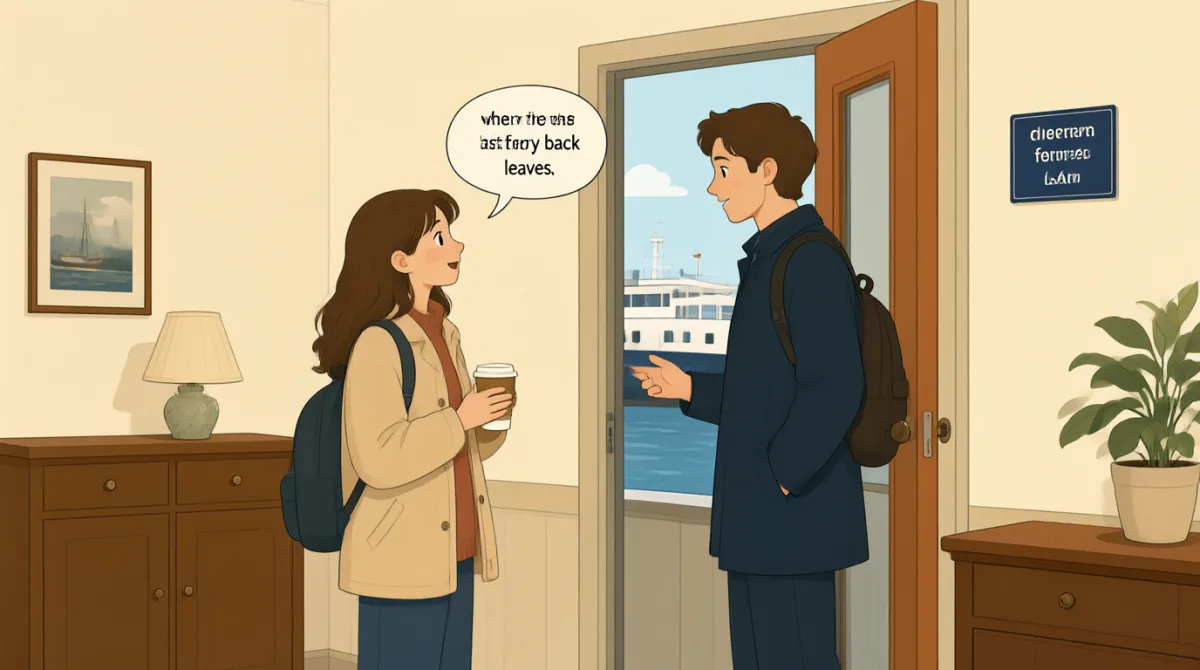

Before we get on, what time is the last ferry back to the mainland?
ก่อนเราขึ้นเรือ เรือเที่ยวสุดท้ายกลับไปฝั่งแผ่นดินใหญ่ออกกี่โมงเหรอ?

Let me check the schedule. I think it leaves around six.
ขอดูตารางก่อนนะ คิดว่าน่าจะออกประมาณหกโมง
Could we miss it if we stay for dinner?
ถ้าเราอยู่กินมื้อเย็น จะตกรถเที่ยวสุดท้ายไหม?
The schedule says the last ferry leaves at six thirty.
ในตารางบอกว่าเรือเที่ยวสุดท้ายออกตอนหกโมงครึ่ง
Good. How early should we get back to the dock?
ดีเลย เราควรกลับไปถึงท่าเรือก่อนกี่โมงดี?
Let's get there by six. The line can get long.
ไปถึงที่นั่นตอนหกโมงกันเถอะ แถวอาจจะยาว
I'll set an alarm so we don't lose track of time.
ฉันจะตั้งนาฬิกาปลุกไว้ จะได้ไม่ลืมเวลา
Good idea. Let's take a photo of the schedule, too.
เป็นความคิดที่ดี ถ่ายรูปตารางเวลาเก็บไว้ด้วยนะ
คำศัพท์8
- get onขึ้นเรือ
To get on a ferry means to board it. You can also use this phrase for buses and trains.
“get on” หมายถึงขึ้นพาหนะ เช่น ขึ้นเรือ นอกจากนี้ยังใช้กับรถเมล์และรถไฟได้ด้วย
- the last ferry backเรือเที่ยวสุดท้ายขากลับ
This means the final ferry that returns to the place you started from. You can say, “What time is the last bus back?”
หมายถึงเรือเที่ยวสุดท้ายที่กลับไปยังจุดเริ่มต้น เช่น ถามว่า “What time is the last bus back?” (รถเมล์เที่ยวสุดท้ายขากลับออกกี่โมง?) ได้ด้วย
- mainlandแผ่นดินใหญ่
The mainland is the large main area of land, not an island. Here, it is where Emma and Jack are returning.
“mainland” คือผืนดินขนาดใหญ่ที่เป็นแผ่นดินหลัก ไม่ใช่เกาะ ในที่นี้คือที่ที่เอมมาและแจ็กกำลังจะเดินทางกลับไป
- scheduleตารางเวลา
A schedule shows the times when ferries leave. You can check a schedule to plan a trip.
“schedule” คือตารางที่แสดงเวลาเรือออก คุณตรวจดูตารางเวลาเพื่อวางแผนการเดินทางได้
- get back toกลับไปถึง
To get back to a place means to return there. You can say, “We should get back to the hotel by five.”
“get back to” หมายถึงกลับไปยังสถานที่หนึ่ง เช่น “We should get back to the hotel by five.” (เราควรกลับถึงโรงแรมไม่เกินห้าโมง)
- the line can get longแถวอาจจะยาว
This means many people may be waiting in line. “Can” describes something that may happen.
หมายถึงอาจมีคนจำนวนมากกำลังต่อแถวอยู่ “can” ใช้บอกสิ่งที่อาจเกิดขึ้น
- set an alarmตั้งนาฬิกาปลุก
To set an alarm means to arrange for a phone or clock to make a sound at a certain time. It can help you remember when to do something.
“set an alarm” หมายถึงตั้งโทรศัพท์หรือนาฬิกาให้ส่งเสียงในเวลาที่กำหนด เพื่อช่วยเตือนให้ทำบางอย่าง
- lose track of timeลืมดูเวลา
To lose track of time means to stop noticing how much time has passed. You might do this when you are having fun.
“lose track of time” หมายถึงไม่ทันสังเกตว่าเวลาผ่านไปนานแค่ไหน อาจเป็นแบบนี้เวลาเรากำลังสนุก
ประโยคสำคัญ7
- 1
Before we get on, what time is the last ferry back to the mainland?
ก่อนเราขึ้นเรือ เรือเที่ยวสุดท้ายกลับไปฝั่งแผ่นดินใหญ่ออกกี่โมงเหรอ?
Use this to ask when the final ferry returns. You can replace “ferry” with another kind of transport, such as “bus” or “train.”
ใช้ประโยคนี้ถามว่าเรือเที่ยวสุดท้ายกลับกี่โมง คุณเปลี่ยน “ferry” เป็นพาหนะประเภทอื่น เช่น “bus” หรือ “train” ได้
- 2
Let me check the schedule.
ขอดูตารางก่อนนะ
This is a useful way to say you will look up information before answering. You can use it when checking a timetable or appointment.
ใช้ประโยคนี้เพื่อบอกว่าจะหาข้อมูลก่อนตอบ ใช้ได้เวลาตรวจตารางเวลาหรือนัดหมาย
- 3
Could we miss it if we stay for dinner?
ถ้าเราอยู่กินมื้อเย็น จะตกรถเที่ยวสุดท้ายไหม?
Use “Could we… if…?” to ask whether a possible choice may cause a problem. You can change the activity, for example, “Could we miss it if we stop for coffee?”
ใช้ “Could we… if…?” เพื่อถามว่าตัวเลือกที่กำลังพิจารณาอาจทำให้เกิดปัญหาหรือไม่ เปลี่ยนกิจกรรมได้ เช่น “Could we miss it if we stop for coffee?”
- 4
How early should we get back to the dock?
เราควรกลับไปถึงท่าเรือก่อนกี่โมงดี?
This asks how much time to allow before the ferry leaves. You can use “How early should we get back to…?” with other places, like a station or airport.
ประโยคนี้ใช้ถามว่าควรเผื่อเวลาก่อนเรือออกนานแค่ไหน คุณใช้ “How early should we get back to…?” กับสถานที่อื่นได้ เช่น สถานีหรือสนามบิน
- 5
Let's get there by six.
ไปถึงที่นั่นตอนหกโมงกันเถอะ
Use “Let’s” to suggest doing something together, and “by six” means no later than six. You can change the time to make a plan.
ใช้ “Let’s” เพื่อชวนทำอะไรด้วยกัน ส่วน “by six” หมายถึงไม่เกินหกโมง คุณเปลี่ยนเวลาเพื่อวางแผนได้
- 6
I'll set an alarm so we don't lose track of time.
ฉันจะตั้งนาฬิกาปลุกไว้ จะได้ไม่ลืมเวลา
This explains a plan and its purpose: “so” connects the action to the result you want. You can use it to talk about setting a reminder for any important event.
ประโยคนี้บอกแผนและจุดประสงค์ โดย “so” เชื่อมการกระทำกับผลลัพธ์ที่ต้องการ คุณใช้พูดถึงการตั้งเตือนสำหรับเหตุการณ์สำคัญต่าง ๆ ได้
- 7
Let's take a photo of the schedule, too.
ถ่ายรูปตารางเวลาเก็บไว้ด้วยนะ
Use this sentence to suggest taking a picture for later. “Too” means you want to do this in addition to something else.
ใช้ประโยคนี้ชวนถ่ายรูปเก็บไว้ดูทีหลัง “Too” หมายถึงทำสิ่งนี้เพิ่มจากอย่างอื่น