The Child Won't Sleep
بچه خوابش نمیبرد
At bedtime, the child says they are not tired and asks Emma to stay. Emma reads a short story and comforts them as they get ready to sleep.
موقع خواب، بچه میگوید خسته نیست و از اِما میخواهد پیشش بماند. اِما داستان کوتاهی برایش میخواند و وقتی آمادهٔ خواب میشود، آرامش میکند.
گفتوگو8
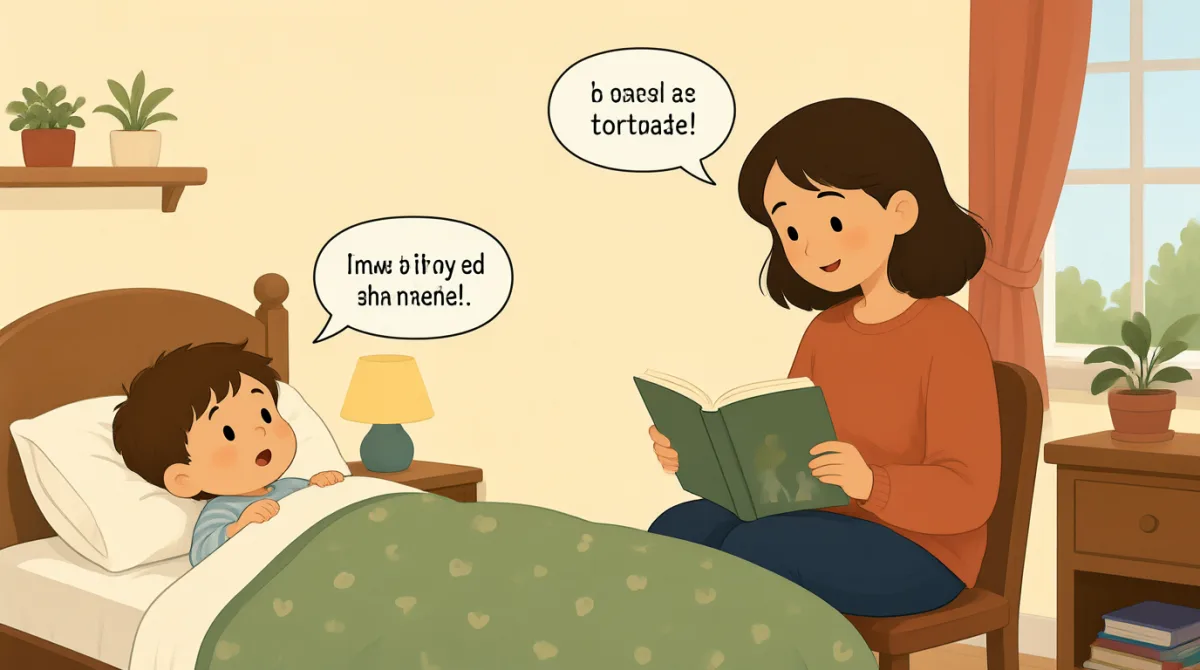

It’s bedtime now. Are you ready to get into bed?
الان وقت خوابه. آمادهای بری توی تخت؟

I’m not tired! Can you stay with me for a little while?
خسته نیستم! میشه یه کم پیشم بمونی؟
Of course. Let’s get your pajamas on, then I’ll read you a story.
البته. بیا لباس خوابت رو بپوش، بعد برات یه قصه میخونم.
Can you read the one about the little bear?
میشه اون قصهای رو بخونی که دربارهٔ خرس کوچولوئه؟
Sure. Climb into bed, and I’ll get the book from your shelf.
حتماً. برو توی تخت، من هم کتاب رو از قفسهات برمیدارم.
Will you stay until I fall asleep?
تا وقتی خوابم ببره پیشم میمونی؟
I’ll stay while we read. After the story, you can close your eyes.
تا وقتی قصه میخونیم پیشت میمونم. بعد از قصه میتونی چشمهات رو ببندی.
Okay. Please read it slowly. I like the bear’s house.
باشه. لطفاً آروم بخون. خونهٔ خرسه رو دوست دارم.
واژگان8
- bedtimeوقت خواب
The time when a child goes to bed to sleep. You can say, “It’s bedtime now” to tell someone it is time to get ready for bed.
زمانی که بچه برای خوابیدن به رختخواب میرود. میتوانی با گفتن “It’s bedtime now” (الان وقت خوابه) به کسی بگویی که وقت آمادهشدن برای خواب است.
- get into bedرفتن توی تخت
To climb into bed and lie down. Use this phrase when you ask someone to start going to sleep.
وارد تخت شدن و دراز کشیدن. وقتی از کسی میخواهی کمکم برای خواب آماده شود، از این عبارت استفاده کن.
- stay with meپیشم ماندن
To remain near someone and keep them company. A child might ask you to stay with them when they feel unsure or lonely.
نزد کسی ماندن و تنهایش نگذاشتن. ممکن است بچهای وقتی کمی میترسد یا احساس تنهایی میکند، از تو بخواهد پیشش بمانی.
- for a little whileبرای یه مدت کوتاه
For a short amount of time. You can use it to ask someone to stay or wait briefly.
برای مدت کوتاهی. میتوانی وقتی از کسی میخواهی کمی بماند یا صبر کند، از این عبارت استفاده کنی.
- get your pajamas onلباس خوابت رو پوشیدن
To put on your pajamas. You can use “get [your clothes] on” when it is time to get dressed.
لباس خواب پوشیدن. وقتی وقت لباس پوشیدن است، میتوانی از عبارت “get [your clothes] on” برای گفتن «[لباسهایت را] بپوش» استفاده کنی.
- climb into bedرفتن توی تخت
To get into bed, usually by moving onto it. This is a gentle way to tell a child to get into bed.
وارد تخت شدن، معمولاً با بالا رفتن روی آن. این راهی ملایم برای گفتن به بچه است که به تخت برود.
- fall asleepخوابش بردن
To begin sleeping. You can use it to talk about the moment someone starts to sleep.
شروع به خوابیدن. میتوانی برای اشاره به لحظهای که کسی خوابش میبرد، از این عبارت استفاده کنی.
- close your eyesچشمهایت را بستن
To shut your eyes. At bedtime, this can be a gentle suggestion to relax and get ready to sleep.
بستن چشمها. موقع خواب، این میتواند پیشنهادی آرام برای استراحتکردن و آمادهشدن برای خواب باشد.
جملات کلیدی8
- 1
It’s bedtime now.
الان وقت خوابه.
This is a simple way to tell someone it is time to go to bed. You can change “bedtime” to another activity, such as “It’s lunch time now.”
این راه سادهای است برای اینکه به کسی بگویی وقت خوابیدن است. میتوانی “bedtime” را با فعالیت دیگری عوض کنی، مثلاً “It’s lunch time now.” (الان وقت ناهاره.)
- 2
Can you stay with me for a little while?
میشه یه کم پیشم بمونی؟
Use this question to ask someone to keep you company briefly. You can replace “stay with me” with another request, such as “sit with me.”
از این پرسش برای درخواست همراهی کوتاهمدت استفاده کن. میتوانی “stay with me” را با درخواست دیگری، مثلاً “sit with me”، جایگزین کنی.
- 3
Of course.
البته.
This is a warm, natural way to agree to a request. You can use it instead of “yes” when you want to sound reassuring.
این راهی گرم و طبیعی برای پذیرفتن یک درخواست است. وقتی میخواهی با لحنت به طرف مقابل اطمینانخاطر بدهی، میتوانی بهجای “yes” از آن استفاده کنی.
- 4
Let’s get your pajamas on, then I’ll read you a story.
بیا لباس خوابت رو بپوش، بعد برات یه قصه میخونم.
This sentence gives two simple plans in order. You can use “Let’s [activity], then I’ll [next activity]” to explain what will happen next.
این جمله دو برنامهٔ ساده را بهترتیب بیان میکند. برای توضیح اینکه بعدش چه اتفاقی میافتد، میتوانی از الگوی “Let’s [activity], then I’ll [next activity]” استفاده کنی.
- 5
Climb into bed, and I’ll get the book from your shelf.
برو توی تخت، من هم کتاب رو از قفسهات برمیدارم.
This combines a gentle instruction with a promise to do something. You can use “and I’ll…” to explain what you will do next.
این جمله یک دستور ملایم را با قول انجام کاری همراه میکند. میتوانی با “and I’ll…” بگویی بعدش چه کاری انجام خواهی داد.
- 6
Will you stay until I fall asleep?
تا وقتی خوابم ببره پیشم میمونی؟
Use this question to ask whether someone will remain until something happens. Replace “I fall asleep” with another event, such as “the movie ends.”
از این پرسش برای اینکه بپرسی آیا کسی تا زمان رخدادن اتفاقی میماند یا نه، استفاده کن. میتوانی “I fall asleep” را با اتفاق دیگری، مثلاً “the movie ends”، جایگزین کنی.
- 7
I’ll stay while we read.
تا وقتی قصه میخونیم پیشت میمونم.
This sentence promises to stay during an activity. You can use “I’ll [action] while we [activity]” to describe what you will do at the same time.
این جمله قول میدهد که در طول انجام کاری بمانی. میتوانی با الگوی “I’ll [action] while we [activity]” بگویی همزمان چه کاری انجام خواهی داد.
- 8
Please read it slowly.
لطفاً آروم بخون.
This is a polite way to ask someone to read at a slower speed. You can use “Please [verb] slowly” for other activities, such as speaking or walking.
این راهی مؤدبانه برای درخواست خواندن با سرعت کمتر است. برای کارهای دیگری مثل حرفزدن یا راهرفتن هم میتوانی از الگوی “Please [verb] slowly” استفاده کنی.