The Child Won't Sleep
الطفلة لا تريد النوم
At bedtime, the child says they are not tired and asks Emma to stay. Emma reads a short story and comforts them as they get ready to sleep.
عند موعد النوم، تقول الطفلة إنها ليست متعبة وتطلب من إيما أن تبقى معها. تقرأ إيما لها قصة قصيرة وتطمئنها بينما تستعد للنوم.
حوار8
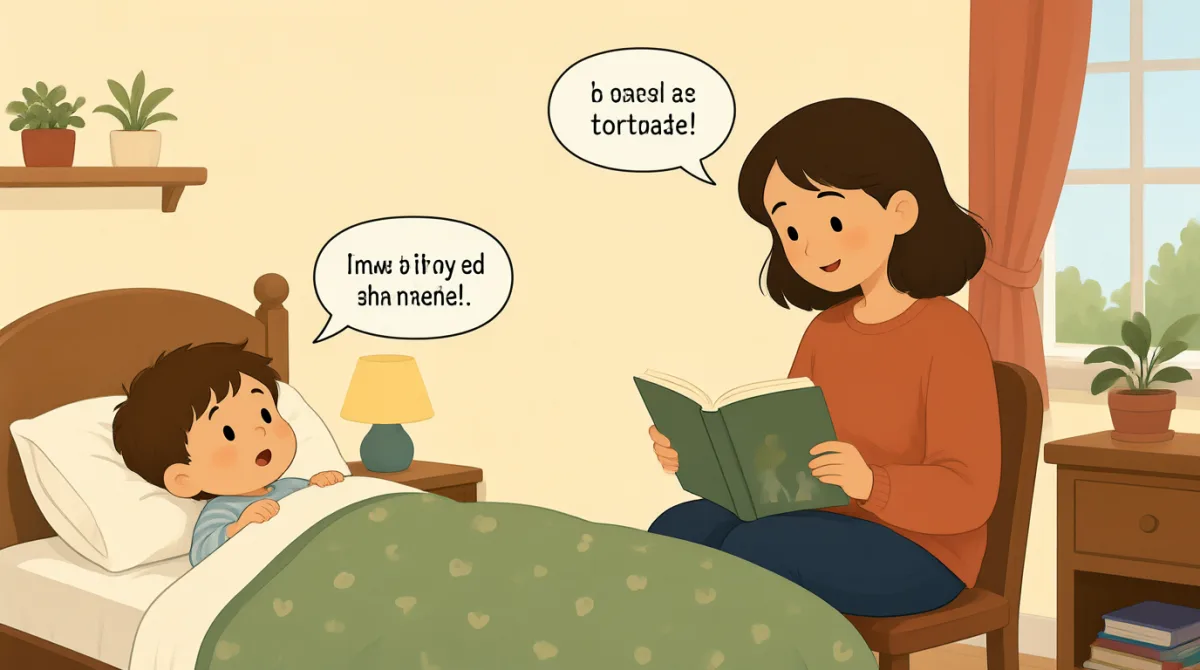

It’s bedtime now. Are you ready to get into bed?
حان وقت النوم الآن. هل أنتِ مستعدة للصعود إلى السرير؟

I’m not tired! Can you stay with me for a little while?
لستُ متعبة! هل يمكنكِ البقاء معي قليلًا؟
Of course. Let’s get your pajamas on, then I’ll read you a story.
بالطبع. لنرتدِ ملابس النوم، ثم سأقرأ لكِ قصة.
Can you read the one about the little bear?
هل يمكنكِ قراءة القصة التي تتحدث عن الدب الصغير؟
Sure. Climb into bed, and I’ll get the book from your shelf.
بالتأكيد. اصعدي إلى السرير، وسأحضر الكتاب من رفكِ.
Will you stay until I fall asleep?
هل ستبقين معي حتى أغفو؟
I’ll stay while we read. After the story, you can close your eyes.
سأبقى معكِ أثناء قراءتنا. وبعد القصة، يمكنكِ إغماض عينيكِ.
Okay. Please read it slowly. I like the bear’s house.
حسنًا. أرجوكِ اقرئيها ببطء. أحب بيت الدب.
المفردات8
- bedtimeموعد النوم
The time when a child goes to bed to sleep. You can say, “It’s bedtime now” to tell someone it is time to get ready for bed.
الوقت الذي يذهب فيه الطفل إلى السرير لينام. يمكنك أن تقولي “It’s bedtime now” (حان وقت النوم الآن) لتخبري أحدًا أن وقت الاستعداد للنوم قد حان.
- get into bedيصعد إلى السرير
To climb into bed and lie down. Use this phrase when you ask someone to start going to sleep.
يدخل إلى السرير ويستلقي فيه. استخدمي هذه العبارة عندما تطلبين من شخص أن يبدأ الاستعداد للنوم.
- stay with meابقَ معي
To remain near someone and keep them company. A child might ask you to stay with them when they feel unsure or lonely.
أن تبقى بالقرب من شخص وتؤانسه. قد يطلب منك طفل أن تبقى معه عندما يشعر بالقلق أو الوحدة.
- for a little whileلفترة قصيرة
For a short amount of time. You can use it to ask someone to stay or wait briefly.
لمدة قصيرة. يمكنك استخدام هذه العبارة لتطلبي من شخص أن يبقى أو ينتظر قليلًا.
- get your pajamas onارتدِ ملابس النوم
To put on your pajamas. You can use “get [your clothes] on” when it is time to get dressed.
ارتداء ملابس النوم. يمكنك استخدام “get [your clothes] on” (ارتدِ [ملابسك]) عندما يحين وقت ارتداء الملابس.
- climb into bedاصعد إلى السرير
To get into bed, usually by moving onto it. This is a gentle way to tell a child to get into bed.
الذهاب إلى السرير، عادةً بالصعود إليه. هذه طريقة لطيفة لطلب طفل أن يصعد إلى السرير.
- fall asleepيغفو
To begin sleeping. You can use it to talk about the moment someone starts to sleep.
يبدأ بالنوم. يمكنك استخدام هذه العبارة للحديث عن اللحظة التي يبدأ فيها شخص بالنوم.
- close your eyesأغمض عينيك
To shut your eyes. At bedtime, this can be a gentle suggestion to relax and get ready to sleep.
أطبق جفنيك. وعند موعد النوم، يمكن أن يكون هذا اقتراحًا لطيفًا للاسترخاء والاستعداد للنوم.
الجمل الأساسية8
- 1
It’s bedtime now.
حان وقت النوم الآن.
This is a simple way to tell someone it is time to go to bed. You can change “bedtime” to another activity, such as “It’s lunch time now.”
هذه طريقة بسيطة لإخبار شخص أن وقت الذهاب إلى السرير قد حان. يمكنك استبدال “bedtime” بنشاط آخر، مثل “It’s lunch time now.” (حان وقت الغداء الآن).
- 2
Can you stay with me for a little while?
هل يمكنكِ البقاء معي قليلًا؟
Use this question to ask someone to keep you company briefly. You can replace “stay with me” with another request, such as “sit with me.”
استخدمي هذا السؤال لتطلبي من شخص أن يؤنسك لفترة قصيرة. يمكنك استبدال “stay with me” بطلب آخر، مثل “sit with me.”
- 3
Of course.
بالطبع.
This is a warm, natural way to agree to a request. You can use it instead of “yes” when you want to sound reassuring.
هذه طريقة ودودة وطبيعية للموافقة على طلب. يمكنك قولها بدلًا من “yes” عندما تريدين أن تطمئني الشخص.
- 4
Let’s get your pajamas on, then I’ll read you a story.
لنرتدِ ملابس النوم، ثم سأقرأ لكِ قصة.
This sentence gives two simple plans in order. You can use “Let’s [activity], then I’ll [next activity]” to explain what will happen next.
توضح هذه الجملة خطتين بسيطتين بالترتيب. يمكنك استخدام “Let’s [activity], then I’ll [next activity]” لشرح ما سيحدث بعد ذلك.
- 5
Climb into bed, and I’ll get the book from your shelf.
اصعدي إلى السرير، وسأحضر الكتاب من رفكِ.
This combines a gentle instruction with a promise to do something. You can use “and I’ll…” to explain what you will do next.
تجمع هذه الجملة بين توجيه لطيف ووعد بفعل شيء. يمكنك استخدام “and I’ll…” لشرح ما ستفعلينه بعد ذلك.
- 6
Will you stay until I fall asleep?
هل ستبقين معي حتى أغفو؟
Use this question to ask whether someone will remain until something happens. Replace “I fall asleep” with another event, such as “the movie ends.”
استخدمي هذا السؤال لتسألي إن كان شخص سيبقى حتى وقوع أمر ما. استبدلي “I fall asleep” بحدث آخر، مثل “the movie ends.”
- 7
I’ll stay while we read.
سأبقى معكِ أثناء قراءتنا.
This sentence promises to stay during an activity. You can use “I’ll [action] while we [activity]” to describe what you will do at the same time.
تعد هذه الجملة بالبقاء أثناء القيام بنشاط ما. يمكنك استخدام “I’ll [action] while we [activity]” لوصف ما ستفعلينه في الوقت نفسه.
- 8
Please read it slowly.
أرجوكِ اقرئي ببطء.
This is a polite way to ask someone to read at a slower speed. You can use “Please [verb] slowly” for other activities, such as speaking or walking.
هذه طريقة مهذبة لطلب القراءة بسرعة أبطأ. يمكنك استخدام “Please [verb] slowly” مع أنشطة أخرى، مثل التحدث أو المشي.