The Child Won't Sleep
เด็กไม่ยอมนอน
At bedtime, the child says they are not tired and asks Emma to stay. Emma reads a short story and comforts them as they get ready to sleep.
ถึงเวลาเข้านอนแล้ว เด็กบอกว่ายังไม่ง่วงและขอให้เอ็มมาอยู่ด้วย เอ็มมาอ่านนิทานสั้น ๆ ให้ฟังและปลอบใจระหว่างที่เด็กเตรียมตัวเข้านอน
บทสนทนา8
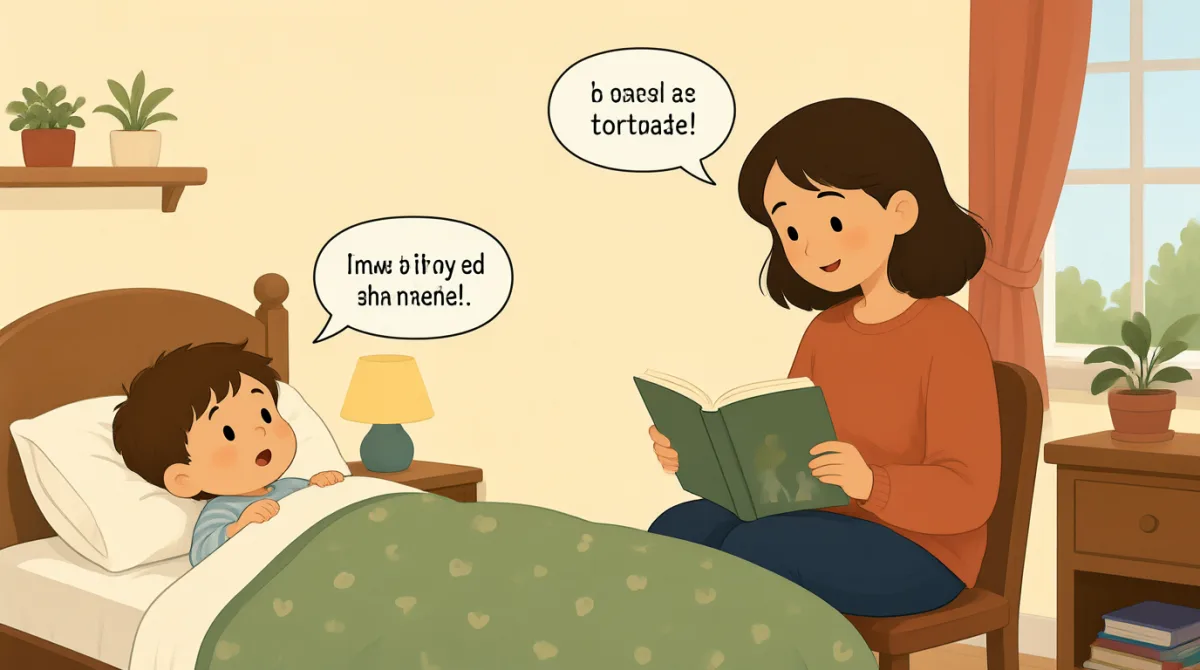

It’s bedtime now. Are you ready to get into bed?
ถึงเวลาเข้านอนแล้ว พร้อมขึ้นเตียงหรือยัง?

I’m not tired! Can you stay with me for a little while?
หนูยังไม่ง่วงเลย! อยู่กับหนูอีกสักพักได้ไหม?
Of course. Let’s get your pajamas on, then I’ll read you a story.
ได้สิ ใส่ชุดนอนกันก่อน แล้วเดี๋ยวฉันอ่านนิทานให้ฟังนะ
Can you read the one about the little bear?
อ่านเรื่องหมีน้อยให้หนูฟังได้ไหม?
Sure. Climb into bed, and I’ll get the book from your shelf.
ได้เลย ขึ้นเตียงนะ เดี๋ยวฉันไปหยิบหนังสือจากชั้นให้
Will you stay until I fall asleep?
พี่จะอยู่จนกว่าหนูจะหลับไหม?
I’ll stay while we read. After the story, you can close your eyes.
พี่จะอยู่ด้วยตอนเราอ่านนิทานนะ พออ่านจบแล้ว หนูก็หลับตาได้เลย
Okay. Please read it slowly. I like the bear’s house.
ตกลง อ่านช้า ๆ นะ หนูชอบบ้านของเจ้าหมี
คำศัพท์8
- bedtimeเวลาเข้านอน
The time when a child goes to bed to sleep. You can say, “It’s bedtime now” to tell someone it is time to get ready for bed.
เวลาที่เด็กเข้านอนเพื่อพักผ่อน เช่น พูดว่า “It’s bedtime now” เพื่อบอกใครสักคนว่าถึงเวลาเตรียมตัวเข้านอนแล้ว
- get into bedขึ้นเตียง
To climb into bed and lie down. Use this phrase when you ask someone to start going to sleep.
ปีนขึ้นเตียงแล้วนอนลง ใช้สำนวนนี้เมื่อต้องการบอกให้ใครสักคนเริ่มเข้านอน
- stay with meอยู่กับฉัน
To remain near someone and keep them company. A child might ask you to stay with them when they feel unsure or lonely.
อยู่ใกล้ ๆ และเป็นเพื่อนใครสักคน เด็กอาจขอให้คุณอยู่ด้วยเมื่อรู้สึกไม่มั่นใจหรือเหงา
- for a little whileอีกสักพัก
For a short amount of time. You can use it to ask someone to stay or wait briefly.
เป็นช่วงเวลาสั้น ๆ ใช้ขอให้ใครสักคนอยู่ด้วยหรือรออีกไม่นาน
- get your pajamas onใส่ชุดนอน
To put on your pajamas. You can use “get [your clothes] on” when it is time to get dressed.
สวมชุดนอน ใช้ “get [your clothes] on” เมื่อต้องการพูดถึงการแต่งตัว
- climb into bedขึ้นเตียง
To get into bed, usually by moving onto it. This is a gentle way to tell a child to get into bed.
ขึ้นไปบนเตียง โดยทั่วไปคือขยับตัวขึ้นไปนอน เป็นวิธีพูดกับเด็กอย่างอ่อนโยนเพื่อบอกให้ขึ้นเตียง
- fall asleepหลับ
To begin sleeping. You can use it to talk about the moment someone starts to sleep.
เริ่มนอนหลับ ใช้พูดถึงช่วงเวลาที่ใครสักคนเริ่มหลับ
- close your eyesหลับตา
To shut your eyes. At bedtime, this can be a gentle suggestion to relax and get ready to sleep.
ปิดตาลง ตอนเข้านอนอาจใช้พูดชวนให้อีกฝ่ายผ่อนคลายและเตรียมตัวหลับอย่างอ่อนโยน
ประโยคสำคัญ8
- 1
It’s bedtime now.
ถึงเวลาเข้านอนแล้ว
This is a simple way to tell someone it is time to go to bed. You can change “bedtime” to another activity, such as “It’s lunch time now.”
เป็นวิธีง่าย ๆ ในการบอกใครสักคนว่าถึงเวลาเข้านอนแล้ว คุณเปลี่ยน “bedtime” เป็นกิจกรรมอื่นได้ เช่น “It’s lunch time now.” (ถึงเวลากินอาหารกลางวันแล้ว)
- 2
Can you stay with me for a little while?
อยู่กับหนูอีกสักพักได้ไหม?
Use this question to ask someone to keep you company briefly. You can replace “stay with me” with another request, such as “sit with me.”
ใช้คำถามนี้เพื่อขอให้ใครสักคนอยู่เป็นเพื่อนสักครู่ คุณเปลี่ยน “stay with me” เป็นคำขออย่างอื่นได้ เช่น “sit with me.” (นั่งอยู่กับฉัน)
- 3
Of course.
ได้สิ
This is a warm, natural way to agree to a request. You can use it instead of “yes” when you want to sound reassuring.
เป็นวิธีตอบรับคำขอที่ฟังดูอบอุ่นและเป็นธรรมชาติ ใช้แทน “yes” ได้เมื่อต้องการให้อีกฝ่ายรู้สึกอุ่นใจ
- 4
Let’s get your pajamas on, then I’ll read you a story.
ใส่ชุดนอนกันก่อน แล้วเดี๋ยวฉันอ่านนิทานให้ฟังนะ
This sentence gives two simple plans in order. You can use “Let’s [activity], then I’ll [next activity]” to explain what will happen next.
ประโยคนี้บอกแผนง่าย ๆ สองอย่างตามลำดับ ใช้ “Let’s [activity], then I’ll [next activity]” เพื่ออธิบายว่าจะทำอะไรต่อ
- 5
Climb into bed, and I’ll get the book from your shelf.
ขึ้นเตียงนะ แล้วเดี๋ยวฉันไปหยิบหนังสือจากชั้นให้
This combines a gentle instruction with a promise to do something. You can use “and I’ll…” to explain what you will do next.
ประโยคนี้รวมคำบอกให้ทำอย่างอ่อนโยนเข้ากับคำสัญญาว่าจะทำบางอย่าง ใช้ “and I’ll…” เพื่อบอกว่าจะทำอะไรต่อ
- 6
Will you stay until I fall asleep?
พี่จะอยู่จนกว่าหนูจะหลับไหม?
Use this question to ask whether someone will remain until something happens. Replace “I fall asleep” with another event, such as “the movie ends.”
ใช้คำถามนี้เพื่อถามว่าใครสักคนจะอยู่ต่อจนกว่าจะเกิดเหตุการณ์หนึ่งหรือไม่ เปลี่ยน “I fall asleep” เป็นเหตุการณ์อื่นได้ เช่น “the movie ends.” (หนังจบ)
- 7
I’ll stay while we read.
พี่จะอยู่ด้วยตอนเราอ่านนิทานนะ
This sentence promises to stay during an activity. You can use “I’ll [action] while we [activity]” to describe what you will do at the same time.
ประโยคนี้เป็นการรับปากว่าจะอยู่ด้วยระหว่างทำกิจกรรม ใช้ “I’ll [action] while we [activity]” เพื่อบอกว่าจะทำอะไรไปพร้อม ๆ กับกิจกรรมนั้น
- 8
Please read it slowly.
อ่านช้า ๆ นะ
This is a polite way to ask someone to read at a slower speed. You can use “Please [verb] slowly” for other activities, such as speaking or walking.
เป็นวิธีสุภาพในการขอให้ใครสักคนอ่านช้าลง คุณใช้ “Please [verb] slowly” กับกิจกรรมอื่นได้ เช่น การพูดหรือการเดิน