Your First Shift
Tu primer turno
On Emma’s first shift, Grace shows her the routine and introduces her to the café team. Emma learns the basics and gets ready to help customers.
En el primer turno de Emma, Grace le muestra la rutina y se la presenta al equipo de la cafetería. Emma aprende lo básico y se prepara para atender a los clientes.
Diálogo9
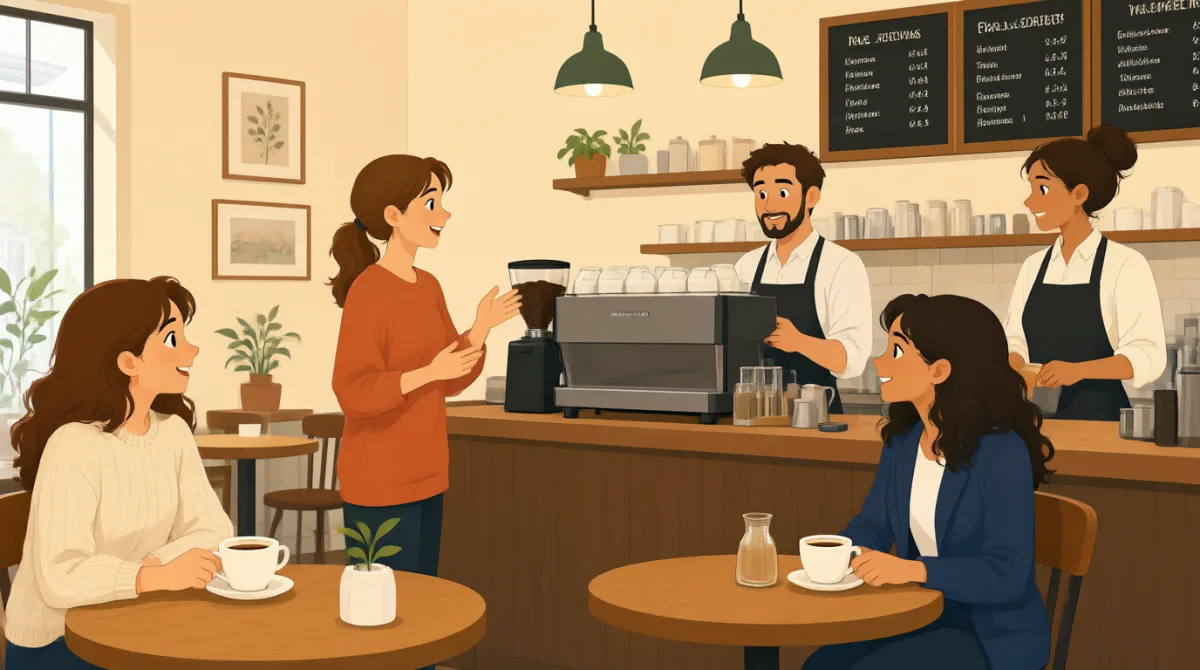

Welcome to your first shift, Emma. I’ll show you how we open the café, then Leo can walk you through the register.
Bienvenida a tu primer turno, Emma. Te enseñaré cómo abrimos la cafetería y luego Leo puede explicarte cómo usar la caja.

Thanks, Grace. I’m excited, but a little nervous. I’ve never worked in a café before, so I’ll probably have a few questions.
Gracias, Grace. Estoy emocionada, pero un poco nerviosa. Nunca he trabajado en una cafetería, así que probablemente tendré algunas preguntas.

No worries! We all start somewhere. First, tie your apron here, and keep your hair away from the food-prep area.
¡No te preocupes! Todos empezamos en algún momento. Primero, átate el delantal aquí y mantén el pelo alejado de la zona de preparación de alimentos.
Exactly. We wash our hands before handling food, and we wipe the counter between tasks. Clean as you go—it saves time later.
Exactamente. Nos lavamos las manos antes de manipular alimentos y limpiamos el mostrador entre una tarea y otra. Limpia mientras trabajas; así ahorrarás tiempo después.
Got it. Where should I start if a customer comes in while I’m still learning the menu?
Entendido. ¿Por dónde debería empezar si entra un cliente mientras todavía estoy aprendiendo el menú?
Just smile and say hello. If you’re not sure about something, ask me or Grace instead of guessing. We’ve got your back.
Solo sonríe y saluda. Si no estás segura de algo, pregúntame a mí o a Grace en vez de adivinar. Te apoyamos.
That’s right. You can take simple orders today, and I’ll stay nearby. The register is easy once you get the hang of it.
Así es. Hoy puedes tomar pedidos sencillos y yo me quedaré cerca. La caja es fácil cuando le agarras el truco.
Thanks, both of you. I’ll take it one step at a time. That customer by the door looks ready to order!
Gracias a los dos. Iré paso a paso. ¡Ese cliente junto a la puerta parece listo para pedir!
Go ahead, Emma. Greet them, listen carefully, and don’t rush. I’ll be right here if you need a hand.
Adelante, Emma. Salúdalo, escucha con atención y no te apresures. Estaré aquí mismo si necesitas ayuda.
Vocabulario8
- a little nervousun poco nerviosa
Slightly worried or uneasy. Use it to describe how you feel in a new or unfamiliar situation.
Significa sentir algo de preocupación o inquietud. Úsalo para describir cómo te sientes en una situación nueva o desconocida.
- We all start somewhere.We all start somewhere.
A reassuring way to say that everyone is inexperienced when they begin. Use it to encourage someone who is learning.
Una forma tranquilizadora de decir que todos tenemos poca experiencia cuando empezamos. Úsala para animar a alguien que está aprendiendo.
- keep your hair away from the food-prep areamantén el pelo alejado de la zona de preparación de alimentos
Make sure your hair does not come near the place where food is prepared. This is a practical hygiene instruction in a kitchen or café.
Asegúrate de que el pelo no se acerque al lugar donde se prepara la comida. Es una instrucción práctica de higiene en una cocina o cafetería.
- Clean as you goClean as you go
Clean things while you work instead of leaving all the cleaning until later. This phrase is useful for describing an efficient routine.
Limpia mientras trabajas, en vez de dejar toda la limpieza para después. Esta frase sirve para hablar de una rutina eficiente.
- instead of guessingen vez de adivinar
Rather than trying to answer when you are unsure. Use this phrase to explain a safer or more reliable choice.
Significa que, si no estás segura, es mejor preguntar que intentar responder a ciegas. Usa esta expresión para explicar una opción más segura o confiable.
- We’ve got your back.We’ve got your back.
We’re here to support and help you. This informal phrase reassures someone that they are not alone.
Significa que estamos aquí para apoyarte y ayudarte. Esta expresión informal le recuerda a alguien que no está solo.
- get the hang of itagarrarle el truco
Learn how to do something through practice. Use it when a task feels difficult at first but becomes easier over time.
Aprender a hacer algo con la práctica. Úsalo cuando una tarea parece difícil al principio, pero se vuelve más fácil con el tiempo.
- take it one step at a timeir paso a paso
Do things gradually, focusing on one part before moving to the next. This phrase can help someone stay calm when learning something new.
Hacer las cosas poco a poco, concentrándote en una parte antes de pasar a la siguiente. Esta expresión puede ayudar a alguien a mantener la calma mientras aprende algo nuevo.
Frases clave7
- 1
I’m excited, but a little nervous.
Estoy emocionada, pero un poco nerviosa.
This sentence expresses two feelings at once. Use “I’m excited, but a little [feeling]” to describe mixed emotions about a new experience.
Esta oración expresa dos sentimientos a la vez. Usa “I’m excited, but a little [feeling]” para hablar de emociones mezcladas ante una experiencia nueva.
- 2
I’ve never worked in a café before, so I’ll probably have a few questions.
Nunca he trabajado en una cafetería, así que probablemente tendré algunas preguntas.
This is a natural way to explain that you are new to something and may need help. You can replace “worked in a café” with another activity or situation.
Es una forma natural de explicar que algo es nuevo para ti y que quizá necesites ayuda. Puedes sustituir “worked in a café” por otra actividad o situación.
- 3
If you’re not sure about something, ask me or Grace instead of guessing.
Si no estás segura de algo, pregúntame a mí o a Grace en vez de adivinar.
This gives clear, supportive advice for handling uncertainty. Reuse “If you’re not sure about something, [action] instead of [less helpful action].”
Este consejo claro y amable explica qué hacer cuando tienes dudas. Puedes reutilizar “If you’re not sure about something, [action] instead of [less helpful action].”
- 4
We’ve got your back.
Te apoyamos.
This informal phrase lets someone know you will support them. It works well when reassuring a new colleague or friend.
Esta expresión informal le hace saber a alguien que cuenta con tu apoyo. Va bien para tranquilizar a un compañero nuevo o a un amigo.
- 5
The register is easy once you get the hang of it.
La caja es fácil cuando le agarras el truco.
This sentence reassures someone that a task becomes easier with practice. Use “It’s easy once you get the hang of it” for other skills or routines.
Esta oración tranquiliza a alguien: una tarea se vuelve más fácil con la práctica. Usa “It’s easy once you get the hang of it” para hablar de otras habilidades o rutinas.
- 6
I’ll take it one step at a time.
Iré paso a paso.
This is a calm way to say you will handle a task gradually. Use it when you want to avoid feeling overwhelmed.
Es una forma tranquila de decir que harás algo poco a poco. Úsala cuando quieras evitar sentirte abrumado.
- 7
Greet them, listen carefully, and don’t rush.
Salúdalo, escucha con atención y no te apresures.
These are concise instructions for helping a customer. The sentence uses direct verbs to give a clear sequence of actions.
Son instrucciones breves para atender a un cliente. La oración usa verbos directos para indicar una secuencia clara de acciones.