Helping in the Garden
Ayudar en el jardín
Emma joins her grandparents in the garden and helps them pull weeds and water the plants. They talk about what to grow next.
Emma se une a sus abuelos en el jardín y los ayuda a arrancar las malas hierbas y a regar las plantas. Hablan de qué cultivar después.
Diálogo8
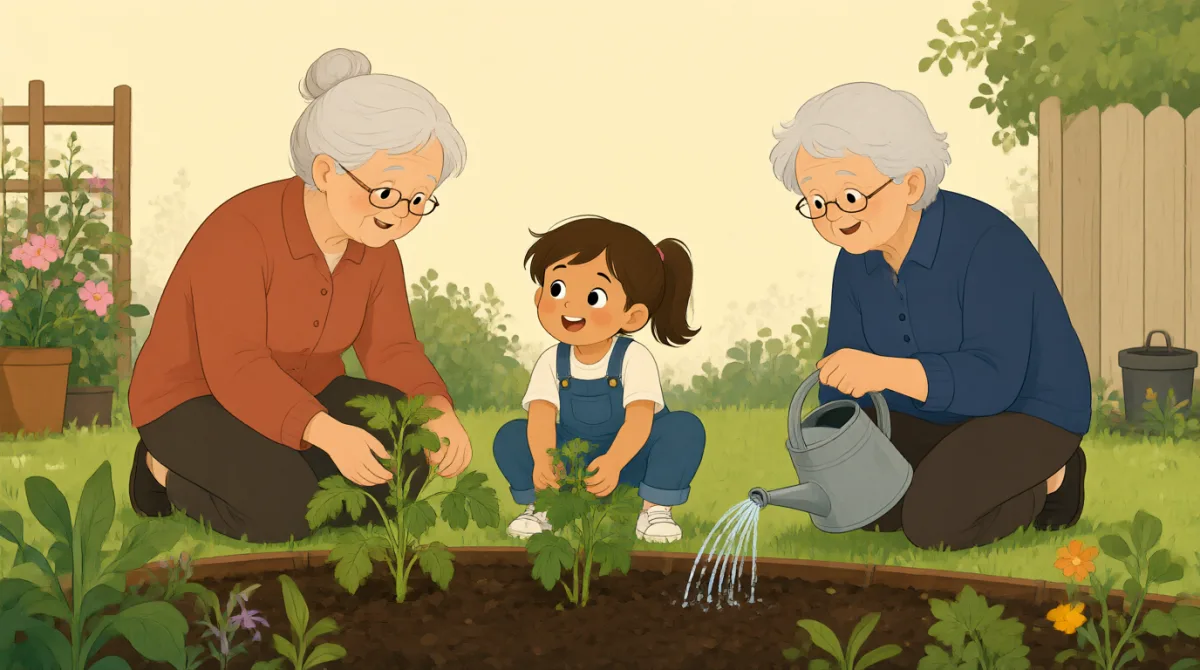

What should I do first? I can help with the garden.
¿Qué debería hacer primero? Puedo ayudar con el jardín.

Thanks, Emma. Please pull the weeds near those small plants.
Gracias, Emma. Arranca las malas hierbas que están cerca de esas plantas pequeñas, por favor.

Be careful with the flowers. They’re growing well this year.
Ten cuidado con las flores. Este año están creciendo muy bien.
I’ll be careful. Should I water them after I pull the weeds?
Tendré cuidado. ¿Las riego después de arrancar las malas hierbas?
Yes, please. The soil is dry, and the plants need a good drink.
Sí, por favor. La tierra está seca y las plantas necesitan un buen trago de agua.
We could grow tomatoes next. We use them in many meals.
Podríamos cultivar tomates después. Los usamos en muchas comidas.
That sounds fun! Can I help you plant them next weekend?
¡Qué divertido! ¿Puedo ayudarlos a plantarlos el próximo fin de semana?
Of course. Bring your gardening gloves, and we’ll find a sunny spot.
Claro. Trae tus guantes de jardinería y buscaremos un lugar soleado.
Vocabulario8
- pull the weedsarrancar las malas hierbas
To pull the weeds means to remove unwanted plants from a garden by pulling them out. You can say, “Please pull the weeds near the flowers.”
“To pull the weeds” significa quitar las plantas no deseadas de un jardín arrancándolas. Puedes decir: “Please pull the weeds near the flowers” (Arranca las malas hierbas que están cerca de las flores, por favor).
- Be carefultener cuidado
This is a way to remind someone to act safely and avoid causing a problem. Use it before someone handles something delicate or dangerous.
Es una forma de recordarle a alguien que actúe con cuidado para evitar problemas. Úsala antes de que alguien manipule algo delicado o peligroso.
- growing wellcrecer bien
This means that a plant is healthy and getting bigger. You can use it to describe plants or other things that are developing successfully.
Significa que una planta está sana y está creciendo. Puedes usar esta expresión para hablar de plantas o de otras cosas que se están desarrollando con éxito.
- water themregarlas
To water plants means to give them water. Use “water them” when the people you are talking about already know which plants you mean.
“To water plants” significa echarles agua a las plantas. Usa “water them” cuando las personas con las que hablas ya saben a qué plantas te refieres.
- The soil is dryLa tierra está seca
Soil is the earth in which plants grow. This sentence explains that the plants need water.
“Soil” es la tierra donde crecen las plantas. Esta frase explica que las plantas necesitan agua.
- grow tomatoescultivar tomates
To grow tomatoes means to plant and care for tomato plants. You can replace “tomatoes” with another plant or vegetable.
“To grow tomatoes” significa plantar tomateras y cuidarlas. Puedes sustituir “tomatoes” por el nombre de otra planta u hortaliza.
- next weekendel próximo fin de semana
This means the weekend that is coming soon. Use it to talk about a plan for the near future.
Se refiere al fin de semana que viene pronto. Úsalo para hablar de un plan para un futuro cercano.
- find a sunny spotbuscar un lugar soleado
A sunny spot is a place that gets a lot of sunlight. This phrase is useful when choosing a good place for plants.
“A sunny spot” es un lugar que recibe mucha luz del sol. Esta expresión es útil para elegir un buen sitio para las plantas.
Frases clave7
- 1
What should I do first?
¿Qué debería hacer primero?
Use this to ask what task to do before the others. You can replace “do” with another action, such as “What should I bring first?”
Usa esta pregunta para saber qué tarea hacer antes que las demás. Puedes sustituir “do” por otra acción, como en “What should I bring first?” (¿Qué debería traer primero?).
- 2
I can help with the garden.
Puedo ayudar con el jardín.
This is a friendly way to offer help. Replace “the garden” with another task or place, such as “I can help with dinner.”
Es una forma amable de ofrecer ayuda. Sustituye “the garden” por otra tarea o lugar, como en “I can help with dinner” (Puedo ayudar con la cena).
- 3
Please pull the weeds near those small plants.
Arranca las malas hierbas que están cerca de esas plantas pequeñas, por favor.
This is a polite way to ask someone to remove weeds and say where to do it. You can change the action and location to give other simple instructions.
Es una forma amable de pedirle a alguien que quite las malas hierbas e indicarle dónde hacerlo. Puedes cambiar la acción y el lugar para dar otras instrucciones sencillas.
- 4
Should I water them after I pull the weeds?
¿Las riego después de arrancar las malas hierbas?
Use “Should I…?” to ask if an action is the right thing to do. “After” helps you check the order of two tasks.
Usa “Should I…?” para preguntar si una acción es lo correcto. “After” te ayuda a comprobar el orden de dos tareas.
- 5
The soil is dry, and the plants need a good drink.
La tierra está seca y las plantas necesitan un buen trago de agua.
This explains why the plants need water. “The plants need a good drink” is a friendly, everyday way to say they need watering.
Esta frase explica por qué las plantas necesitan agua. “The plants need a good drink” es una forma coloquial y cotidiana de decir que hay que regarlas.
- 6
Can I help you plant them next weekend?
¿Puedo ayudarlos a plantarlos el próximo fin de semana?
Use this to offer help with a future activity and ask for permission. You can change “plant them” and “next weekend” to fit your plans.
Usa esta pregunta para ofrecer ayuda con una actividad futura y pedir permiso. Puedes cambiar “plant them” y “next weekend” para adaptarlos a tus planes.
- 7
Bring your gardening gloves, and we’ll find a sunny spot.
Trae tus guantes de jardinería y buscaremos un lugar soleado.
This sentence gives a simple instruction and describes what you will do together. Use “Bring your…” to remind someone to take something they need.
Esta frase da una instrucción sencilla y describe lo que harán juntos. Usa “Bring your…” para recordarle a alguien que traiga algo que va a necesitar.