The Doctor Checks Your Child
El médico examina a tu hijo
Dr. David checks the child and explains what he thinks is causing the fever. He gives Mia clear advice about rest, fluids, and when to call back.
El doctor David examina al niño y explica qué cree que está causando la fiebre. Le da a Mia consejos claros sobre el descanso, los líquidos y cuándo volver a llamar.
Diálogo9
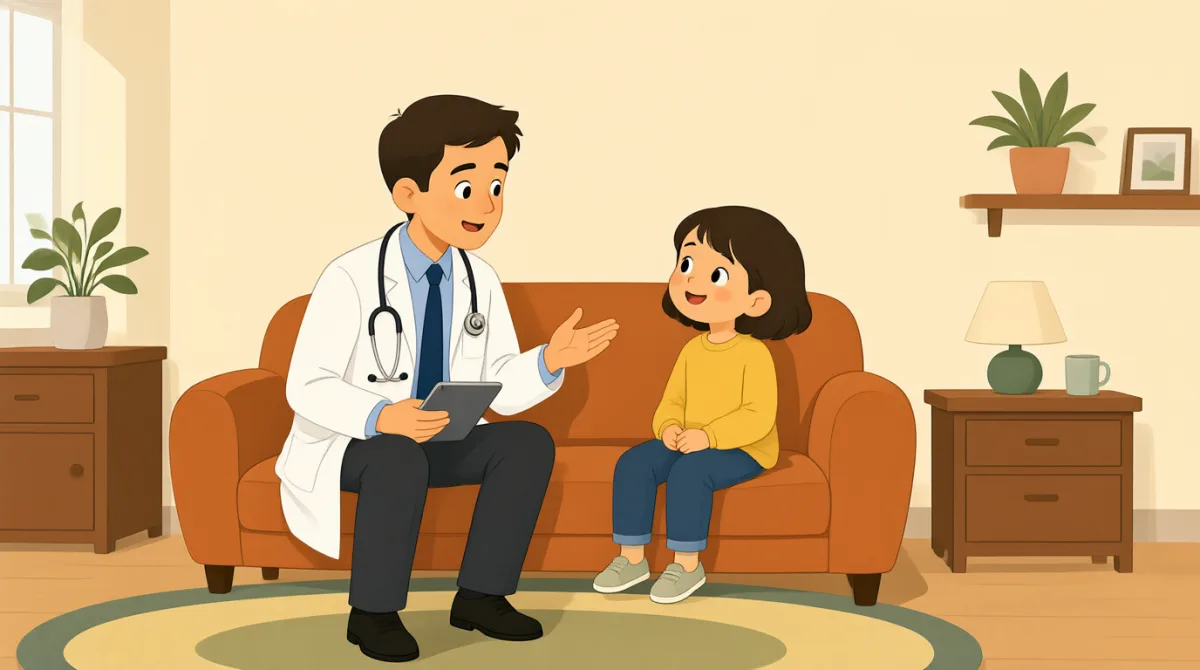

I’m going to listen to your child’s chest and check their ears.
Voy a escucharle el pecho a tu hijo y a revisarle los oídos.

Okay. They’ve been coughing, and the fever started yesterday.
De acuerdo. Ha estado tosiendo y la fiebre empezó ayer.
Take a deep breath, please. Good. I don’t hear anything unusual.
Respira hondo, por favor. Muy bien. No oigo nada fuera de lo normal.
What do you think is causing the fever?
¿Qué crees que está causando la fiebre?
It looks like a common virus. Your child should rest and drink plenty of fluids.
Parece un virus común. Tu hijo debería descansar y beber mucho líquido.
Should I give medicine if the fever comes back?
¿Debo darle algún medicamento si le vuelve la fiebre?
You can give children’s medicine as the label says. Don’t give more than the recommended amount.
Puedes darle un medicamento infantil siguiendo las instrucciones del envase. No le des más de la cantidad recomendada.
When should I call you again?
¿Cuándo debería volver a llamarte?
Call if the fever lasts more than three days or your child has trouble breathing.
Llama si la fiebre dura más de tres días o si a tu hijo le cuesta respirar.
Vocabulario8
- take a deep breathrespirar hondo
Breathe in deeply. A doctor may say this to help check your breathing.
Inhalar profundamente. Un médico puede decirte esto para comprobar cómo respiras.
- coughingtoser
Making a sound when air comes out of your throat suddenly. People often cough when they are sick.
Hacer un sonido cuando el aire sale de la garganta de repente. La gente suele toser cuando está enferma.
- feverfiebre
A higher-than-normal body temperature, often caused by an illness.
Una temperatura corporal más alta de lo normal, a menudo causada por una enfermedad.
- common virusvirus común
A virus that many people get. It can cause symptoms like a cough or fever.
Un virus que contrae mucha gente. Puede causar síntomas como tos o fiebre.
- plenty of fluidsmucho líquido
A lot of drinks, such as water. This phrase is often used as advice when someone is sick.
Una gran cantidad de bebidas, como agua. Esta expresión se usa a menudo para aconsejar a alguien que está enfermo.
- comes backvolver
Returns after going away. Here, it means the fever returns.
Regresar después de haber desaparecido. Aquí significa que vuelve la fiebre.
- recommended amountcantidad recomendada
The amount that is advised as safe or suitable, such as the dose written on a medicine label.
La cantidad que se aconseja como segura o adecuada, por ejemplo, la dosis indicada en la etiqueta de un medicamento.
- trouble breathingdificultad para respirar
Difficulty breathing. This can be a serious reason to contact a doctor.
Tener dificultad para respirar. Puede ser un motivo serio para ponerse en contacto con un médico.
Frases clave7
- 1
I’m going to listen to your child’s chest and check their ears.
Voy a escucharle el pecho a tu hijo y a revisarle los oídos.
This explains what a doctor is about to do. Use “I’m going to” to tell someone about a planned action.
Esta frase explica lo que un médico está a punto de hacer. Usa “I’m going to” para hablar de una acción que tienes planeada.
- 2
They’ve been coughing, and the fever started yesterday.
Ha estado tosiendo y la fiebre empezó ayer.
This describes symptoms and when they began. You can use this pattern to give a doctor clear information about an illness.
Esta frase describe los síntomas y cuándo comenzaron. Puedes usar este patrón para darle al médico información clara sobre una enfermedad.
- 3
Take a deep breath, please.
Respira hondo, por favor.
This is a polite instruction. Use “Take a…” to ask someone to do a simple action.
Esta es una instrucción cortés. Usa “Take a…” para pedirle a alguien que haga algo sencillo.
- 4
It looks like a common virus.
Parece un virus común.
This is a simple way to explain what may be causing an illness. “It looks like…” shows that something seems likely.
Esta es una forma sencilla de explicar qué podría estar causando una enfermedad. “It looks like…” indica que algo parece probable.
- 5
Your child should rest and drink plenty of fluids.
Tu hijo debería descansar y beber mucho líquido.
This gives advice about what to do when sick. Use “should” to make a helpful recommendation.
Esta frase da consejos sobre qué hacer cuando uno está enfermo. Usa “should” para hacer una recomendación útil.
- 6
You can give children’s medicine as the label says.
Puedes darle un medicamento infantil siguiendo las instrucciones del envase.
This explains how to use medicine by following its instructions. You can use “as the label says” when talking about directions on a product.
Esta frase explica cómo usar un medicamento siguiendo sus instrucciones. Puedes usar “as the label says” para hablar de las indicaciones de un producto.
- 7
Call if the fever lasts more than three days or your child has trouble breathing.
Llama si la fiebre dura más de tres días o si a tu hijo le cuesta respirar.
This tells someone when to contact the doctor again. Use “Call if…” to give a clear condition for calling.
Esta frase indica cuándo volver a ponerse en contacto con el médico. Usa “Call if…” para dar una condición clara para llamar.