Hot Chocolate After Skiing
Chocolate caliente después de esquiar
After the lesson, Emma and Jack warm up with hot chocolate. Emma tells Jack what she enjoyed and what she wants to practice next time.
Después de la clase, Emma y Jack entran en calor tomando chocolate caliente. Emma le cuenta a Jack qué le gustó y qué quiere practicar la próxima vez.
Diálogo8
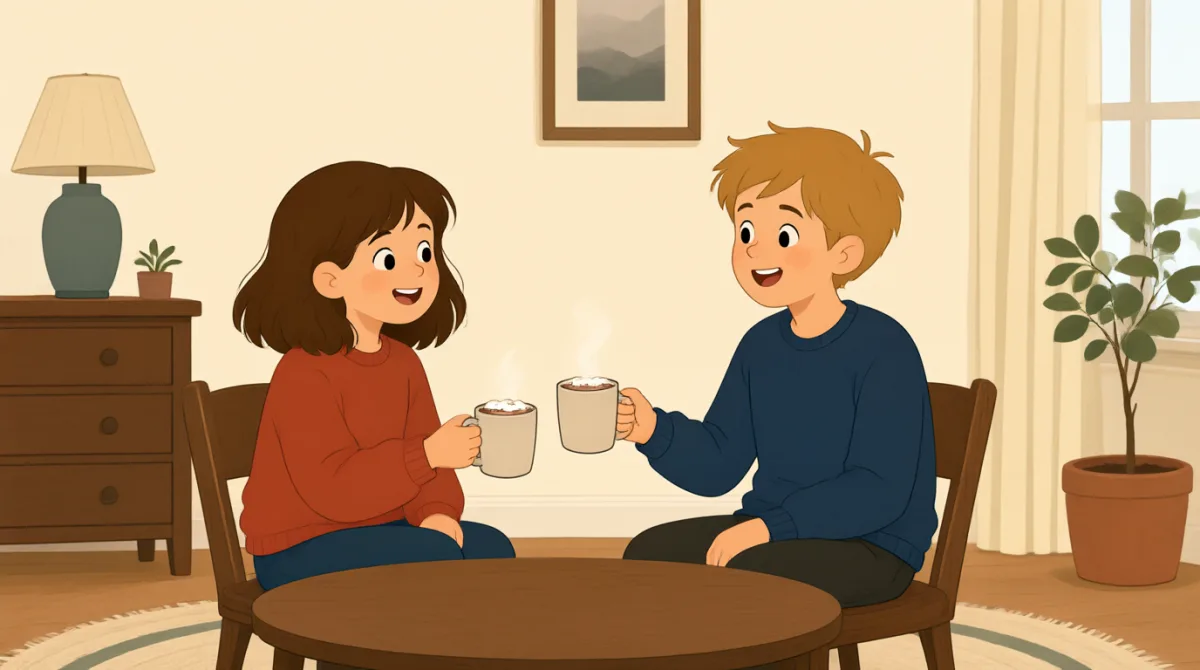

This hot chocolate is just what I need. My hands are still cold.
Este chocolate caliente es justo lo que necesito. Todavía tengo las manos frías.

You did well today. How did you like your first ski lesson?
Hoy lo hiciste muy bien. ¿Qué te pareció tu primera clase de esquí?
I loved it! Moving on the snow was fun, even when I fell.
¡Me encantó! Deslizarme por la nieve fue divertido, incluso cuando me caí.
You got back up and tried again. That was the important part.
Te levantaste y lo intentaste de nuevo. Eso es lo importante.
I want to practice stopping more next time. I still feel nervous.
La próxima vez quiero practicar más cómo frenar. Todavía me da un poco de miedo.
That makes sense. You’ll feel more sure after a little practice.
Es normal. Te sentirás con más confianza después de practicar un poco.
Let’s come back next weekend. I’d like to try that easy slope.
Volvamos el próximo fin de semana. Me gustaría probar esa pista fácil.
Sounds good. We can warm up with hot chocolate again afterward.
Me parece bien. Después podemos entrar en calor con otro chocolate caliente.
Vocabulario8
- warm upentrar en calor
To get warm after being cold. Here, Emma and Jack warm up by drinking hot chocolate.
Recuperar el calor después de haber tenido frío. En este caso, Emma y Jack entran en calor tomando chocolate caliente.
- How did you like your first ski lesson?¿Qué te pareció tu primera clase de esquí?
A friendly way to ask what someone thought of an experience. You can use “How did you like...?” to ask about a class, trip, or activity.
Una forma amistosa de preguntarle a alguien qué opina de una experiencia. Puedes usar “How did you like...?” para preguntar por una clase, un viaje o una actividad.
- got back upse levantó
Stood up again after falling down. Use “get back up” when someone stands after a fall.
Se puso de pie otra vez después de caerse. Usa “get back up” cuando alguien se levanta después de una caída.
- tried againlo intentó de nuevo
Made another attempt after something did not go as planned. You can use this phrase to talk about practicing or not giving up.
Volvió a intentarlo después de que algo no saliera como esperaba. Puedes usar esta expresión para hablar de practicar o de no rendirse.
- next timela próxima vez
On the next occasion. Use it when talking about what you want to do or change in the future.
En la siguiente ocasión. Úsala para hablar de algo que quieres hacer o cambiar en el futuro.
- That makes sense.Tiene sentido.
A way to say that you understand why someone feels or thinks something. You can use it to respond supportively.
Una forma de decir que entiendes por qué alguien siente o piensa algo. Puedes usarla para responder con comprensión y apoyo.
- come backvolver
Return to a place. Here, Emma suggests returning to the ski area next weekend.
Regresar a un lugar. Aquí, Emma propone volver a la estación de esquí el próximo fin de semana.
- afterwarddespués
At a later time, after something else happens. Here, Jack means they can have hot chocolate after skiing.
En un momento posterior, cuando ya haya ocurrido otra cosa. Aquí, Jack quiere decir que pueden tomar chocolate caliente después de esquiar.
Frases clave8
- 1
This hot chocolate is just what I need.
Este chocolate caliente es justo lo que necesito.
Use this to say that something is exactly right for you at the moment. Replace “hot chocolate” with something else you need, such as “a warm coat” or “a break.”
Usa esta frase para decir que algo es exactamente lo que necesitas en ese momento. Puedes reemplazar “hot chocolate” por otra cosa que necesites, como “a warm coat” o “a break.”
- 2
How did you like your first ski lesson?
¿Qué te pareció tu primera clase de esquí?
This is a natural way to ask someone what they thought of an experience. Replace “ski lesson” with another activity or event.
Esta es una forma natural de preguntarle a alguien qué le pareció una experiencia. Reemplaza “ski lesson” por otra actividad o evento.
- 3
Moving on the snow was fun, even when I fell.
Deslizarme por la nieve fue divertido, incluso cuando me caí.
Use “...was fun, even when...” to say you enjoyed an activity despite a difficulty. You can change the activity and the challenge to fit your experience.
Usa “...was fun, even when...” para decir que disfrutaste una actividad a pesar de alguna dificultad. Puedes cambiar la actividad y el reto para que se ajusten a tu experiencia.
- 4
You got back up and tried again.
Te levantaste y lo intentaste de nuevo.
This sentence encourages someone by recognizing that they kept going after a problem. Use “got back up” and “tried again” to describe persistence.
Esta frase anima a alguien al reconocer que siguió adelante después de tener un problema. Usa “got back up” y “tried again” para describir la perseverancia.
- 5
I want to practice stopping more next time.
La próxima vez quiero practicar más cómo frenar.
Use this sentence to say what skill you want to improve in the future. Replace “stopping” with another skill, such as “turning” or “speaking.”
Usa esta frase para decir qué habilidad quieres mejorar en el futuro. Reemplaza “stopping” por otra habilidad, como “turning” o “speaking.”
- 6
You’ll feel more sure after a little practice.
Te sentirás con más confianza después de practicar un poco.
This is a reassuring way to say that practice can build confidence. You can use “You’ll feel more sure” to encourage someone learning a new skill.
Esta es una forma tranquilizadora de decir que practicar puede ayudar a ganar confianza. Puedes usar “You’ll feel more sure” para animar a alguien que está aprendiendo una habilidad nueva.
- 7
Let’s come back next weekend.
Volvamos el próximo fin de semana.
Use “Let’s...” to suggest doing something together, and “come back” to suggest returning to a place. Replace “next weekend” with another time.
Usa “Let’s...” para proponer hacer algo juntos y “come back” para sugerir regresar a un lugar. Reemplaza “next weekend” por otro momento.
- 8
We can warm up with hot chocolate again afterward.
Después podemos entrar en calor con otro chocolate caliente.
This sentence suggests a plan for what to do after an activity. Replace “hot chocolate” with another way to warm up or relax.
Esta frase propone un plan para después de una actividad. Reemplaza “hot chocolate” por otra forma de entrar en calor o relajarse.