Finding the Bike Gone
Al volver, la bici ya no está
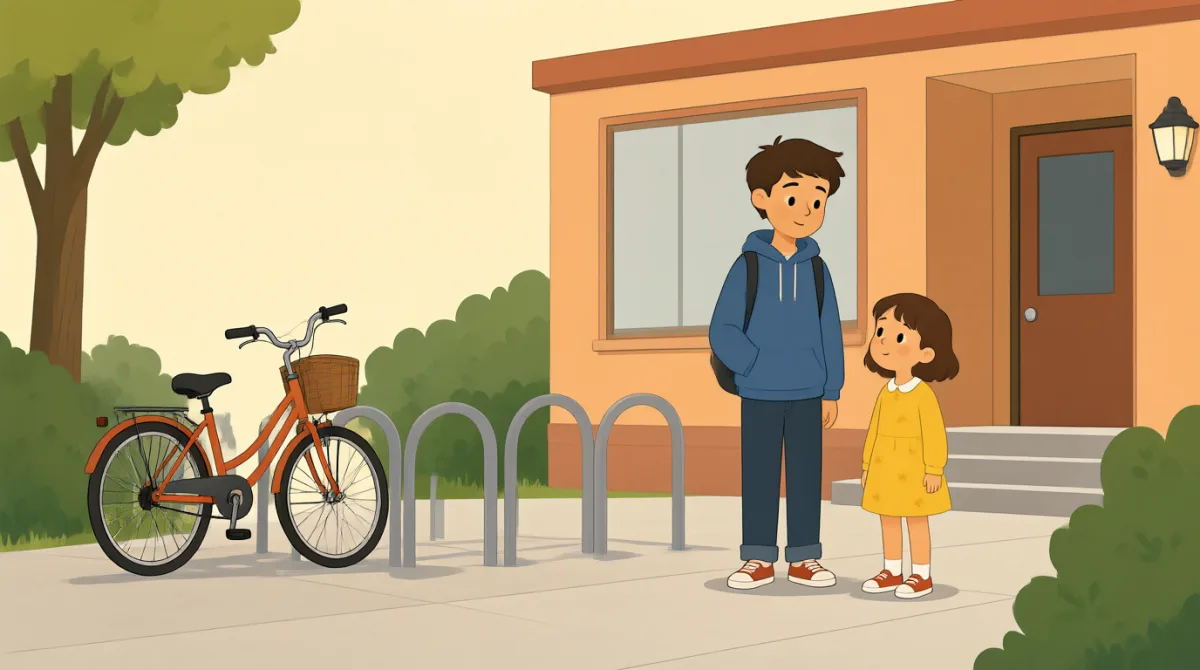
Leo returns to the bike rack and finds his bike is gone. He calls his friend Emma and tells her what happened.
Leo vuelve al aparcamiento de bicicletas y descubre que su bici ha desaparecido. Llama a su amiga Emma y le cuenta lo que pasó.
Diálogo8

Emma, are you free? I just got back to the bike rack.
Emma, ¿estás libre? Acabo de volver al aparcamiento de bicicletas.

Sure. What's up? Are you still at the station?
Claro. ¿Qué pasa? ¿Sigues en la estación?
Yes, but my bike is gone. I left it here this morning.
Sí, pero mi bici no está. La dejé aquí esta mañana.
Oh no! Did you lock it before you went inside?
¡Vaya! ¿La ataste antes de entrar?
Yes, I locked it to the rack. The lock is gone too.
Sí, la até al aparcamiento. El candado también ha desaparecido.
I'm sorry, Leo. Did you look around the whole rack?
Lo siento, Leo. ¿Buscaste por todo el aparcamiento?
I did. I checked both sides, but I can't find it.
Sí. Miré a ambos lados, pero no la encuentro.
Let's meet there. We can ask people nearby if they saw it.
Vamos a encontrarnos allí. Podemos preguntarles a las personas que estén cerca si la vieron.
Vocabulario6
- What's up?¿Qué pasa?
This is a casual way to ask what is happening or why someone is calling. You can use it to start a conversation with a friend.
Es una forma informal de preguntar qué pasa o por qué alguien te llama. Puedes usarla para iniciar una conversación con un amigo.
- gonedesaparecido
Here, “gone” means the bike is no longer where Leo left it. You can say something is gone when it has disappeared or is missing.
Aquí, “gone” significa que la bici ya no está donde Leo la dejó. Puedes decir que algo “is gone” cuando ha desaparecido o no está.
- left it herela dejé aquí
This means Leo put his bike here and went away. Use “left it” to say where you put something before leaving.
Significa que Leo dejó la bici aquí y se fue. Usa “left it” para decir dónde pusiste algo antes de irte.
- look aroundbuscar por los alrededores
This means to search by checking different places nearby. You can use it when you are trying to find something.
Significa buscar revisando distintos lugares cercanos. Puedes usarlo cuando intentas encontrar algo.
- checked both sidesmiré a ambos lados
This means Leo looked at the two sides of the rack. Use “check” to say you looked carefully at a place or thing.
Significa que Leo miró los dos lados del aparcamiento. Usa “check” para decir que revisaste un lugar o una cosa con atención.
- nearbycerca
This means close to the place where you are. You can ask people nearby for help or information.
Significa que algo está a poca distancia del lugar donde estás. Puedes pedir ayuda o información a las personas que estén cerca.
Frases clave7
- 1
I just got back to the bike rack.
Acabo de volver al aparcamiento de bicicletas.
This tells someone you have returned to a place. Use “I just got back to…” to say you returned a short time ago.
Con esta frase le dices a alguien que has vuelto a un lugar. Usa “I just got back to…” para decir que regresaste hace poco.
- 2
I left it here this morning.
La dejé aquí esta mañana.
This explains where and when Leo last had his bike. You can use “I left it…” to say where you put something.
Esto explica dónde y cuándo Leo vio su bici por última vez. Puedes usar “I left it…” para decir dónde dejaste algo.
- 3
Did you lock it before you went inside?
¿La ataste antes de entrar?
This is a simple way to ask whether someone secured something before doing another action. You can change “lock it” to another action, such as “close the door.”
Es una forma sencilla de preguntar si alguien aseguró algo antes de hacer otra cosa. Puedes cambiar “lock it” por otra acción, como “close the door.”
- 4
I locked it to the rack.
La até al aparcamiento.
This explains how Leo secured his bike. Use “I locked it to…” to describe attaching something with a lock.
Esto explica cómo aseguró Leo su bici. Usa “I locked it to…” para describir que sujetaste algo con un candado.
- 5
Did you look around the whole rack?
¿Buscaste por todo el aparcamiento?
This asks whether someone searched all of a specific area. You can use “Did you look around…?” when helping someone find something.
Esto pregunta si alguien buscó en toda una zona específica. Puedes usar “Did you look around…?” cuando ayudas a alguien a encontrar algo.
- 6
I checked both sides, but I can't find it.
Miré a ambos lados, pero no la encuentro.
This says what Leo searched and explains that the bike is still missing. Use “I checked…, but I can’t find it” when you have looked for something without success.
Esto cuenta qué buscó Leo y explica que la bici sigue sin aparecer. Usa “I checked…, but I can’t find it” cuando has buscado algo sin éxito.
- 7
We can ask people nearby if they saw it.
Podemos preguntarles a las personas que estén cerca si la vieron.
This suggests a practical next step and asks whether nearby people noticed the bike. Use “We can ask…” to suggest doing something together.
Esto sugiere un paso práctico y pregunta si alguien de las inmediaciones vio la bici. Usa “We can ask…” para proponer hacer algo juntos.