The Dentist Explains a Filling
El dentista explica un empaste
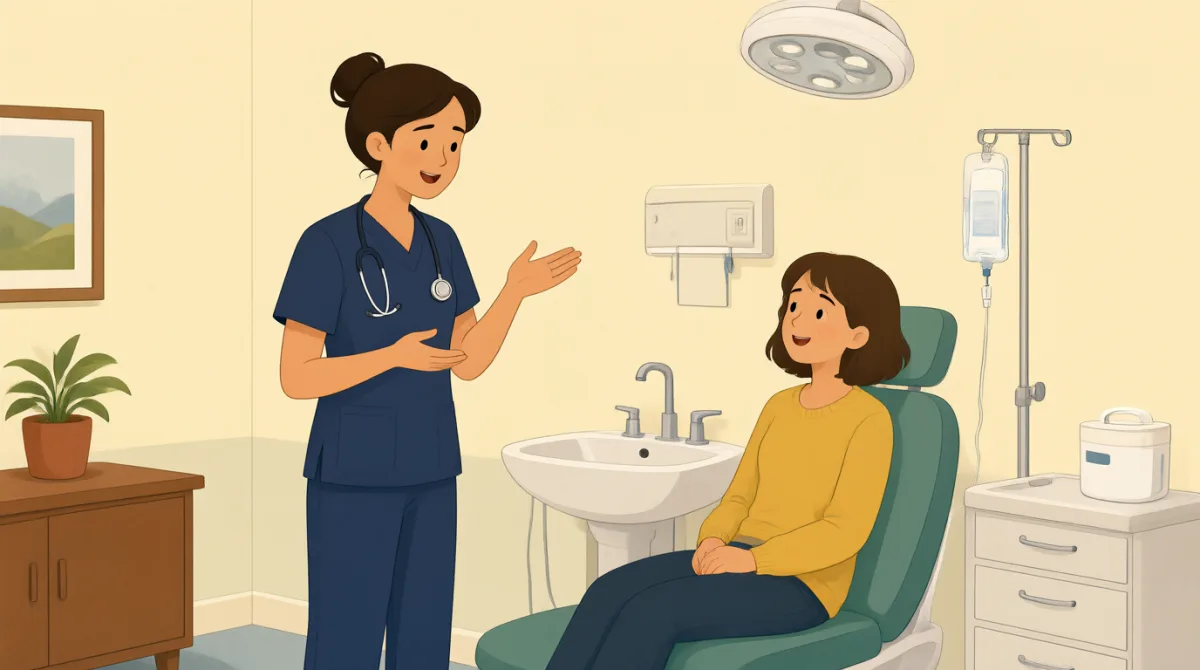
David explains that Emma needs a small filling and describes what will happen. Emma asks whether the treatment will hurt.
David explica que Emma necesita un empaste pequeño y describe qué va a pasar. Emma pregunta si el tratamiento le dolerá.
Diálogo9

The X-ray shows a small cavity in one of your back teeth.
La radiografía muestra una pequeña caries en una de las muelas de atrás.

Does that mean I need a filling today?
¿Eso significa que necesito un empaste hoy?
Yes, it’s a small filling, and we can do it now if you’re ready.
Sí, es un empaste pequeño y podemos hacerlo ahora si estás lista.
Will it hurt? I’m a little nervous about the shot.
¿Me va a doler? Me pone un poco nerviosa la inyección.
You may feel a small pinch, but the medicine will numb the tooth.
Puede que sientas un pequeño pinchazo, pero la anestesia te dejará el diente insensible.
How long will the filling take?
¿Cuánto tiempo llevará el empaste?
About thirty minutes. I’ll clean out the cavity and fill the tooth.
Unos treinta minutos. Limpiaré la caries y empastaré el diente.
Okay, let’s do it. What should I do afterward?
De acuerdo, hagámoslo. ¿Qué debo hacer después?
Wait until the numb feeling is gone before you eat, and call us if it hurts.
Espera a que se te pase el efecto de la anestesia antes de comer y llámanos si te duele.
Vocabulario8
- cavitycaries
A cavity is a small hole in a tooth caused by decay. In this conversation, the dentist finds one in Emma’s back tooth.
Una caries es un pequeño agujero en un diente causado por el deterioro dental. En esta conversación, el dentista encuentra una en una de las muelas de atrás de Emma.
- fillingempaste
A filling is material a dentist puts into a tooth to repair a cavity. You can say, “I need a filling.”
Un empaste es el material que el dentista coloca en un diente para reparar una caries. Puedes decir: “I need a filling” (Necesito un empaste).
- nervousnervioso/a
Nervous means worried or a little afraid. You can use it to explain how you feel before a medical appointment.
“Nervous” significa estar preocupado o sentir un poco de miedo. Puedes usar esta palabra para explicar cómo te sientes antes de una cita médica.
- a small pinchun pequeño pinchazo
A small pinch is a brief, slight feeling of pain. You might hear this phrase when someone explains what an injection may feel like.
“A small pinch” es una sensación de dolor leve y breve. Puede que oigas esta expresión cuando alguien explica cómo se siente una inyección.
- numb the toothadormecer el diente
To numb the tooth means to make it lose feeling so treatment hurts less. You can use “numb” to describe medicine that takes away feeling.
“To numb the tooth” significa quitarle la sensibilidad al diente para que el tratamiento duela menos. Puedes usar “numb” para hablar de un medicamento que elimina la sensibilidad.
- clean outlimpiar
To clean out something means to remove unwanted material from inside it. Here, the dentist cleans out the cavity before filling the tooth.
“To clean out” algo significa quitar de su interior el material que no debería estar ahí. Aquí, el dentista limpia la caries antes de empastar el diente.
- the numb feeling is gonese te ha pasado el efecto de la anestesia
This means the tooth or mouth has its normal feeling again. You can use this phrase to talk about waiting for medicine to stop working.
“The numb feeling is gone” significa que el diente o la boca han recuperado su sensibilidad normal. Puedes usar esta expresión para hablar de esperar a que deje de hacer efecto un medicamento.
- afterwarddespués
Afterward means after something happens. You can use it to ask or talk about what to do after an appointment or treatment.
“Afterward” significa después de que ocurra algo. Puedes usar esta palabra para preguntar o hablar sobre qué hacer después de una cita o un tratamiento.
Frases clave7
- 1
Does that mean I need a filling today?
¿Eso significa que necesito un empaste hoy?
Use this question to check what a situation means and whether something is needed now. You can replace “a filling” with another treatment or task.
Usa esta pregunta para comprobar qué significa una situación y si hace falta hacer algo ahora. Puedes cambiar “a filling” por otro tratamiento o tarea.
- 2
Will it hurt?
¿Me va a doler?
This is a simple way to ask if something will be painful. You can also use it before other medical treatments or procedures.
Esta es una forma sencilla de preguntar si algo va a ser doloroso. También puedes usarla antes de otros tratamientos o procedimientos médicos.
- 3
I’m a little nervous about the shot.
Me pone un poco nervioso/a la inyección.
Use this sentence to explain that you feel slightly worried about something. Replace “the shot” with whatever is making you nervous.
Usa esta frase para explicar que algo te preocupa un poco. Cambia “the shot” por aquello que te pone nervioso/a.
- 4
How long will the filling take?
¿Cuánto tiempo llevará el empaste?
Use this question to ask how much time a future activity or treatment will need. Replace “the filling” with another task or event.
Usa esta pregunta para saber cuánto tiempo necesitará una actividad o un tratamiento futuro. Cambia “the filling” por otra tarea o actividad.
- 5
I’ll clean out the cavity and fill the tooth.
Limpiaré la caries y empastaré el diente.
This sentence explains the steps in a treatment. You can use “I’ll” to describe what you plan to do next.
Esta frase explica los pasos de un tratamiento. Puedes usar “I’ll” para describir lo que piensas hacer a continuación.
- 6
What should I do afterward?
¿Qué debo hacer después?
Use this question to ask for advice about what to do after an event or treatment. Replace “afterward” with a specific time if needed.
Usa esta pregunta para pedir consejo sobre qué hacer después de un evento o tratamiento. Si hace falta, cambia “afterward” por un momento concreto.
- 7
Wait until the numb feeling is gone before you eat, and call us if it hurts.
Espera a que se te pase el efecto de la anestesia antes de comer y llámanos si te duele.
This gives clear advice with two instructions: wait before eating and call if there is pain. You can reuse “Wait until … before you …” to give other safety instructions.
Esta frase da dos instrucciones claras: esperar antes de comer y llamar si hay dolor. Puedes reutilizar “Wait until … before you …” para dar otras indicaciones de seguridad.