The Dentist Explains a Filling
Dentysta wyjaśnia, na czym polega założenie plomby
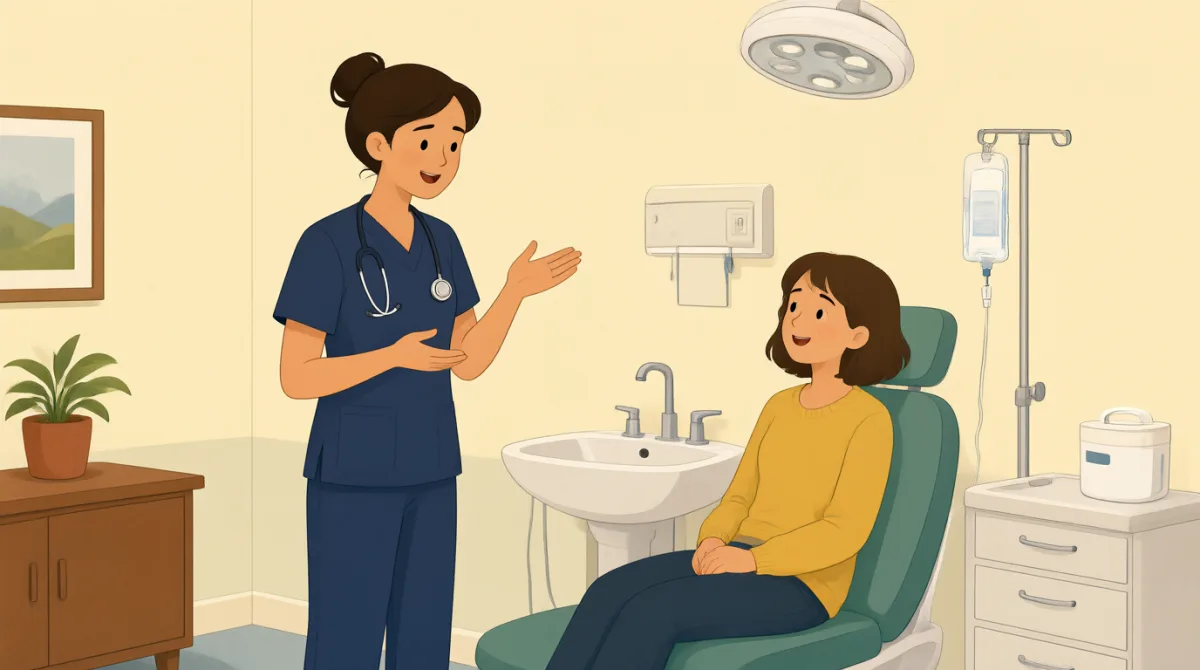
David explains that Emma needs a small filling and describes what will happen. Emma asks whether the treatment will hurt.
David wyjaśnia, że Emma potrzebuje małej plomby, i opisuje, jak będzie wyglądał zabieg. Emma pyta, czy będzie bolało.
Dialog9

The X-ray shows a small cavity in one of your back teeth.
Na zdjęciu rentgenowskim widać mały ubytek w jednym z tylnych zębów.

Does that mean I need a filling today?
Czy to znaczy, że muszę dziś założyć plombę?
Yes, it’s a small filling, and we can do it now if you’re ready.
Tak, to niewielka plomba. Możemy założyć ją teraz, jeśli jesteś gotowa.
Will it hurt? I’m a little nervous about the shot.
Czy będzie bolało? Trochę się boję zastrzyku.
You may feel a small pinch, but the medicine will numb the tooth.
Możesz poczuć lekkie ukłucie, ale lek znieczuli ząb.
How long will the filling take?
Ile potrwa założenie plomby?
About thirty minutes. I’ll clean out the cavity and fill the tooth.
Około trzydziestu minut. Oczyszczę ubytek i wypełnię ząb.
Okay, let’s do it. What should I do afterward?
Dobrze, zróbmy to. Co powinnam zrobić później?
Wait until the numb feeling is gone before you eat, and call us if it hurts.
Poczekaj, aż znieczulenie przestanie działać, zanim coś zjesz. Jeśli będzie bolało, zadzwoń do nas.
Słownictwo8
- cavityubytek
A cavity is a small hole in a tooth caused by decay. In this conversation, the dentist finds one in Emma’s back tooth.
Cavity to mały ubytek w zębie spowodowany próchnicą. W tej rozmowie dentysta znajduje go w tylnym zębie Emmy.
- fillingplomba
A filling is material a dentist puts into a tooth to repair a cavity. You can say, “I need a filling.”
Filling to materiał, którym dentysta wypełnia ubytek w zębie. Możesz powiedzieć: „I need a filling” (Potrzebuję plomby).
- nervouszdenerwowany; zaniepokojony
Nervous means worried or a little afraid. You can use it to explain how you feel before a medical appointment.
Nervous znaczy „zaniepokojony” albo „trochę przestraszony”. Możesz użyć tego słowa, żeby opisać, jak się czujesz przed wizytą u lekarza.
- a small pinchlekkie ukłucie
A small pinch is a brief, slight feeling of pain. You might hear this phrase when someone explains what an injection may feel like.
A small pinch to krótkie, lekkie uczucie bólu. Możesz usłyszeć to wyrażenie, gdy ktoś opisuje, co można poczuć podczas zastrzyku.
- numb the toothznieczulić ząb
To numb the tooth means to make it lose feeling so treatment hurts less. You can use “numb” to describe medicine that takes away feeling.
Numb the tooth znaczy „pozbawić ząb czucia”, żeby zabieg mniej bolał. Słowo “numb” opisuje działanie leku, który znosi czucie.
- clean outoczyścić
To clean out something means to remove unwanted material from inside it. Here, the dentist cleans out the cavity before filling the tooth.
Clean out something znaczy usunąć niepotrzebną substancję ze środka czegoś. Tutaj dentysta oczyszcza ubytek przed wypełnieniem zęba.
- the numb feeling is goneznieczulenie przestanie działać
This means the tooth or mouth has its normal feeling again. You can use this phrase to talk about waiting for medicine to stop working.
The numb feeling is gone znaczy, że w zębie lub ustach znów normalnie się czuje. Możesz użyć tego wyrażenia, mówiąc o czekaniu, aż przestanie działać lek znieczulający.
- afterwardpóźniej
Afterward means after something happens. You can use it to ask or talk about what to do after an appointment or treatment.
Afterward znaczy „po czymś” albo „później”. Możesz użyć tego słowa, pytając lub mówiąc o tym, co zrobić po wizycie albo zabiegu.
Kluczowe zdania7
- 1
Does that mean I need a filling today?
Czy to znaczy, że muszę dziś założyć plombę?
Use this question to check what a situation means and whether something is needed now. You can replace “a filling” with another treatment or task.
Użyj tego pytania, żeby sprawdzić, co oznacza dana sytuacja i czy coś jest potrzebne już teraz. Możesz zastąpić “a filling” innym zabiegiem lub zadaniem.
- 2
Will it hurt?
Czy będzie bolało?
This is a simple way to ask if something will be painful. You can also use it before other medical treatments or procedures.
To prosty sposób, żeby zapytać, czy coś będzie bolesne. Możesz też użyć tego pytania przed innymi zabiegami medycznymi.
- 3
I’m a little nervous about the shot.
Trochę się boję zastrzyku.
Use this sentence to explain that you feel slightly worried about something. Replace “the shot” with whatever is making you nervous.
Użyj tego zdania, żeby powiedzieć, że trochę się czymś martwisz. Zastąp “the shot” tym, co wywołuje twój niepokój.
- 4
How long will the filling take?
Ile potrwa założenie plomby?
Use this question to ask how much time a future activity or treatment will need. Replace “the filling” with another task or event.
Użyj tego pytania, żeby dowiedzieć się, ile czasu zajmie przyszła czynność lub zabieg. Zastąp “the filling” innym zadaniem lub wydarzeniem.
- 5
I’ll clean out the cavity and fill the tooth.
Oczyszczę ubytek i wypełnię ząb.
This sentence explains the steps in a treatment. You can use “I’ll” to describe what you plan to do next.
To zdanie opisuje kolejne etapy zabiegu. Możesz użyć “I’ll”, żeby powiedzieć, co zamierzasz zrobić dalej.
- 6
What should I do afterward?
Co powinnam zrobić później?
Use this question to ask for advice about what to do after an event or treatment. Replace “afterward” with a specific time if needed.
Użyj tego pytania, żeby poprosić o radę, co zrobić po wydarzeniu lub zabiegu. W razie potrzeby zastąp “afterward” konkretnym określeniem czasu.
- 7
Wait until the numb feeling is gone before you eat, and call us if it hurts.
Poczekaj, aż znieczulenie przestanie działać, zanim coś zjesz, a jeśli będzie bolało, zadzwoń do nas.
This gives clear advice with two instructions: wait before eating and call if there is pain. You can reuse “Wait until … before you …” to give other safety instructions.
To jasna wskazówka zawierająca dwa zalecenia: poczekaj z jedzeniem i zadzwoń, jeśli pojawi się ból. Możesz użyć konstrukcji “Wait until … before you …”, żeby przekazać inne wskazówki dotyczące bezpieczeństwa.