Checking In the Next Day
Am nächsten Tag nachfragen
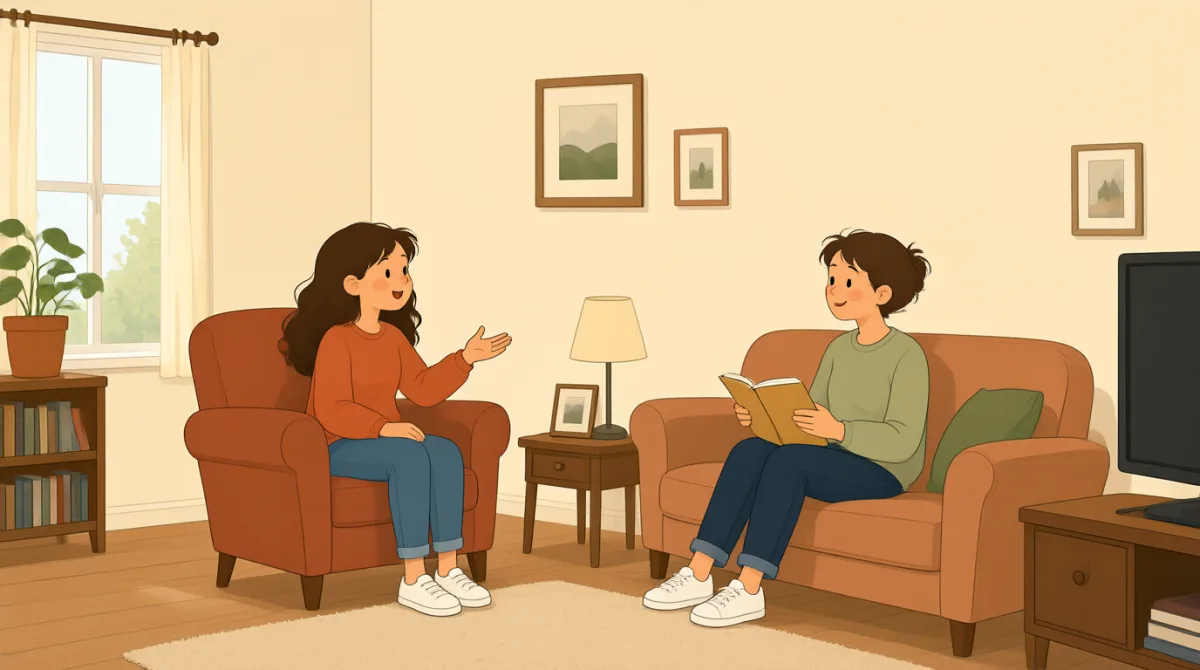
Emma calls Grace the next morning with an update on how she feels. They discuss whether Emma can return to work the following day.
Emma ruft Grace am nächsten Morgen an und berichtet, wie sie sich fühlt. Sie besprechen, ob Emma am nächsten Tag wieder zur Arbeit kommen kann.
Dialog8

Good morning, Grace. I’m still feeling sick today, so I can’t come in.
Guten Morgen, Grace. Mir geht es heute immer noch schlecht, deshalb kann ich nicht zur Arbeit kommen.

I’m sorry to hear that. Do you have a fever or a cough?
Das tut mir leid. Hast du Fieber oder Husten?
I have a fever and a bad headache. I’m going to rest today.
Ich habe Fieber und starke Kopfschmerzen. Ich werde mich heute ausruhen.
Okay, please take care of yourself. Do you think you’ll be back tomorrow?
Okay, pass gut auf dich auf. Glaubst du, dass du morgen wieder da bist?
I hope so. I’ll see how I feel later today and call you this afternoon.
Ich hoffe es. Ich schaue später, wie es mir geht, und rufe dich heute Nachmittag an.
That sounds good. Don’t worry about work today; we can handle your tasks.
Das klingt gut. Mach dir heute keine Sorgen um die Arbeit; wir kümmern uns um deine Aufgaben.
Thanks, Grace. I’ll send you an update this afternoon.
Danke, Grace. Ich gebe dir heute Nachmittag Bescheid.
You’re welcome. Get some rest, and I hope you feel better soon.
Gern. Ruh dich aus, und ich hoffe, dass es dir bald besser geht.
Wortschatz8
- come inzur Arbeit kommen
Here, it means to go to work. You can say, “I can’t come in today” when you are unable to work.
Hier bedeutet „come in“, zur Arbeit zu kommen. Du kannst sagen: „I can’t come in today“ (Ich kann heute nicht zur Arbeit kommen), wenn du nicht arbeiten kannst.
- feverFieber
A fever is when your body temperature is higher than normal. It is a common symptom of being sick.
Fieber hast du, wenn deine Körpertemperatur höher als normal ist. Es ist ein häufiges Krankheitssymptom.
- bad headachestarke Kopfschmerzen
A bad headache is strong pain in your head. Use “bad” to describe a symptom that is severe.
Ein „bad headache“ sind starke Schmerzen im Kopf. Mit „bad“ beschreibst du ein Symptom als heftig.
- take care of yourselfpass gut auf dich auf
This means to do things that help you stay well or get better. It is a kind way to show concern.
„Take care of yourself“ bedeutet, Dinge zu tun, die dir helfen, gesund zu bleiben oder wieder gesund zu werden. So zeigst du auf freundliche Weise, dass du dir Sorgen machst.
- back tomorrowmorgen wieder da sein
Here, this means returning to work the next day. You can ask, “Will you be back tomorrow?”
Hier bedeutet „back tomorrow“, am nächsten Tag wieder zur Arbeit zu kommen. Du kannst fragen: „Will you be back tomorrow?“ (Bist du morgen wieder da?)
- see how I feelschauen, wie es mir geht
This means to wait and check how you feel before making a decision. It is useful when you are not sure what you will be able to do.
„See how I feel“ bedeutet, erst einmal abzuwarten und zu prüfen, wie es dir geht, bevor du dich entscheidest. Das ist praktisch, wenn du noch nicht weißt, was du schaffen wirst.
- handle your taskssich um deine Aufgaben kümmern
This means to take care of your work duties. You can use it to reassure someone that their work will be managed.
„Handle your tasks“ bedeutet, deine beruflichen Aufgaben zu übernehmen. Mit dieser Formulierung kannst du jemandem versichern, dass sich um die Arbeit gekümmert wird.
- get some restdich ausruhen
This means to relax or sleep so you can recover. It is a common way to wish someone well when they are sick.
„Get some rest“ bedeutet, dich zu entspannen oder zu schlafen, damit du wieder gesund wirst. Das sagt man oft, um jemandem, der krank ist, gute Besserung zu wünschen.
Wichtige Sätze8
- 1
I’m still feeling sick today, so I can’t come in.
Mir geht es heute immer noch schlecht, deshalb kann ich nicht zur Arbeit kommen.
Use this to tell someone you are still unwell and cannot go to work. You can change “today” to another day.
Mit diesem Satz sagst du jemandem, dass du dich noch nicht wieder gut fühlst und nicht zur Arbeit kommen kannst. Du kannst „today“ durch einen anderen Tag ersetzen.
- 2
Do you have a fever or a cough?
Hast du Fieber oder Husten?
This is a simple way to ask about common symptoms. You can replace “a fever or a cough” with other symptoms.
So kannst du einfach nach häufigen Krankheitssymptomen fragen. Du kannst „a fever or a cough“ durch andere Symptome ersetzen.
- 3
I’m going to rest today.
Ich werde mich heute ausruhen.
Use “I’m going to” to talk about a plan. Replace “rest” with another activity, such as “stay home.”
Mit „I’m going to“ sprichst du über einen Plan. Du kannst „rest“ durch eine andere Aktivität ersetzen, zum Beispiel durch „stay home“.
- 4
Do you think you’ll be back tomorrow?
Glaubst du, dass du morgen wieder da bist?
This is a polite way to ask if someone expects to return the next day. You can change “tomorrow” to another time.
So kannst du höflich fragen, ob jemand damit rechnet, am nächsten Tag wiederzukommen. Du kannst „tomorrow“ durch einen anderen Zeitpunkt ersetzen.
- 5
I’ll see how I feel later today and call you this afternoon.
Ich schaue später, wie es mir geht, und rufe dich heute Nachmittag an.
This sentence explains that you will check how you feel and follow up later. Use “I’ll” to talk about a future action.
Dieser Satz erklärt, dass du später prüfen wirst, wie es dir geht, und dich dann wieder meldest. Mit „I’ll“ sprichst du über etwas, das du in Zukunft tun wirst.
- 6
Don’t worry about work today; we can handle your tasks.
Mach dir heute keine Sorgen um die Arbeit; wir kümmern uns um deine Aufgaben.
Use this to reassure someone that their work will be taken care of. You can replace “your tasks” with a specific responsibility.
Mit diesem Satz versicherst du jemandem, dass sich um die Arbeit gekümmert wird. Du kannst „your tasks“ durch eine konkrete Aufgabe ersetzen.
- 7
I’ll send you an update this afternoon.
Ich gebe dir heute Nachmittag Bescheid.
This is a clear way to promise to share new information later. You can change “this afternoon” to another time.
So kannst du klar versprechen, später neue Informationen mitzuteilen. Du kannst „this afternoon“ durch einen anderen Zeitpunkt ersetzen.
- 8
Get some rest, and I hope you feel better soon.
Ruh dich aus, und ich hoffe, dass es dir bald besser geht.
This is a friendly way to encourage someone who is sick. You can use “I hope you feel better soon” by itself, too.
Das ist eine freundliche Art, jemandem, der krank ist, Mut zu machen. Du kannst auch einfach „I hope you feel better soon“ sagen.