Paying the Bill
Die Rechnung bezahlen
David finishes the repair and gives Jack the bill. Jack asks about the cost and pays for the work.
David ist mit der Reparatur fertig und gibt Jack die Rechnung. Jack fragt nach den Kosten und bezahlt die Arbeit.
Dialog8
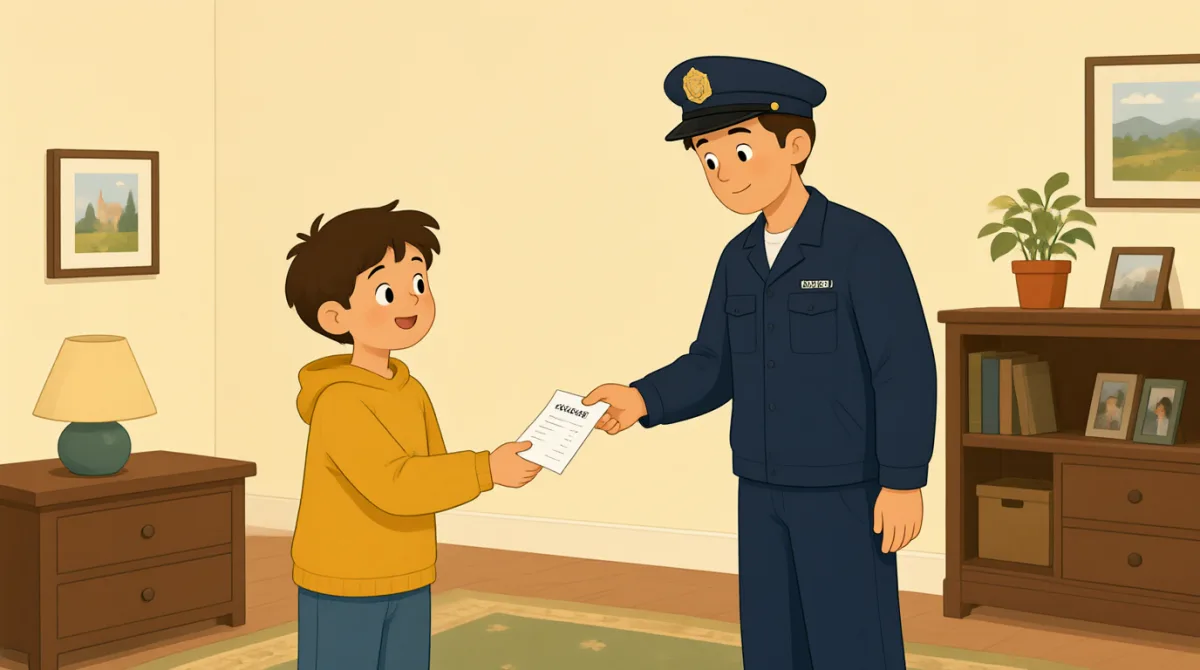

The repair is finished. The pipe was loose, but it’s fixed now.
Die Reparatur ist fertig. Das Rohr war locker, aber jetzt ist es wieder dicht.

Great. Can I see the bill? How much do I owe you?
Super. Kann ich die Rechnung sehen? Wie viel schulde ich Ihnen?
The repair and parts come to one hundred and twenty dollars.
Die Reparatur und die Ersatzteile kosten zusammen 120 Dollar.
Does that include the visit and the new pipe part?
Sind darin der Besuch und das neue Rohrteil enthalten?
Yes, it includes both. There are no extra charges today.
Ja, beides ist darin enthalten. Heute kommen keine zusätzlichen Kosten dazu.
Okay, I’ll pay by card. Can you give me a receipt?
Okay, ich bezahle mit Karte. Können Sie mir eine Quittung geben?
Sure. Here’s your receipt. The sink should be fine now.
Natürlich. Hier ist Ihre Quittung. Das Waschbecken sollte jetzt in Ordnung sein.
Thanks for fixing it so quickly. I’ll keep an eye on it.
Danke, dass Sie das so schnell repariert haben. Ich werde es im Auge behalten.
Wortschatz8
- the repair is finisheddie Reparatur ist fertig
This means the work is done. You can use it to tell someone that a job is complete.
Das bedeutet, dass die Arbeit erledigt ist. Du kannst das sagen, wenn du jemandem mitteilen möchtest, dass eine Arbeit abgeschlossen ist.
- looselocker
Here, “loose” means the pipe was not firmly connected. You can use it to describe something that needs tightening.
Hier bedeutet “loose”, dass das Rohr nicht fest verbunden war. Du kannst das Wort verwenden, um etwas zu beschreiben, das festgezogen werden muss.
- How much do I owe you?Wie viel schulde ich Ihnen?
Use this question to ask how much money you need to pay someone.
Mit dieser Frage erkundigst du dich, wie viel Geld du jemandem bezahlen musst.
- come tosich auf ... belaufen
Here, “come to” means to add up to a total amount. For example, “The items come to $20.”
Hier bedeutet “come to”, dass sich etwas zu einem Gesamtbetrag addiert. Zum Beispiel: “The items come to $20.” (Die Artikel kosten zusammen 20 Dollar.)
- extra chargeszusätzliche Kosten
These are additional costs beyond the main price. You can ask if there are any extra charges before you pay.
Das sind Kosten, die zusätzlich zum Grundpreis anfallen. Du kannst vor dem Bezahlen fragen, ob noch zusätzliche Kosten dazukommen.
- pay by cardmit Karte bezahlen
This means to use a bank or credit card to pay. You can say, “I’ll pay by card” when choosing how to pay.
Das bedeutet, mit einer Bank- oder Kreditkarte zu bezahlen. Wenn du sagst “I’ll pay by card”, teilst du mit, wie du bezahlen möchtest.
- receiptQuittung
A receipt is a written record that shows you paid. You can ask for one after buying something or paying for a service.
Eine Quittung ist ein schriftlicher Beleg dafür, dass du bezahlt hast. Du kannst danach fragen, wenn du etwas kaufst oder eine Dienstleistung bezahlst.
- keep an eye on itetwas im Auge behalten
This means to watch something and check that it stays okay. Here, Jack will check the sink to make sure it does not leak again.
Das bedeutet, etwas zu beobachten und zu überprüfen, ob alles in Ordnung bleibt. Jack wird das Waschbecken im Auge behalten und darauf achten, dass es nicht wieder undicht wird.
Wichtige Sätze8
- 1
The repair is finished.
Die Reparatur ist fertig.
This is a simple way to say that a job is complete. You can replace “the repair” with another task, such as “The cleaning is finished.”
So kannst du einfach sagen, dass eine Arbeit abgeschlossen ist. Du kannst “the repair” durch eine andere Aufgabe ersetzen, zum Beispiel: “The cleaning is finished.” (Die Reinigung ist abgeschlossen.)
- 2
How much do I owe you?
Wie viel schulde ich Ihnen?
Use this to ask how much you need to pay. It is useful after someone provides a service or gives you something to buy.
Mit diesem Satz fragst du, wie viel du bezahlen musst. Er ist nützlich, nachdem dir jemand eine Dienstleistung erbracht oder etwas zum Kauf angeboten hat.
- 3
Does that include the visit and the new pipe part?
Sind darin der Besuch und das neue Rohrteil enthalten?
This question checks what is covered by the price. You can ask, “Does that include [item or service]?” to avoid surprises.
Mit dieser Frage klärst du, was im Preis enthalten ist. Du kannst fragen: “Does that include [item or service]?” (Ist darin [Artikel oder Dienstleistung] enthalten?), damit du keine Überraschungen erlebst.
- 4
There are no extra charges today.
Heute kommen keine zusätzlichen Kosten dazu.
This sentence tells someone that they will not have to pay additional fees. You can use “There are no extra charges” when explaining a price.
Mit diesem Satz sagst du jemandem, dass keine weiteren Gebühren anfallen. Du kannst “There are no extra charges” verwenden, wenn du einen Preis erklärst.
- 5
I’ll pay by card.
Ich bezahle mit Karte.
This is a clear way to choose card as your payment method. You can also say, “I’ll pay in cash.”
So kannst du klar sagen, dass du mit Karte bezahlen möchtest. Du kannst auch sagen: “I’ll pay in cash.” (Ich bezahle bar.)
- 6
Can you give me a receipt?
Können Sie mir eine Quittung geben?
Use this polite question to ask for proof of payment. You can ask for a receipt when paying at a shop or for a service.
Mit dieser höflichen Frage bittest du um einen Zahlungsbeleg. Du kannst beim Bezahlen in einem Geschäft oder für eine Dienstleistung um eine Quittung bitten.
- 7
The sink should be fine now.
Das Waschbecken sollte jetzt in Ordnung sein.
This gives a simple, reassuring update about a repair. You can use “It should be fine now” after fixing or checking something.
Damit gibst du nach einer Reparatur eine einfache, beruhigende Rückmeldung. “It should be fine now” kannst du sagen, nachdem du etwas repariert oder überprüft hast.
- 8
I’ll keep an eye on it.
Ich werde es im Auge behalten.
Use this to say that you will watch or check something. Replace “it” with the thing you plan to monitor.
Damit sagst du, dass du etwas beobachten oder überprüfen wirst. Ersetze “it” durch das, was du im Auge behalten möchtest.