Paying the Bill
David finishes the repair and gives Jack the bill. Jack asks about the cost and pays for the work.
Dialogue8
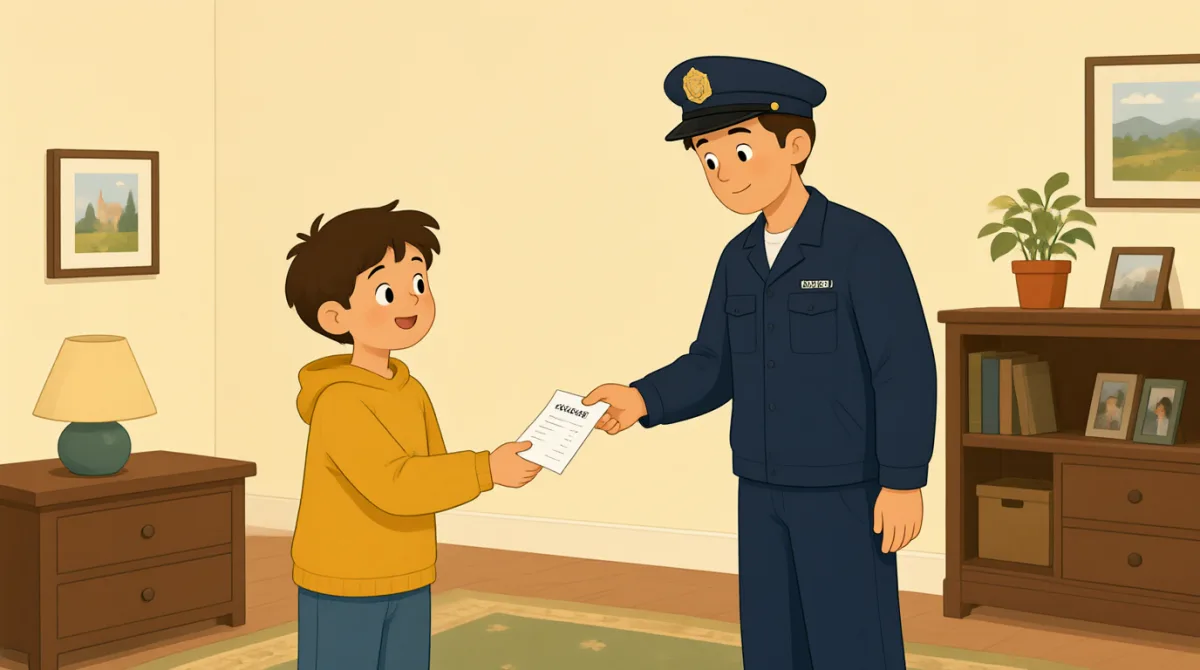

The repair is finished. The pipe was loose, but it’s fixed now.

Great. Can I see the bill? How much do I owe you?
The repair and parts come to one hundred and twenty dollars.
Does that include the visit and the new pipe part?
Yes, it includes both. There are no extra charges today.
Okay, I’ll pay by card. Can you give me a receipt?
Sure. Here’s your receipt. The sink should be fine now.
Thanks for fixing it so quickly. I’ll keep an eye on it.
Vocabulary8
- the repair is finished
This means the work is done. You can use it to tell someone that a job is complete.
- loose
Here, “loose” means the pipe was not firmly connected. You can use it to describe something that needs tightening.
- How much do I owe you?
Use this question to ask how much money you need to pay someone.
- come to
Here, “come to” means to add up to a total amount. For example, “The items come to $20.”
- extra charges
These are additional costs beyond the main price. You can ask if there are any extra charges before you pay.
- pay by card
This means to use a bank or credit card to pay. You can say, “I’ll pay by card” when choosing how to pay.
- receipt
A receipt is a written record that shows you paid. You can ask for one after buying something or paying for a service.
- keep an eye on it
This means to watch something and check that it stays okay. Here, Jack will check the sink to make sure it does not leak again.
Key Sentences8
- 1
The repair is finished.
This is a simple way to say that a job is complete. You can replace “the repair” with another task, such as “The cleaning is finished.”
- 2
How much do I owe you?
Use this to ask how much you need to pay. It is useful after someone provides a service or gives you something to buy.
- 3
Does that include the visit and the new pipe part?
This question checks what is covered by the price. You can ask, “Does that include [item or service]?” to avoid surprises.
- 4
There are no extra charges today.
This sentence tells someone that they will not have to pay additional fees. You can use “There are no extra charges” when explaining a price.
- 5
I’ll pay by card.
This is a clear way to choose card as your payment method. You can also say, “I’ll pay in cash.”
- 6
Can you give me a receipt?
Use this polite question to ask for proof of payment. You can ask for a receipt when paying at a shop or for a service.
- 7
The sink should be fine now.
This gives a simple, reassuring update about a repair. You can use “It should be fine now” after fixing or checking something.
- 8
I’ll keep an eye on it.
Use this to say that you will watch or check something. Replace “it” with the thing you plan to monitor.