The Doctor Checks Your Child
醫生為孩子檢查
Dr. David checks the child and explains what he thinks is causing the fever. He gives Mia clear advice about rest, fluids, and when to call back.
David 醫生為孩子檢查,並解釋他認為發燒的原因。他告訴 Mia 如何讓孩子休息、補充水分,以及何時需要再打電話諮詢。
對話9
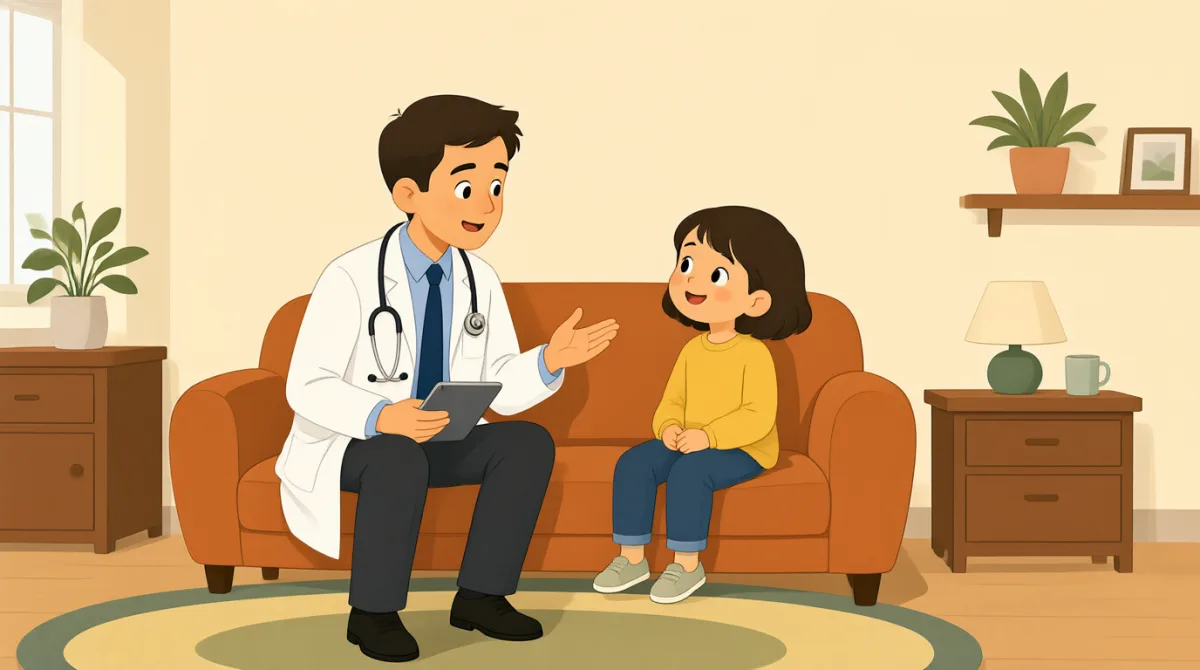

I’m going to listen to your child’s chest and check their ears.
我來聽一下孩子的胸口,再檢查一下耳朵。

Okay. They’ve been coughing, and the fever started yesterday.
好的。孩子一直咳嗽,昨天開始發燒。
Take a deep breath, please. Good. I don’t hear anything unusual.
請深吸一口氣。很好,我沒聽到什麼異常。
What do you think is causing the fever?
您覺得發燒是什麼原因引起的?
It looks like a common virus. Your child should rest and drink plenty of fluids.
看起來像是普通病毒感染。孩子應該多休息,多喝水。
Should I give medicine if the fever comes back?
如果又發燒了,我應該給孩子吃藥嗎?
You can give children’s medicine as the label says. Don’t give more than the recommended amount.
可以按照說明給孩子服用兒童藥。不要超過建議的劑量。
When should I call you again?
我什麼時候應該再給您打電話?
Call if the fever lasts more than three days or your child has trouble breathing.
如果發燒超過三天,或者孩子呼吸困難,請給我打電話。
詞彙8
- take a deep breath深吸一口氣
Breathe in deeply. A doctor may say this to help check your breathing.
深深地吸氣。醫生可能會這樣說,以便檢查您的呼吸。
- coughing咳嗽
Making a sound when air comes out of your throat suddenly. People often cough when they are sick.
氣流突然從喉嚨裡出來時發出的聲音。人們生病時常常會咳嗽。
- fever發燒
A higher-than-normal body temperature, often caused by an illness.
體溫高於正常水平,通常是由疾病引起的。
- common virus常見病毒
A virus that many people get. It can cause symptoms like a cough or fever.
很多人都會感染的一種病毒,可能引起咳嗽或發燒等症狀。
- plenty of fluids多喝水
A lot of drinks, such as water. This phrase is often used as advice when someone is sick.
喝大量飲品,比如水。別人身體不舒服時,常會用這個說法來給建議。
- comes back再次出現
Returns after going away. Here, it means the fever returns.
消失後又出現。這裡指的是發燒又出現了。
- recommended amount建議劑量
The amount that is advised as safe or suitable, such as the dose written on a medicine label.
建議使用的安全或合適的量,比如藥品標籤上寫的劑量。
- trouble breathing呼吸困難
Difficulty breathing. This can be a serious reason to contact a doctor.
呼吸不順暢。這可能是需要聯絡醫生的嚴重情況。
關鍵句7
- 1
I’m going to listen to your child’s chest and check their ears.
我來聽一下孩子的胸口,再檢查一下耳朵。
This explains what a doctor is about to do. Use “I’m going to” to tell someone about a planned action.
這句話說明醫生接下來要做什麼。用 “I’m going to” 來告訴別人你計劃要做的事。
- 2
They’ve been coughing, and the fever started yesterday.
孩子一直咳嗽,昨天開始發燒。
This describes symptoms and when they began. You can use this pattern to give a doctor clear information about an illness.
這句話描述了症狀以及症狀開始的時間。你可以用這個句型向醫生清楚地說明病情。
- 3
Take a deep breath, please.
請深吸一口氣。
This is a polite instruction. Use “Take a…” to ask someone to do a simple action.
這是一種禮貌的指示。用 “Take a…” 請別人做一個簡單的動作。
- 4
It looks like a common virus.
看起來像是普通病毒感染。
This is a simple way to explain what may be causing an illness. “It looks like…” shows that something seems likely.
這是解釋疾病可能由什麼引起的一種簡單說法。“It looks like…”表示某種情況看起來很有可能。
- 5
Your child should rest and drink plenty of fluids.
孩子應該多休息,多喝水。
This gives advice about what to do when sick. Use “should” to make a helpful recommendation.
這句話是在建議生病時該怎麼做。用 “should” 來提出有幫助的建議。
- 6
You can give children’s medicine as the label says.
可以按照說明給孩子服用兒童藥。
This explains how to use medicine by following its instructions. You can use “as the label says” when talking about directions on a product.
這句話說明要按照藥品的說明使用藥物。談到產品上的使用說明時,可以用 “as the label says”。
- 7
Call if the fever lasts more than three days or your child has trouble breathing.
如果發燒超過三天,或者孩子呼吸困難,請給我打電話。
This tells someone when to contact the doctor again. Use “Call if…” to give a clear condition for calling.
這句話告訴別人什麼時候應該再聯絡醫生。用 “Call if…” 來清楚地說明什麼情況下需要打電話。