Getting a Little Lost
有點迷路
Emma and Jack reach a fork in the trail and are not sure which way to go. They check the map and follow the trail markers to get back on the right path.
Emma 和 Jack 走到一處分岔路口,不確定該往哪邊走。他們檢視地圖,並沿著步道標記回到正確的路線。
對話8
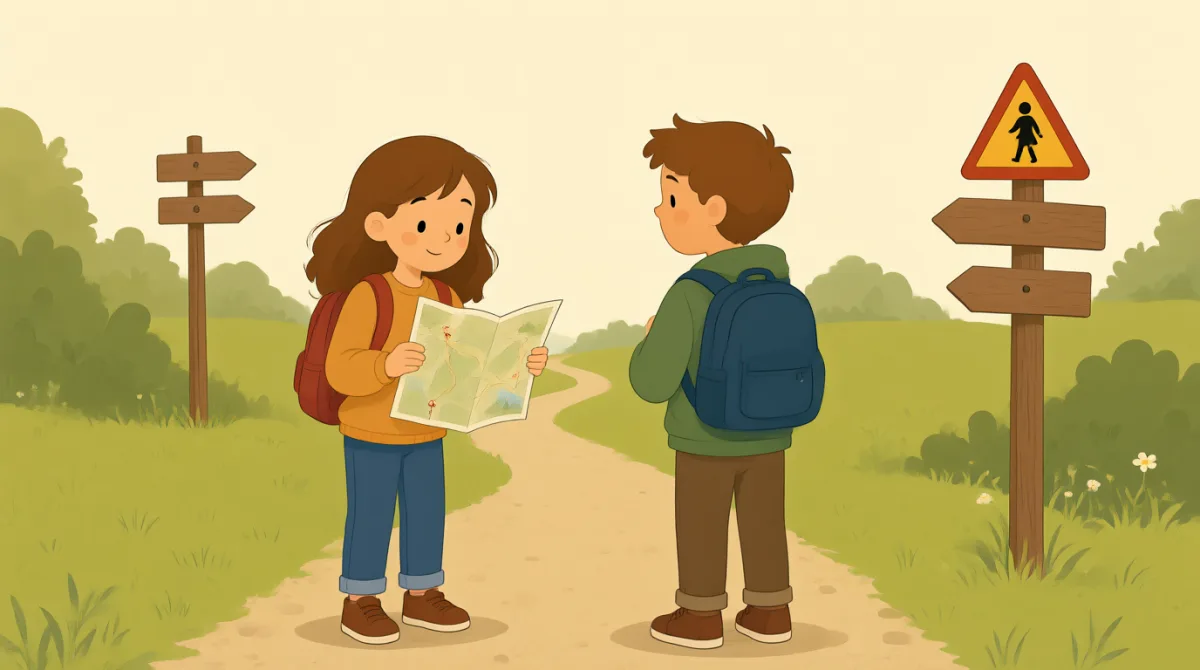

Jack, I think we took the wrong path. This trail looks different.
Jack,我覺得我們走錯路了。這條小路看起來不一樣。

Let's stop here and check the map. We don't want to walk farther.
我們在這裡停下來看看地圖吧。別再往前走了。
There are two paths at this fork. Which one did we take before?
這個岔路口有兩條路。我們剛才走的是哪一條?
We came up from the left. But I can't see the trail sign.
我們是從左邊上來的。不過我沒看到路標。
The map shows a blue marker on the right path. Let's look around.
地圖上顯示右邊的小路有藍色標記。我們四處找找吧。
I see one on that tree! The blue marks lead back to our trail.
我看到樹上有一個!藍色標記會帶我們回到原來的小路。
Great. Let's follow the markers and stay together this time.
太好了。我們跟著標記走,這次別走散了。
Good idea. We should keep the map out and watch for signs.
好主意。我們把地圖拿在手上,留意路標。
詞彙8
- wrong path走錯路
A path that does not take you where you want to go. You can say, “I think we took the wrong path,” when you may have gone the wrong way.
指一條不能帶你去想去的地方的路。覺得自己可能走錯了方向時,可以說:“I think we took the wrong path.”(我覺得我們走錯路了。)
- check the map檢視地圖
Look at a map to find where you are or where to go. You can use this phrase when you need help finding your way.
看地圖來確認自己在哪裡,或者該往哪兒走。需要辨認方向時,可以用這個短語。
- fork岔路口
A place where one path splits into two or more paths. You can ask, “Which path should we take at this fork?”
一條路分成兩條或更多條路的地方。你可以問:“Which path should we take at this fork?”(這個岔路口我們該走哪條路?)
- trail sign步道標誌
A sign that shows information about a walking trail. You can look for a trail sign to check that you are going the right way.
顯示步道相關資訊的標誌。你可以找步道標誌,確認自己有沒有走對方向。
- look around四處看看
Look at the area nearby to find something. You can say this when you want to search for a sign or marker.
看看附近,試著找到某樣東西。想找路標或標記時,可以這樣說。
- lead back to帶回到
Show the way back to a place. You can use it to explain where a path or set of markers goes.
指引你回到某個地方。你可以用它說明一條路或一組標記會通向哪裡。
- follow the markers沿著標記走
Go in the direction shown by the trail markers. This phrase is useful when signs or marks show you which way to go.
按照步道標記指示的方向前進。標誌或標記能告訴你該往哪邊走時,這個短語就很實用。
- stay together待在一起
Remain with the other people in your group. You can say this to help everyone stay safe and avoid getting lost.
和同行的人待在一塊兒。你可以這樣提醒大家待在一起,既安全又不容易走散。
關鍵句8
- 1
I think we took the wrong path.
我覺得我們走錯路了。
Use this sentence when you believe you may have gone the wrong way. You can replace “the wrong path” with another problem, such as “the wrong bus.”
覺得自己可能走錯了方向時,可以用這句話。你也可以把“the wrong path”換成其他問題,比如“the wrong bus”。
- 2
Let's stop here and check the map.
我們在這裡停下來看看地圖吧。
This is a simple way to suggest stopping to find out where you are. Replace “check the map” with another action, such as “ask for help.”
這是一個簡單的提議,意思是停下來確認自己在哪裡。你可以把“check the map”換成其他行動,比如“ask for help”。
- 3
Which one did we take before?
我們剛才走的是哪一條?
Use this question when you need to remember which choice you made earlier. You can ask it about paths, roads, or other options.
需要回想之前做了哪個選擇時,可以用這個問句。它可以用來問走過的路、道路或其他選項。
- 4
But I can't see the trail sign.
不過我沒看到步道標誌。
Use this sentence when something you are looking for is not visible. Replace “the trail sign” with another thing, such as “the bus stop.”
想找的東西不在視線裡時,可以用這句話。你可以把“the trail sign”換成其他東西,比如“the bus stop”。
- 5
Let's look around.
我們四處找找吧。
This is a short, friendly suggestion to search nearby. You can use it when you are trying to find something you have lost.
這是一個簡短又友好的建議,表示在附近找找。找丟了的東西時可以用它。
- 6
The blue marks lead back to our trail.
這些藍色標記會帶我們回到原來的步道。
This sentence explains where the marks will take you. You can replace “The blue marks” with another guide, such as “These signs.”
這句話說明這些標記會把你帶到哪裡。你可以把“The blue marks”換成其他指引,比如“These signs”。
- 7
Let's follow the markers and stay together this time.
我們跟著標記走,這次待在一起吧。
Use this sentence to suggest a plan and remind people to remain as a group. You can replace “the markers” with another guide, such as “the signs.”
用這句話提出一個計劃,並提醒大家待在一起。你可以把“the markers”換成其他指引,比如“the signs”。
- 8
We should keep the map out and watch for signs.
我們應該把地圖拿在手上,留意路標。
This sentence gives two helpful actions to avoid getting lost. You can use “We should…” to suggest things to do in other situations.
這句話提出了兩個避免迷路的好辦法。在其他情境中,也可以用“We should…”來建議該做些什麼。