Getting a Little Lost
หลงทางนิดหน่อย
Emma and Jack reach a fork in the trail and are not sure which way to go. They check the map and follow the trail markers to get back on the right path.
เอมมาและแจ็กเดินมาถึงทางแยกของเส้นทางเดินป่าและไม่แน่ใจว่าควรไปทางไหน พวกเขาดูแผนที่และเดินตามป้ายบอกทางเพื่อกลับเข้าสู่เส้นทางที่ถูกต้อง
บทสนทนา8
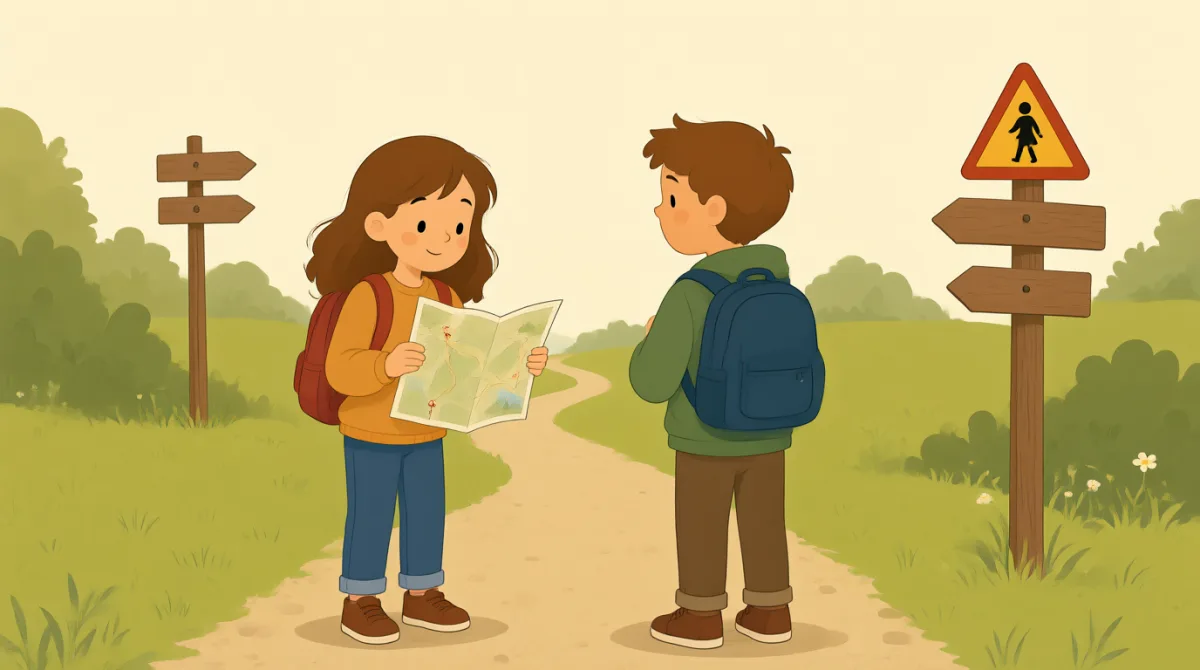

Jack, I think we took the wrong path. This trail looks different.
แจ็ก ฉันว่าเราเดินมาผิดทางแล้วนะ เส้นทางนี้ดูไม่เหมือนเดิมเลย

Let's stop here and check the map. We don't want to walk farther.
หยุดตรงนี้แล้วดูแผนที่กันเถอะ เราไม่อยากเดินต่อไปไกลกว่านี้
There are two paths at this fork. Which one did we take before?
ตรงทางแยกนี้มีอยู่สองทาง เราเดินมาทางไหนก่อนนะ
We came up from the left. But I can't see the trail sign.
เราขึ้นมาจากทางซ้าย แต่ฉันไม่เห็นป้ายบอกทางเลย
The map shows a blue marker on the right path. Let's look around.
ในแผนที่บอกว่าทางขวามีเครื่องหมายสีน้ำเงิน ลองมองไปรอบ ๆ กันเถอะ
I see one on that tree! The blue marks lead back to our trail.
ฉันเห็นอันหนึ่งอยู่บนต้นไม้นั่น! เครื่องหมายสีน้ำเงินพาเรากลับไปที่เส้นทางของเราได้
Great. Let's follow the markers and stay together this time.
ดีเลย คราวนี้เดินตามเครื่องหมายไปและอยู่ด้วยกันนะ
Good idea. We should keep the map out and watch for signs.
ก็ดี เราควรกางแผนที่ไว้และคอยมองหาป้ายบอกทางด้วย
คำศัพท์8
- wrong pathทางที่ผิด
A path that does not take you where you want to go. You can say, “I think we took the wrong path,” when you may have gone the wrong way.
เส้นทางที่ไม่ได้พาคุณไปยังจุดหมายที่ต้องการ คุณพูดว่า “I think we took the wrong path” เมื่อคิดว่าตัวเองอาจเดินผิดทาง
- check the mapดูแผนที่
Look at a map to find where you are or where to go. You can use this phrase when you need help finding your way.
ดูแผนที่เพื่อหาว่าตอนนี้คุณอยู่ที่ไหนหรือควรไปทางไหน คุณใช้วลีนี้เมื่อต้องการความช่วยเหลือในการหาทาง
- forkทางแยก
A place where one path splits into two or more paths. You can ask, “Which path should we take at this fork?”
จุดที่เส้นทางหนึ่งแยกออกเป็นสองเส้นทางขึ้นไป คุณสามารถถามว่า “Which path should we take at this fork?”
- trail signป้ายบอกทางเดินป่า
A sign that shows information about a walking trail. You can look for a trail sign to check that you are going the right way.
ป้ายที่ให้ข้อมูลเกี่ยวกับเส้นทางเดินป่า คุณสามารถมองหาป้ายบอกทางเดินป่าเพื่อดูว่ากำลังเดินไปถูกทางหรือไม่
- look aroundมองไปรอบ ๆ
Look at the area nearby to find something. You can say this when you want to search for a sign or marker.
มองดูบริเวณใกล้ ๆ เพื่อหาอะไรบางอย่าง คุณพูดวลีนี้เมื่อต้องการค้นหาป้ายหรือเครื่องหมายบอกทาง
- lead back toพากลับไปที่
Show the way back to a place. You can use it to explain where a path or set of markers goes.
แสดงทางกลับไปยังสถานที่แห่งหนึ่ง คุณใช้วลีนี้เพื่ออธิบายว่าเส้นทางหรือชุดเครื่องหมายบอกทางนำไปที่ไหน
- follow the markersเดินตามเครื่องหมายบอกทาง
Go in the direction shown by the trail markers. This phrase is useful when signs or marks show you which way to go.
เดินไปในทิศทางที่เครื่องหมายบอกทางบนเส้นทางแสดงไว้ วลีนี้มีประโยชน์เมื่อป้ายหรือเครื่องหมายบอกว่าควรไปทางไหน
- stay togetherอยู่ด้วยกัน
Remain with the other people in your group. You can say this to help everyone stay safe and avoid getting lost.
อยู่กับคนอื่น ๆ ในกลุ่มของคุณ คุณสามารถพูดแบบนี้เพื่อช่วยให้ทุกคนปลอดภัยและไม่หลงทาง
ประโยคสำคัญ8
- 1
I think we took the wrong path.
ฉันว่าเราเดินมาผิดทางแล้ว
Use this sentence when you believe you may have gone the wrong way. You can replace “the wrong path” with another problem, such as “the wrong bus.”
ใช้ประโยคนี้เมื่อคุณคิดว่าตัวเองอาจเดินผิดทาง คุณสามารถแทนที่ “the wrong path” ด้วยปัญหาอื่นได้ เช่น “the wrong bus”
- 2
Let's stop here and check the map.
หยุดตรงนี้แล้วดูแผนที่กันเถอะ
This is a simple way to suggest stopping to find out where you are. Replace “check the map” with another action, such as “ask for help.”
นี่เป็นวิธีง่าย ๆ ในการเสนอให้หยุดเพื่อดูว่าตอนนี้คุณอยู่ที่ไหน แทนที่ “check the map” ด้วยการกระทำอื่นได้ เช่น “ask for help”
- 3
Which one did we take before?
เราเดินมาทางไหนก่อนนะ
Use this question when you need to remember which choice you made earlier. You can ask it about paths, roads, or other options.
ใช้คำถามนี้เมื่อต้องการจำว่าก่อนหน้านี้คุณเลือกทางไหน คุณสามารถใช้ถามเกี่ยวกับเส้นทาง ถนน หรือตัวเลือกอื่น ๆ ได้
- 4
But I can't see the trail sign.
แต่ฉันไม่เห็นป้ายบอกทางเดินป่าเลย
Use this sentence when something you are looking for is not visible. Replace “the trail sign” with another thing, such as “the bus stop.”
ใช้ประโยคนี้เมื่อสิ่งที่คุณกำลังมองหาไม่อยู่ในสายตา แทนที่ “the trail sign” ด้วยสิ่งอื่นได้ เช่น “the bus stop”
- 5
Let's look around.
ลองมองไปรอบ ๆ กันเถอะ
This is a short, friendly suggestion to search nearby. You can use it when you are trying to find something you have lost.
นี่เป็นคำชวนสั้น ๆ และเป็นกันเองให้ช่วยกันค้นหาบริเวณใกล้ ๆ คุณใช้ประโยคนี้ได้เมื่อกำลังพยายามหาของที่ทำหาย
- 6
The blue marks lead back to our trail.
เครื่องหมายสีน้ำเงินพาเรากลับไปที่เส้นทางของเราได้
This sentence explains where the marks will take you. You can replace “The blue marks” with another guide, such as “These signs.”
ประโยคนี้อธิบายว่าเครื่องหมายจะพาคุณไปที่ไหน คุณสามารถแทนที่ “The blue marks” ด้วยสิ่งที่ใช้บอกทางอย่างอื่นได้ เช่น “These signs”
- 7
Let's follow the markers and stay together this time.
คราวนี้เดินตามเครื่องหมายไปและอยู่ด้วยกันนะ
Use this sentence to suggest a plan and remind people to remain as a group. You can replace “the markers” with another guide, such as “the signs.”
ใช้ประโยคนี้เพื่อเสนอแผนและเตือนให้ทุกคนอยู่รวมกัน คุณสามารถแทนที่ “the markers” ด้วยสิ่งที่ใช้บอกทางอย่างอื่นได้ เช่น “the signs”
- 8
We should keep the map out and watch for signs.
เราควรกางแผนที่ไว้และคอยมองหาป้ายบอกทาง
This sentence gives two helpful actions to avoid getting lost. You can use “We should…” to suggest things to do in other situations.
ประโยคนี้เสนอการกระทำที่เป็นประโยชน์สองอย่างเพื่อป้องกันการหลงทาง คุณสามารถใช้ “We should…” เพื่อเสนอสิ่งที่ควรทำในสถานการณ์อื่น ๆ ได้