Getting a Little Lost
थोड़ा रास्ता भटक जाना
Emma and Jack reach a fork in the trail and are not sure which way to go. They check the map and follow the trail markers to get back on the right path.
एमा और जैक रास्ते के दोराहे पर पहुँचते हैं और तय नहीं कर पाते कि किस ओर जाएँ। वे नक्शा देखते हैं और सही रास्ते पर लौटने के लिए रास्ते के निशानों का अनुसरण करते हैं।
संवाद8
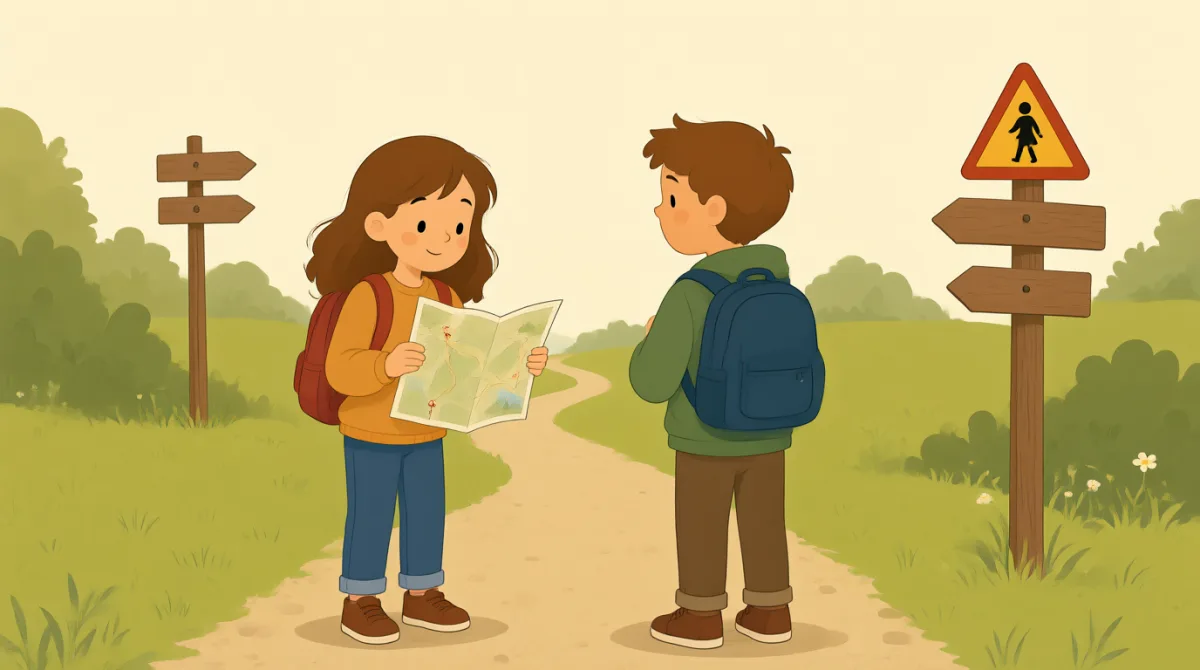

Jack, I think we took the wrong path. This trail looks different.
जैक, मुझे लगता है कि हम गलत रास्ते पर आ गए हैं। यह पगडंडी कुछ अलग लग रही है।

Let's stop here and check the map. We don't want to walk farther.
चलो, यहीं रुककर नक्शा देखते हैं। हमें और आगे नहीं जाना चाहिए।
There are two paths at this fork. Which one did we take before?
इस दोराहे पर दो रास्ते हैं। हम पहले किस रास्ते से आए थे?
We came up from the left. But I can't see the trail sign.
हम बाईं ओर से ऊपर आए थे। लेकिन मुझे रास्ते का संकेत नहीं दिख रहा।
The map shows a blue marker on the right path. Let's look around.
नक्शे में दाईं ओर वाले रास्ते पर नीला निशान दिख रहा है। चलो, आसपास देखते हैं।
I see one on that tree! The blue marks lead back to our trail.
मुझे उस पेड़ पर एक निशान दिख रहा है! नीले निशान हमें वापस हमारी पगडंडी तक ले जाएँगे।
Great. Let's follow the markers and stay together this time.
बढ़िया। चलो, इस बार निशानों का अनुसरण करते हैं और साथ-साथ रहते हैं।
Good idea. We should keep the map out and watch for signs.
अच्छा विचार है। हमें नक्शा खुला रखना चाहिए और संकेतों पर नज़र रखनी चाहिए।
शब्दावली8
- wrong pathगलत रास्ता
A path that does not take you where you want to go. You can say, “I think we took the wrong path,” when you may have gone the wrong way.
ऐसा रास्ता जो आपको उस जगह तक न ले जाए जहाँ आप जाना चाहते हैं। जब आपको लगे कि शायद आप गलत दिशा में चले गए हैं, तो आप कह सकते हैं, “I think we took the wrong path” (मुझे लगता है कि हम गलत रास्ते पर आ गए हैं)।
- check the mapनक्शा देखना
Look at a map to find where you are or where to go. You can use this phrase when you need help finding your way.
यह पता लगाने के लिए नक्शा देखना कि आप कहाँ हैं या आपको किस ओर जाना चाहिए। रास्ता ढूँढ़ने में मदद चाहिए हो, तो आप इस वाक्यांश का इस्तेमाल कर सकते हैं।
- forkदोराहा
A place where one path splits into two or more paths. You can ask, “Which path should we take at this fork?”
वह जगह जहाँ एक रास्ता दो या उससे ज़्यादा रास्तों में बँट जाता है। आप पूछ सकते हैं, “Which path should we take at this fork?” (इस दोराहे पर हमें कौन-सा रास्ता लेना चाहिए?)
- trail signपगडंडी का संकेत
A sign that shows information about a walking trail. You can look for a trail sign to check that you are going the right way.
पैदल चलने के रास्ते के बारे में जानकारी देने वाला संकेत। सही रास्ते पर हैं या नहीं, यह जानने के लिए आप पगडंडी का संकेत ढूँढ़ सकते हैं।
- look aroundआसपास देखना
Look at the area nearby to find something. You can say this when you want to search for a sign or marker.
कुछ ढूँढ़ने के लिए आस-पास की जगह पर नज़र डालना। किसी संकेत या निशान को ढूँढ़ते समय आप यह कह सकते हैं।
- lead back toवापस ले जाना
Show the way back to a place. You can use it to explain where a path or set of markers goes.
किसी जगह तक लौटने का रास्ता दिखाना। किसी रास्ते या निशानों के समूह से आप कहाँ पहुँचेंगे, यह बताने के लिए इसका इस्तेमाल कर सकते हैं।
- follow the markersनिशानों का अनुसरण करना
Go in the direction shown by the trail markers. This phrase is useful when signs or marks show you which way to go.
रास्ते के निशान जिस दिशा में दिखाएँ, उस ओर जाना। जब संकेत या निशान बताते हों कि किस ओर जाना है, तो यह वाक्यांश काम आता है।
- stay togetherसाथ-साथ रहना
Remain with the other people in your group. You can say this to help everyone stay safe and avoid getting lost.
अपने समूह के बाकी लोगों के साथ रहना। सबको सुरक्षित रखने और किसी को रास्ता भटकने से बचाने के लिए आप यह कह सकते हैं।
मुख्य वाक्य8
- 1
I think we took the wrong path.
मुझे लगता है कि हम गलत रास्ते पर आ गए हैं।
Use this sentence when you believe you may have gone the wrong way. You can replace “the wrong path” with another problem, such as “the wrong bus.”
जब आपको लगे कि शायद आप गलत दिशा में चले गए हैं, तब यह वाक्य बोलें। “the wrong path” की जगह किसी दूसरी समस्या का ज़िक्र कर सकते हैं, जैसे “the wrong bus” (गलत बस)।
- 2
Let's stop here and check the map.
चलो, यहीं रुककर नक्शा देखते हैं।
This is a simple way to suggest stopping to find out where you are. Replace “check the map” with another action, such as “ask for help.”
यह पता लगाने के लिए रुकने का सुझाव देने का आसान तरीका है कि आप कहाँ हैं। “check the map” की जगह कोई दूसरी कार्रवाई रख सकते हैं, जैसे “ask for help” (मदद माँगना)।
- 3
Which one did we take before?
हम पहले किस रास्ते से आए थे?
Use this question when you need to remember which choice you made earlier. You can ask it about paths, roads, or other options.
जब आपको याद करना हो कि आपने पहले कौन-सा विकल्प चुना था, तब यह सवाल पूछें। आप रास्तों, सड़कों या दूसरे विकल्पों के बारे में पूछ सकते हैं।
- 4
But I can't see the trail sign.
लेकिन मुझे पगडंडी का संकेत नहीं दिख रहा।
Use this sentence when something you are looking for is not visible. Replace “the trail sign” with another thing, such as “the bus stop.”
जब आपको कोई ढूँढ़ी जा रही चीज़ दिखाई न दे, तब यह वाक्य बोलें। “the trail sign” की जगह किसी दूसरी चीज़ का नाम रख सकते हैं, जैसे “the bus stop” (बस स्टॉप)।
- 5
Let's look around.
चलो, आसपास देखते हैं।
This is a short, friendly suggestion to search nearby. You can use it when you are trying to find something you have lost.
आस-पास कुछ ढूँढ़ने का यह छोटा और दोस्ताना सुझाव है। खोई हुई चीज़ तलाशते समय आप इसका इस्तेमाल कर सकते हैं।
- 6
The blue marks lead back to our trail.
नीले निशान हमें वापस हमारी पगडंडी तक ले जाएँगे।
This sentence explains where the marks will take you. You can replace “The blue marks” with another guide, such as “These signs.”
यह वाक्य बताता है कि निशान आपको कहाँ ले जाएँगे। “The blue marks” की जगह कोई दूसरा मार्गदर्शक रख सकते हैं, जैसे “These signs” (ये संकेत)।
- 7
Let's follow the markers and stay together this time.
चलो, इस बार निशानों का अनुसरण करते हैं और साथ-साथ रहते हैं।
Use this sentence to suggest a plan and remind people to remain as a group. You can replace “the markers” with another guide, such as “the signs.”
किसी योजना का सुझाव देने और सबको समूह में रहने की याद दिलाने के लिए यह वाक्य बोलें। “the markers” की जगह कोई दूसरा मार्गदर्शक रख सकते हैं, जैसे “the signs” (संकेत)।
- 8
We should keep the map out and watch for signs.
हमें नक्शा खुला रखना चाहिए और संकेतों पर नज़र रखनी चाहिए।
This sentence gives two helpful actions to avoid getting lost. You can use “We should…” to suggest things to do in other situations.
रास्ता भटकने से बचने के लिए यह वाक्य दो मददगार काम सुझाता है। दूसरी परिस्थितियों में कोई काम सुझाने के लिए “We should…” का इस्तेमाल कर सकते हैं।