Getting a Little Lost
少し道に迷って
Emma and Jack reach a fork in the trail and are not sure which way to go. They check the map and follow the trail markers to get back on the right path.
エマとジャックは登山道の分岐点に着き、どちらへ進めばいいのか分からなくなります。地図を確認し、道しるべに従って正しい道に戻ります。
会話8
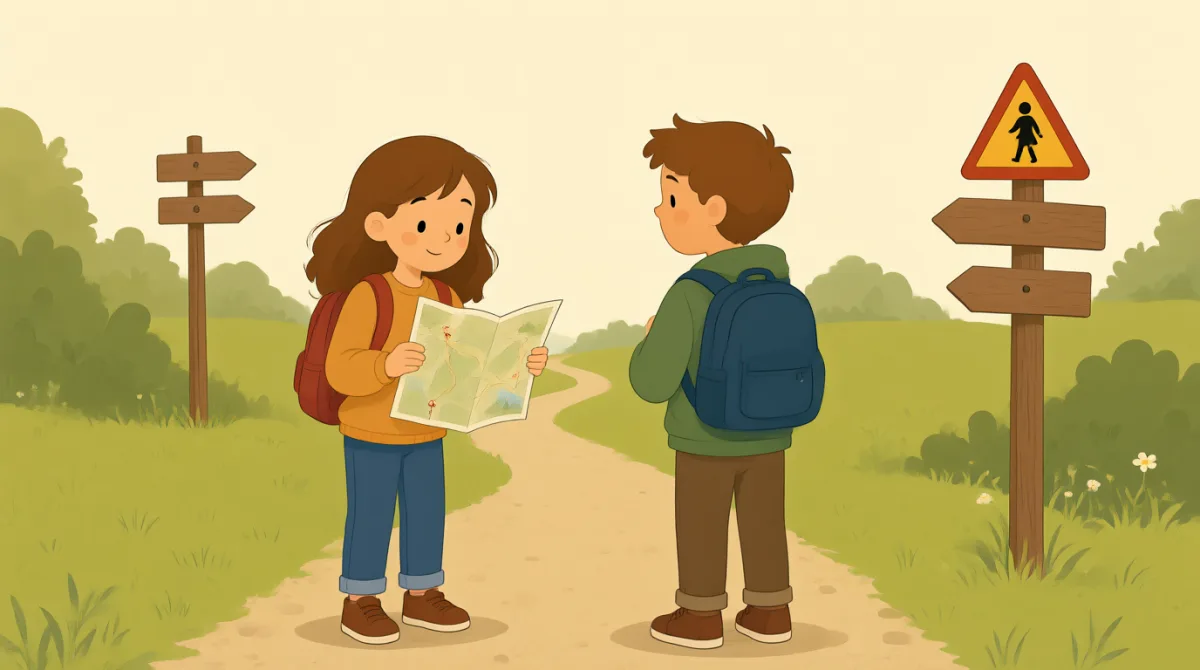

Jack, I think we took the wrong path. This trail looks different.
ジャック、道を間違えたと思う。この道、なんか違うね。

Let's stop here and check the map. We don't want to walk farther.
ここで止まって地図を確認しよう。これ以上進みたくないし。
There are two paths at this fork. Which one did we take before?
この分岐には道が二つあるね。さっきはどっちを通ったっけ?
We came up from the left. But I can't see the trail sign.
左から上がってきたよ。でも登山道の標識が見えないな。
The map shows a blue marker on the right path. Let's look around.
地図だと右の道に青い目印があるね。周りを見てみよう。
I see one on that tree! The blue marks lead back to our trail.
あの木にあるよ!青い印をたどれば、元の登山道に戻れるね。
Great. Let's follow the markers and stay together this time.
よかった。今度は目印に沿って進んで、離れないようにしよう。
Good idea. We should keep the map out and watch for signs.
そうしよう。地図をすぐ見られるようにして、標識にも気をつけよう。
語彙8
- wrong path間違った道
A path that does not take you where you want to go. You can say, “I think we took the wrong path,” when you may have gone the wrong way.
行きたい場所にたどり着けない道のことです。「I think we took the wrong path」(道を間違えたと思う)のように言うと、間違った方向へ進んだかもしれないと伝えられます。
- check the map地図を確認する
Look at a map to find where you are or where to go. You can use this phrase when you need help finding your way.
今いる場所や進む方向を調べるために地図を見ることです。道に迷って、進み方を知りたいときに使えます。
- fork分岐点
A place where one path splits into two or more paths. You can ask, “Which path should we take at this fork?”
道が二つ以上に分かれる場所です。「Which path should we take at this fork?」(この分岐点ではどっちの道に進めばいい?)と聞けます。
- trail sign登山道の標識
A sign that shows information about a walking trail. You can look for a trail sign to check that you are going the right way.
登山道についての情報を示す標識です。正しい道を進んでいるか確かめるために、登山道の標識を探すことがあります。
- look around周りを見回す
Look at the area nearby to find something. You can say this when you want to search for a sign or marker.
何かを見つけるために、近くの様子を見ることです。標識や目印を探したいときに使えます。
- lead back to~に戻る道を示す
Show the way back to a place. You can use it to explain where a path or set of markers goes.
ある場所へ戻る道を示すことです。道や目印をたどるとどこへ行けるか説明するときに使えます。
- follow the markers目印に沿って進む
Go in the direction shown by the trail markers. This phrase is useful when signs or marks show you which way to go.
登山道の目印が示す方向へ進むことです。標識や印を見て進む方向が分かるときに便利な表現です。
- stay together一緒に行動する
Remain with the other people in your group. You can say this to help everyone stay safe and avoid getting lost.
グループのほかの人たちと離れずにいることです。みんなが安全に行動し、道に迷わないように伝えるときに使えます。
重要な文8
- 1
I think we took the wrong path.
道を間違えたと思う。
Use this sentence when you believe you may have gone the wrong way. You can replace “the wrong path” with another problem, such as “the wrong bus.”
間違った方向へ進んだかもしれないと思うときに使う文です。“the wrong path” の部分は、“the wrong bus”(間違ったバス)のように、別の問題に置き換えられます。
- 2
Let's stop here and check the map.
ここで止まって地図を確認しよう。
This is a simple way to suggest stopping to find out where you are. Replace “check the map” with another action, such as “ask for help.”
今いる場所を調べるために、立ち止まろうと提案する簡単な言い方です。“check the map” の部分は、“ask for help”(助けを求める)のような別の行動に置き換えられます。
- 3
Which one did we take before?
さっきはどっちを通ったっけ?
Use this question when you need to remember which choice you made earlier. You can ask it about paths, roads, or other options.
前にどの選択肢を選んだか思い出したいときに使う質問です。道や道路のほか、さまざまな選択肢について尋ねられます。
- 4
But I can't see the trail sign.
でも登山道の標識が見えないな。
Use this sentence when something you are looking for is not visible. Replace “the trail sign” with another thing, such as “the bus stop.”
探しているものが見当たらないときに使う文です。“the trail sign” の部分は、“the bus stop”(バス停)のような別のものに置き換えられます。
- 5
Let's look around.
周りを見てみよう。
This is a short, friendly suggestion to search nearby. You can use it when you are trying to find something you have lost.
近くを探してみようと提案する、短くて親しみやすい言い方です。なくしたものを探しているときにも使えます。
- 6
The blue marks lead back to our trail.
青い印をたどれば、元の登山道に戻れるね。
This sentence explains where the marks will take you. You can replace “The blue marks” with another guide, such as “These signs.”
目印をたどるとどこへ行けるか説明する文です。“The blue marks” の部分は、“These signs”(これらの標識)のような別の道しるべに置き換えられます。
- 7
Let's follow the markers and stay together this time.
今度は目印に沿って進んで、離れないようにしよう。
Use this sentence to suggest a plan and remind people to remain as a group. You can replace “the markers” with another guide, such as “the signs.”
計画を提案しながら、みんなで一緒に行動するよう伝える文です。“the markers” の部分は、“the signs”(標識)のような別の道しるべに置き換えられます。
- 8
We should keep the map out and watch for signs.
地図をすぐ見られるようにして、標識にも気をつけよう。
This sentence gives two helpful actions to avoid getting lost. You can use “We should…” to suggest things to do in other situations.
道に迷わないために役立つ行動を二つ伝える文です。“We should…” は、ほかの状況でも、何をすればいいか提案するときに使えます。