Getting a Little Lost
ضللنا الطريق قليلًا
Emma and Jack reach a fork in the trail and are not sure which way to go. They check the map and follow the trail markers to get back on the right path.
وصلت إيما وجاك إلى مفترق في الدرب ولم يعرفا أي طريق يسلكان. تفقدا الخريطة واتّبعا علامات الدرب للعودة إلى الطريق الصحيح.
حوار8
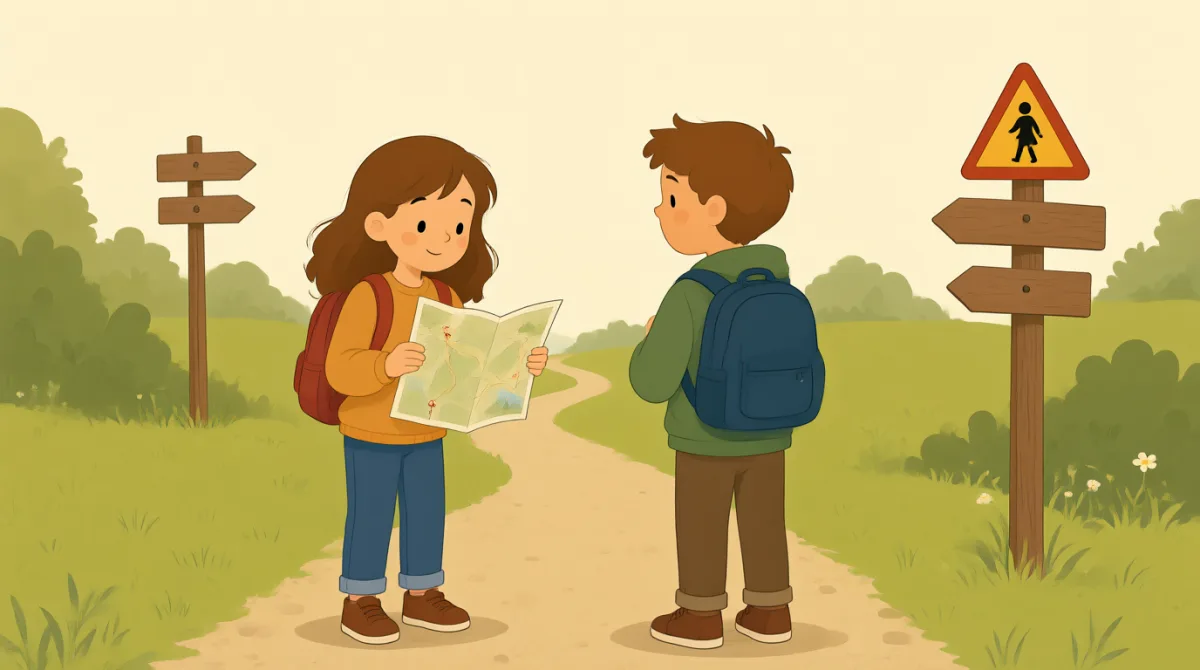

Jack, I think we took the wrong path. This trail looks different.
جاك، أظن أننا سلكنا الطريق الخطأ. يبدو هذا الدرب مختلفًا.

Let's stop here and check the map. We don't want to walk farther.
لنتوقف هنا ونتفقد الخريطة. لا نريد أن نبتعد أكثر.
There are two paths at this fork. Which one did we take before?
هناك طريقان عند هذا المفترق. أيهما سلكنا من قبل؟
We came up from the left. But I can't see the trail sign.
صعدنا من جهة اليسار. لكنني لا أرى لافتة الدرب.
The map shows a blue marker on the right path. Let's look around.
تُظهر الخريطة علامة زرقاء على الطريق الأيمن. لنلقِ نظرة حولنا.
I see one on that tree! The blue marks lead back to our trail.
أرى واحدة على تلك الشجرة! تقودنا العلامات الزرقاء عائدين إلى دربنا.
Great. Let's follow the markers and stay together this time.
رائع. لنتبع العلامات ونبقَ معًا هذه المرة.
Good idea. We should keep the map out and watch for signs.
فكرة جيدة. علينا أن نبقي الخريطة في متناولنا وننتبه إلى اللافتات.
المفردات8
- wrong pathالطريق الخطأ
A path that does not take you where you want to go. You can say, “I think we took the wrong path,” when you may have gone the wrong way.
طريق لا يوصلك إلى المكان الذي تريده. يمكنك أن تقول: “I think we took the wrong path” (أظن أننا سلكنا الطريق الخطأ) عندما تظن أنك ربما سلكت الطريق غير الصحيح.
- check the mapيتفقد الخريطة
Look at a map to find where you are or where to go. You can use this phrase when you need help finding your way.
تنظر إلى الخريطة لتعرف مكانك أو الطريق الذي ينبغي أن تسلكه. يمكنك استخدام هذه العبارة عندما تحتاج إلى مساعدة في العثور على طريقك.
- forkمفترق
A place where one path splits into two or more paths. You can ask, “Which path should we take at this fork?”
مكان يتفرع فيه طريق واحد إلى طريقين أو أكثر. يمكنك أن تسأل: “Which path should we take at this fork?” (أي طريق نسلك عند هذا المفترق؟).
- trail signلافتة الدرب
A sign that shows information about a walking trail. You can look for a trail sign to check that you are going the right way.
لافتة تعرض معلومات عن درب للمشي. يمكنك البحث عن لافتة للدرب لتتأكد من أنك تسير في الاتجاه الصحيح.
- look aroundينظر حوله
Look at the area nearby to find something. You can say this when you want to search for a sign or marker.
تنظر إلى المنطقة القريبة بحثًا عن شيء ما. يمكنك قول هذه العبارة عندما تريد البحث عن لافتة أو علامة.
- lead back toيقود عائدًا إلى
Show the way back to a place. You can use it to explain where a path or set of markers goes.
يدلّ على طريق العودة إلى مكان ما. يمكنك استخدامها لتوضيح إلى أين يذهب طريق أو مجموعة من العلامات.
- follow the markersيتبع العلامات
Go in the direction shown by the trail markers. This phrase is useful when signs or marks show you which way to go.
يسير في الاتجاه الذي تشير إليه علامات الدرب. تفيد هذه العبارة عندما تدلك اللافتات أو العلامات على الطريق الذي ينبغي أن تسلكه.
- stay togetherيبقى مع المجموعة
Remain with the other people in your group. You can say this to help everyone stay safe and avoid getting lost.
يبقى مع بقية أفراد المجموعة. يمكنك قول ذلك لمساعدة الجميع على البقاء بأمان وتجنب الضياع.
الجمل الأساسية8
- 1
I think we took the wrong path.
أظن أننا سلكنا الطريق الخطأ.
Use this sentence when you believe you may have gone the wrong way. You can replace “the wrong path” with another problem, such as “the wrong bus.”
استخدم هذه الجملة عندما تظن أنك ربما سلكت الطريق غير الصحيح. يمكنك استبدال “the wrong path” (الطريق الخطأ) بمشكلة أخرى، مثل “the wrong bus” (الحافلة الخطأ).
- 2
Let's stop here and check the map.
لنتوقف هنا ونتفقد الخريطة.
This is a simple way to suggest stopping to find out where you are. Replace “check the map” with another action, such as “ask for help.”
هذه طريقة بسيطة لاقتراح التوقف لمعرفة مكانك. استبدل “check the map” (نتفقد الخريطة) بفعل آخر، مثل “ask for help” (نطلب المساعدة).
- 3
Which one did we take before?
أيهما سلكنا من قبل؟
Use this question when you need to remember which choice you made earlier. You can ask it about paths, roads, or other options.
استخدم هذا السؤال عندما تحتاج إلى تذكّر الخيار الذي اتخذته من قبل. يمكنك أن تسأل به عن الطرق أو الشوارع أو الخيارات الأخرى.
- 4
But I can't see the trail sign.
لكنني لا أرى لافتة الدرب.
Use this sentence when something you are looking for is not visible. Replace “the trail sign” with another thing, such as “the bus stop.”
استخدم هذه الجملة عندما لا يظهر لك شيء تبحث عنه. استبدل “the trail sign” (لافتة الدرب) بشيء آخر، مثل “the bus stop” (موقف الحافلة).
- 5
Let's look around.
لنلقِ نظرة حولنا.
This is a short, friendly suggestion to search nearby. You can use it when you are trying to find something you have lost.
هذا اقتراح قصير وودّي للبحث في الجوار. يمكنك استخدامه عندما تحاول العثور على شيء أضعته.
- 6
The blue marks lead back to our trail.
تقودنا العلامات الزرقاء عائدين إلى دربنا.
This sentence explains where the marks will take you. You can replace “The blue marks” with another guide, such as “These signs.”
توضح هذه الجملة إلى أين ستوصلك العلامات. يمكنك استبدال “The blue marks” (العلامات الزرقاء) بدليل آخر، مثل “These signs” (هذه اللافتات).
- 7
Let's follow the markers and stay together this time.
لنتبع العلامات ونبقَ معًا هذه المرة.
Use this sentence to suggest a plan and remind people to remain as a group. You can replace “the markers” with another guide, such as “the signs.”
استخدم هذه الجملة لاقتراح خطة وتذكير الآخرين بالبقاء معًا كمجموعة. يمكنك استبدال “the markers” (العلامات) بدليل آخر، مثل “the signs” (اللافتات).
- 8
We should keep the map out and watch for signs.
علينا أن نبقي الخريطة في متناولنا وننتبه إلى اللافتات.
This sentence gives two helpful actions to avoid getting lost. You can use “We should…” to suggest things to do in other situations.
تقدم هذه الجملة خطوتين مفيدتين لتجنب الضياع. يمكنك استخدام “We should…” (علينا أن...) لاقتراح أشياء ينبغي فعلها في مواقف أخرى.