Getting a Little Lost
একটু পথ হারিয়ে ফেলা
Emma and Jack reach a fork in the trail and are not sure which way to go. They check the map and follow the trail markers to get back on the right path.
এমা আর জ্যাক পথের দুমুখো মোড়ে এসে কোন দিকে যাবে বুঝতে পারে না। তারা মানচিত্র দেখে এবং ঠিক পথে ফিরতে পথের চিহ্ন অনুসরণ করে।
সংলাপ8
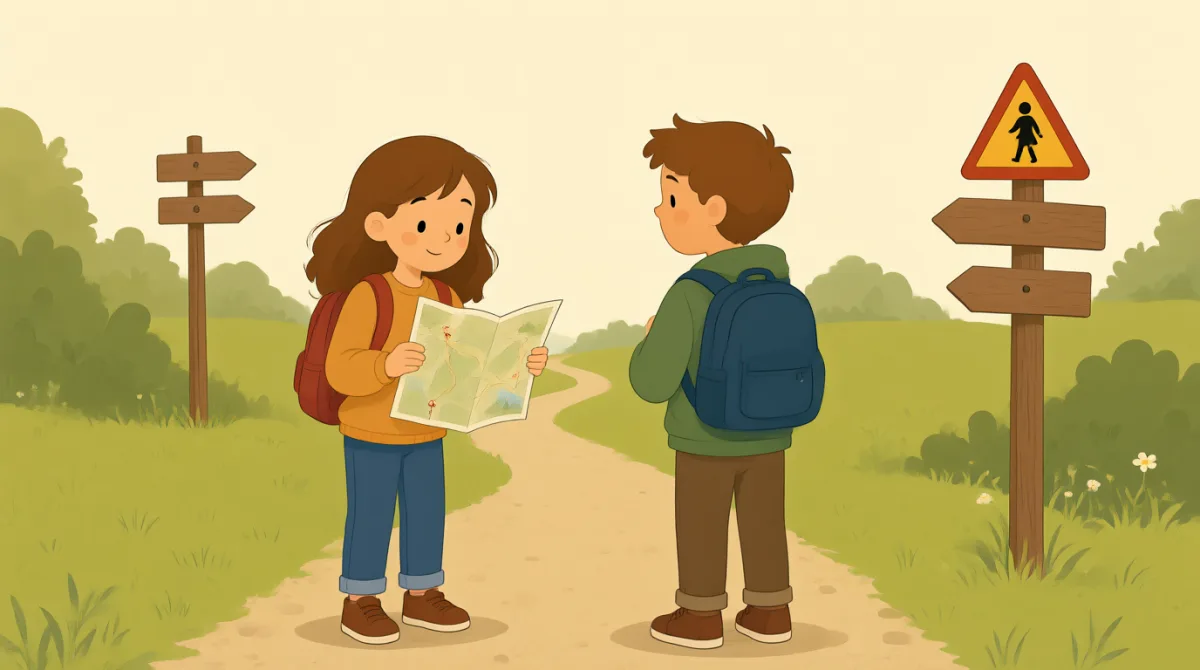

Jack, I think we took the wrong path. This trail looks different.
জ্যাক, আমার মনে হয় আমরা ভুল পথে চলে এসেছি। এই পথটা অন্য রকম লাগছে।

Let's stop here and check the map. We don't want to walk farther.
চলো এখানে থেমে মানচিত্রটা দেখি। আমরা আরও দূরে চলে যেতে চাই না।
There are two paths at this fork. Which one did we take before?
এই মোড়ে দুটো পথ গেছে। আমরা আগে কোনটা ধরে এসেছিলাম?
We came up from the left. But I can't see the trail sign.
আমরা বাঁ দিক থেকে উঠে এসেছিলাম। কিন্তু পথের সাইনটা দেখতে পাচ্ছি না।
The map shows a blue marker on the right path. Let's look around.
মানচিত্রে ডান দিকের পথে একটা নীল চিহ্ন দেখাচ্ছে। চলো আশপাশটা দেখি।
I see one on that tree! The blue marks lead back to our trail.
ওই গাছটায় একটা দেখতে পাচ্ছি! নীল চিহ্নগুলো আমাদের আবার মূল পথে নিয়ে যাবে।
Great. Let's follow the markers and stay together this time.
দারুণ। এবার চলো চিহ্নগুলো ধরে যাই আর একসঙ্গে থাকি।
Good idea. We should keep the map out and watch for signs.
ভালো কথা। মানচিত্রটা হাতের কাছে রাখা উচিত, আর সাইনগুলোর দিকেও খেয়াল রাখা উচিত।
শব্দভান্ডার8
- wrong pathভুল পথ
A path that does not take you where you want to go. You can say, “I think we took the wrong path,” when you may have gone the wrong way.
যে পথে গেলে তুমি যেখানে যেতে চাও, সেখানে পৌঁছানো যায় না। ভুল পথে গিয়ে থাকতে পারো মনে হলে বলতে পারো, “I think we took the wrong path,” (আমার মনে হয় আমরা ভুল পথে চলে এসেছি)।
- check the mapমানচিত্র দেখা
Look at a map to find where you are or where to go. You can use this phrase when you need help finding your way.
তুমি কোথায় আছ বা কোন দিকে যেতে হবে তা জানার জন্য মানচিত্রের দিকে তাকানো। পথ খুঁজে পেতে সাহায্য দরকার হলে এই কথাটা বলতে পারো।
- forkদুমুখো মোড়
A place where one path splits into two or more paths. You can ask, “Which path should we take at this fork?”
যে জায়গায় একটি পথ ভাগ হয়ে দুই বা তার বেশি পথে চলে গেছে। তুমি জিজ্ঞেস করতে পারো, “Which path should we take at this fork?” (এই দুমুখো মোড়ে আমরা কোন পথটা ধরব?)
- trail signপথের সাইন
A sign that shows information about a walking trail. You can look for a trail sign to check that you are going the right way.
হাঁটার পথ সম্পর্কে তথ্য জানায় এমন সাইন। ঠিক পথে যাচ্ছ কি না দেখতে পথের সাইন খুঁজে নিতে পারো।
- look aroundআশপাশে দেখা
Look at the area nearby to find something. You can say this when you want to search for a sign or marker.
কিছু খুঁজে পেতে কাছাকাছি জায়গাগুলো দেখা। কোনো সাইন বা চিহ্ন খুঁজতে চাইলে এই কথাটা বলতে পারো।
- lead back toআবার ফিরিয়ে নিয়ে যাওয়া
Show the way back to a place. You can use it to explain where a path or set of markers goes.
কোনো জায়গায় ফেরার পথ দেখানো। কোনো পথ বা চিহ্নের সারি কোথায় নিয়ে যায়, তা বোঝাতে এই কথাটা ব্যবহার করতে পারো।
- follow the markersচিহ্নগুলো অনুসরণ করা
Go in the direction shown by the trail markers. This phrase is useful when signs or marks show you which way to go.
পথের চিহ্ন যে দিকে নির্দেশ করে, সেদিকে যাওয়া। কোন দিকে যেতে হবে তা সাইন বা চিহ্ন দেখালে এই কথাটা কাজে লাগে।
- stay togetherএকসঙ্গে থাকা
Remain with the other people in your group. You can say this to help everyone stay safe and avoid getting lost.
দলের অন্যদের সঙ্গে থাকা। সবাইকে নিরাপদ রাখতে আর পথ হারানো এড়াতে এই কথাটা বলতে পারো।
গুরুত্বপূর্ণ বাক্য8
- 1
I think we took the wrong path.
আমার মনে হয় আমরা ভুল পথে চলে এসেছি।
Use this sentence when you believe you may have gone the wrong way. You can replace “the wrong path” with another problem, such as “the wrong bus.”
তোমার মনে হলে তোমরা ভুল পথে গিয়ে থাকতে পারো, তখন এই বাক্যটি বলো। “the wrong path”-এর জায়গায় “the wrong bus”-এর মতো অন্য কোনো সমস্যা বসাতে পারো।
- 2
Let's stop here and check the map.
চলো এখানে থেমে মানচিত্রটা দেখি।
This is a simple way to suggest stopping to find out where you are. Replace “check the map” with another action, such as “ask for help.”
তোমরা কোথায় আছ তা বোঝার জন্য থামার প্রস্তাব দিতে এই সহজ বাক্যটি ব্যবহার করো। “check the map”-এর জায়গায় “ask for help”-এর মতো অন্য কোনো কাজ বসাতে পারো।
- 3
Which one did we take before?
আমরা আগে কোনটা ধরেছিলাম?
Use this question when you need to remember which choice you made earlier. You can ask it about paths, roads, or other options.
আগে কোন বিকল্পটি বেছে নিয়েছিলে, তা মনে করার দরকার হলে এই প্রশ্নটি করো। পথ, রাস্তা বা অন্য বিকল্প নিয়ে এভাবে জিজ্ঞেস করতে পারো।
- 4
But I can't see the trail sign.
কিন্তু পথের সাইনটা দেখতে পাচ্ছি না।
Use this sentence when something you are looking for is not visible. Replace “the trail sign” with another thing, such as “the bus stop.”
তুমি যা খুঁজছ, তা চোখে না পড়লে এই বাক্যটি ব্যবহার করো। “the trail sign”-এর জায়গায় “the bus stop”-এর মতো অন্য কিছু বসাতে পারো।
- 5
Let's look around.
চলো আশপাশটা দেখি।
This is a short, friendly suggestion to search nearby. You can use it when you are trying to find something you have lost.
কাছাকাছি কিছু খোঁজার জন্য এটি ছোট্ট, বন্ধুত্বপূর্ণ একটি প্রস্তাব। হারিয়ে যাওয়া কিছু খুঁজতে থাকলে এই বাক্যটি বলতে পারো।
- 6
The blue marks lead back to our trail.
নীল চিহ্নগুলো আমাদের আবার মূল পথে নিয়ে যাবে।
This sentence explains where the marks will take you. You can replace “The blue marks” with another guide, such as “These signs.”
চিহ্নগুলো তোমাদের কোথায় নিয়ে যাবে, এই বাক্যটি তা বোঝায়। “The blue marks”-এর জায়গায় “These signs”-এর মতো অন্য কোনো নির্দেশক বসাতে পারো।
- 7
Let's follow the markers and stay together this time.
চলো চিহ্নগুলো ধরে যাই আর এবার একসঙ্গে থাকি।
Use this sentence to suggest a plan and remind people to remain as a group. You can replace “the markers” with another guide, such as “the signs.”
কোনো পরিকল্পনার প্রস্তাব দিতে এবং সবাইকে একসঙ্গে থাকার কথা মনে করিয়ে দিতে এই বাক্যটি বলো। “the markers”-এর জায়গায় “the signs”-এর মতো অন্য কোনো নির্দেশক বসাতে পারো।
- 8
We should keep the map out and watch for signs.
মানচিত্রটা হাতের কাছে রাখা উচিত, আর সাইনগুলোর দিকেও খেয়াল রাখা উচিত।
This sentence gives two helpful actions to avoid getting lost. You can use “We should…” to suggest things to do in other situations.
পথ হারানো এড়াতে কী করা যায়, এই বাক্যটি তার দুটি উপায় বলে। অন্য পরিস্থিতিতে কী করা উচিত তা বলতে “We should…” ব্যবহার করতে পারো।