Getting a Little Lost
길을 조금 헤매다
Emma and Jack reach a fork in the trail and are not sure which way to go. They check the map and follow the trail markers to get back on the right path.
에마와 잭은 등산로 갈림길에 도착하지만 어느 쪽으로 가야 할지 확신이 서지 않아요. 지도를 확인하고 등산로 표식을 따라 올바른 길로 돌아가요.
대화8
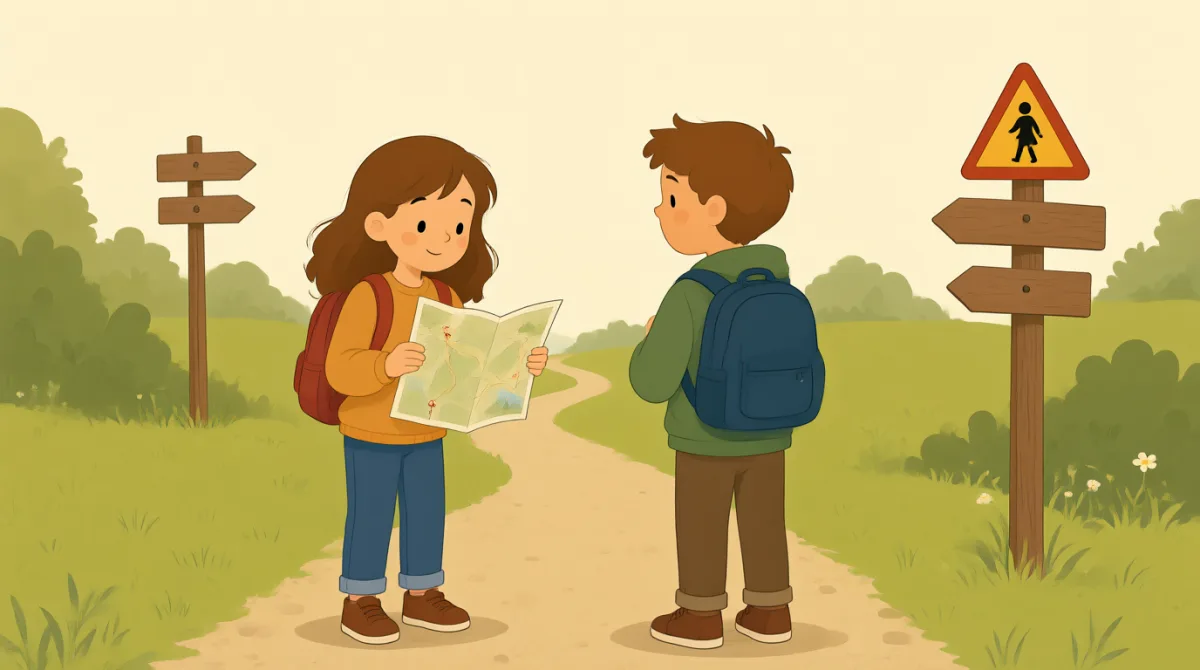

Jack, I think we took the wrong path. This trail looks different.
잭, 우리 길을 잘못 든 것 같아. 이 길은 좀 달라 보여.

Let's stop here and check the map. We don't want to walk farther.
여기서 멈추고 지도를 확인하자. 더 멀리 가면 안 되잖아.
There are two paths at this fork. Which one did we take before?
이 갈림길에 길이 두 개 있어. 아까 우리 어느 쪽으로 갔지?
We came up from the left. But I can't see the trail sign.
우린 왼쪽에서 올라왔어. 그런데 등산로 표지판이 안 보여.
The map shows a blue marker on the right path. Let's look around.
지도에는 오른쪽 길에 파란색 표식이 있다고 나와 있어. 주변을 둘러보자.
I see one on that tree! The blue marks lead back to our trail.
저 나무에 하나 보여! 파란색 표식을 따라가면 우리 등산로로 돌아갈 수 있어.
Great. Let's follow the markers and stay together this time.
좋아. 이번엔 표식을 따라가면서 같이 다니자.
Good idea. We should keep the map out and watch for signs.
좋은 생각이야. 지도를 꺼내 두고 표지판도 잘 살펴보자.
어휘8
- wrong path잘못 든 길
A path that does not take you where you want to go. You can say, “I think we took the wrong path,” when you may have gone the wrong way.
원하는 곳으로 데려다주지 않는 길을 뜻해요. 길을 잘못 든 것 같을 때 “I think we took the wrong path”라고 말할 수 있어요.
- check the map지도를 확인하다
Look at a map to find where you are or where to go. You can use this phrase when you need help finding your way.
현재 위치나 가야 할 곳을 찾으려고 지도를 보는 거예요. 길을 찾는 데 도움이 필요할 때 쓸 수 있는 표현이에요.
- fork갈림길
A place where one path splits into two or more paths. You can ask, “Which path should we take at this fork?”
한 길이 두 개 이상의 길로 나뉘는 곳이에요. “Which path should we take at this fork?”라고 물어볼 수 있어요.
- trail sign등산로 표지판
A sign that shows information about a walking trail. You can look for a trail sign to check that you are going the right way.
등산로에 관한 정보를 알려 주는 표지판이에요. 올바른 길로 가고 있는지 확인하려고 등산로 표지판을 찾아볼 수 있어요.
- look around주변을 둘러보다
Look at the area nearby to find something. You can say this when you want to search for a sign or marker.
무언가를 찾으려고 가까운 주변을 살펴보는 거예요. 표지판이나 표식을 찾고 싶을 때 쓸 수 있어요.
- lead back to~로 돌아가는 길을 알려 주다
Show the way back to a place. You can use it to explain where a path or set of markers goes.
어떤 장소로 돌아가는 길을 알려 준다는 뜻이에요. 길이나 여러 표식이 어디로 이어지는지 설명할 때 쓸 수 있어요.
- follow the markers표식을 따라가다
Go in the direction shown by the trail markers. This phrase is useful when signs or marks show you which way to go.
등산로 표식이 가리키는 방향으로 가는 거예요. 표지판이나 표시가 가야 할 방향을 알려 줄 때 유용한 표현이에요.
- stay together함께 다니다
Remain with the other people in your group. You can say this to help everyone stay safe and avoid getting lost.
같은 일행과 떨어지지 않고 함께 있는 거예요. 모두가 안전하게 다니고 길을 잃지 않도록 이렇게 말할 수 있어요.
핵심 문장8
- 1
I think we took the wrong path.
우리 길을 잘못 든 것 같아.
Use this sentence when you believe you may have gone the wrong way. You can replace “the wrong path” with another problem, such as “the wrong bus.”
길을 잘못 갔을지도 모른다고 생각할 때 쓰는 문장이에요. “the wrong path” 대신 “the wrong bus”처럼 다른 문제를 넣어 말할 수도 있어요.
- 2
Let's stop here and check the map.
여기서 멈추고 지도를 확인하자.
This is a simple way to suggest stopping to find out where you are. Replace “check the map” with another action, such as “ask for help.”
현재 위치를 알아보려고 멈추자고 제안하는 간단한 표현이에요. “check the map” 대신 “ask for help”처럼 다른 행동을 넣을 수 있어요.
- 3
Which one did we take before?
아까 우리 어느 쪽으로 갔지?
Use this question when you need to remember which choice you made earlier. You can ask it about paths, roads, or other options.
전에 어떤 선택을 했는지 기억해 내야 할 때 쓰는 질문이에요. 길이나 도로, 그 밖의 여러 선택지에 관해 물어볼 수 있어요.
- 4
But I can't see the trail sign.
그런데 등산로 표지판이 안 보여.
Use this sentence when something you are looking for is not visible. Replace “the trail sign” with another thing, such as “the bus stop.”
찾고 있는 것이 눈에 보이지 않을 때 쓰는 문장이에요. “the trail sign” 대신 “the bus stop”처럼 다른 대상을 넣을 수 있어요.
- 5
Let's look around.
주변을 둘러보자.
This is a short, friendly suggestion to search nearby. You can use it when you are trying to find something you have lost.
근처를 찾아보자고 짧고 친근하게 제안하는 표현이에요. 잃어버린 것을 찾으려 할 때 쓸 수 있어요.
- 6
The blue marks lead back to our trail.
파란색 표식을 따라가면 우리 등산로로 돌아갈 수 있어.
This sentence explains where the marks will take you. You can replace “The blue marks” with another guide, such as “These signs.”
표식이 어디로 안내하는지 설명하는 문장이에요. “The blue marks” 대신 “These signs”처럼 다른 안내물을 넣을 수 있어요.
- 7
Let's follow the markers and stay together this time.
이번엔 표식을 따라가면서 같이 다니자.
Use this sentence to suggest a plan and remind people to remain as a group. You can replace “the markers” with another guide, such as “the signs.”
계획을 제안하면서 일행이 함께 다니도록 당부할 때 쓰는 문장이에요. “the markers” 대신 “the signs”처럼 다른 안내물을 넣을 수 있어요.
- 8
We should keep the map out and watch for signs.
지도를 꺼내 두고 표지판도 잘 살펴보자.
This sentence gives two helpful actions to avoid getting lost. You can use “We should…” to suggest things to do in other situations.
길을 잃지 않도록 도움이 되는 두 가지 행동을 제안하는 문장이에요. 다른 상황에서도 할 일을 제안할 때 “We should…”를 쓸 수 있어요.