Getting a Little Lost
کمی راه را گم کردن
Emma and Jack reach a fork in the trail and are not sure which way to go. They check the map and follow the trail markers to get back on the right path.
اِما و جک به دوشاخهای در مسیر میرسند و مطمئن نیستند از کدام طرف بروند. آنها نقشه را بررسی میکنند و علامتهای مسیر را دنبال میکنند تا دوباره به راه درست برگردند.
گفتوگو8
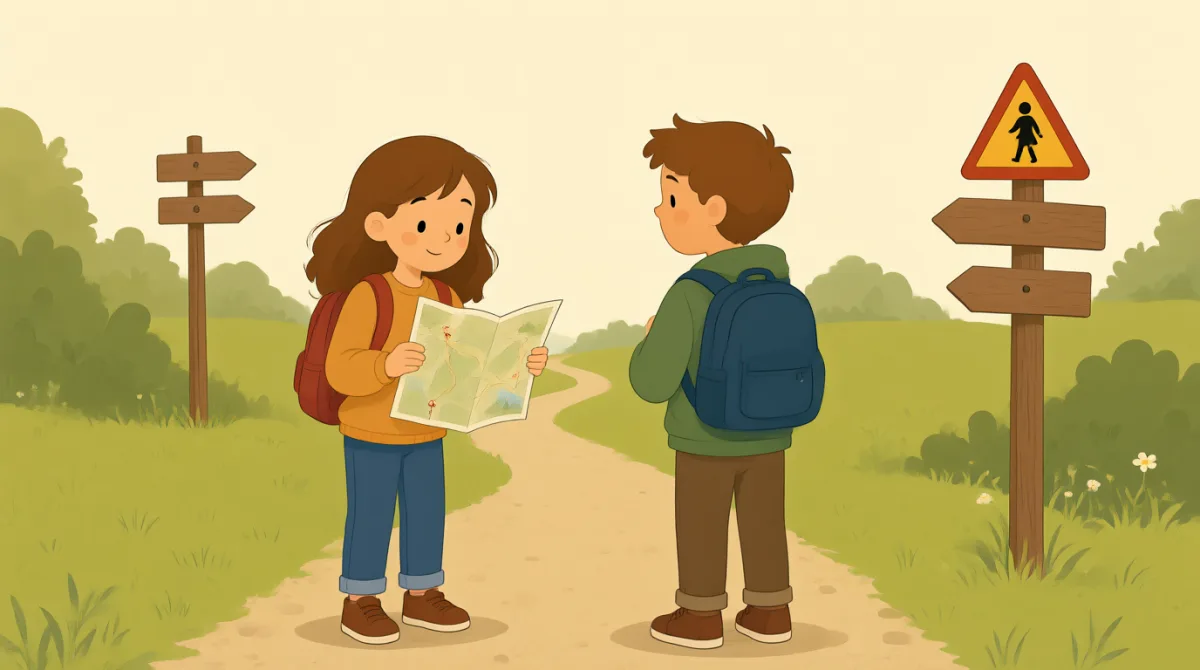

Jack, I think we took the wrong path. This trail looks different.
جک، فکر کنم مسیر رو اشتباه اومدیم. این مسیر فرق داره.

Let's stop here and check the map. We don't want to walk farther.
بیا اینجا وایسیم و نقشه رو بررسی کنیم. نمیخوایم بیشتر از این راه بریم.
There are two paths at this fork. Which one did we take before?
سر این دوشاخه دو تا مسیر هست. قبلاً از کدومش رفتیم؟
We came up from the left. But I can't see the trail sign.
ما از سمت چپ بالا اومدیم. ولی تابلوی مسیر رو نمیبینم.
The map shows a blue marker on the right path. Let's look around.
نقشه روی مسیر سمت راست یک علامت آبی نشون میده. بیا اطراف رو بگردیم.
I see one on that tree! The blue marks lead back to our trail.
یکی روی اون درخت میبینم! علامتهای آبی ما رو دوباره به مسیرمون میرسونن.
Great. Let's follow the markers and stay together this time.
عالیه. این بار بیا علامتها رو دنبال کنیم و کنار هم بمونیم.
Good idea. We should keep the map out and watch for signs.
فکر خوبیه. بهتره نقشه رو دم دست نگه داریم و مراقب تابلوها باشیم.
واژگان8
- wrong pathمسیر اشتباه
A path that does not take you where you want to go. You can say, “I think we took the wrong path,” when you may have gone the wrong way.
مسیری که شما را به جایی که میخواهید بروید نمیرساند. وقتی ممکن است مسیر را اشتباه رفته باشید، میتوانید بگویید “I think we took the wrong path” (فکر کنم مسیر اشتباهی را آمدیم).
- check the mapنقشه را بررسی کردن
Look at a map to find where you are or where to go. You can use this phrase when you need help finding your way.
برای پیدا کردن موقعیت خود یا راه پیشِ رو به نقشه نگاه کردن. وقتی برای پیدا کردن راه به کمک نیاز دارید، میتوانید از این عبارت استفاده کنید.
- forkدوشاخهٔ مسیر
A place where one path splits into two or more paths. You can ask, “Which path should we take at this fork?”
جایی که یک مسیر به دو یا چند مسیر تقسیم میشود. میتوانید بپرسید: “Which path should we take at this fork?” (سر این دوشاخه از کدام مسیر برویم؟).
- trail signتابلوی مسیر
A sign that shows information about a walking trail. You can look for a trail sign to check that you are going the right way.
تابلویی که اطلاعاتی دربارهٔ یک مسیر پیادهروی نشان میدهد. میتوانید دنبال تابلوی مسیر بگردید تا مطمئن شوید در راه درست هستید.
- look aroundاطراف را گشتن
Look at the area nearby to find something. You can say this when you want to search for a sign or marker.
برای پیدا کردن چیزی به اطراف نزدیک خود نگاه کردن. وقتی میخواهید دنبال یک تابلو یا علامت بگردید، میتوانید این عبارت را به کار ببرید.
- lead back toدوباره به ... رساندن
Show the way back to a place. You can use it to explain where a path or set of markers goes.
راه برگشت به یک مکان را نشان دادن. میتوانید از این عبارت برای توضیح دادن مسیر یک راه یا مجموعهای از علامتها استفاده کنید.
- follow the markersعلامتها را دنبال کردن
Go in the direction shown by the trail markers. This phrase is useful when signs or marks show you which way to go.
در جهتی رفتن که علامتهای مسیر نشان میدهند. وقتی تابلوها یا نشانهها جهت حرکت را مشخص میکنند، این عبارت مفید است.
- stay togetherکنار هم ماندن
Remain with the other people in your group. You can say this to help everyone stay safe and avoid getting lost.
همراه افراد دیگر گروه خود ماندن. میتوانید این را بگویید تا همه در امان بمانند و راهشان را گم نکنند.
جملات کلیدی8
- 1
I think we took the wrong path.
فکر کنم مسیر اشتباهی را آمدیم.
Use this sentence when you believe you may have gone the wrong way. You can replace “the wrong path” with another problem, such as “the wrong bus.”
وقتی فکر میکنید ممکن است راه اشتباهی را رفته باشید، از این جمله استفاده کنید. میتوانید “the wrong path” را با مشکل دیگری، مثل “the wrong bus”، جایگزین کنید.
- 2
Let's stop here and check the map.
بیا اینجا بایستیم و نقشه را بررسی کنیم.
This is a simple way to suggest stopping to find out where you are. Replace “check the map” with another action, such as “ask for help.”
این روشی ساده برای پیشنهاد توقف و فهمیدن موقعیت خودتان است. “check the map” را با کار دیگری، مثل “ask for help”، جایگزین کنید.
- 3
Which one did we take before?
قبلاً کدامیکی را انتخاب کردیم؟
Use this question when you need to remember which choice you made earlier. You can ask it about paths, roads, or other options.
وقتی لازم است به یاد بیاورید قبلاً کدام گزینه را انتخاب کردهاید، از این پرسش استفاده کنید. میتوانید آن را دربارهٔ مسیرها، جادهها یا گزینههای دیگر به کار ببرید.
- 4
But I can't see the trail sign.
ولی تابلوی مسیر را نمیبینم.
Use this sentence when something you are looking for is not visible. Replace “the trail sign” with another thing, such as “the bus stop.”
وقتی چیزی را که دنبالش میگردید نمیتوانید ببینید، از این جمله استفاده کنید. “the trail sign” را با چیز دیگری، مثل “the bus stop”، جایگزین کنید.
- 5
Let's look around.
بیا اطراف را بگردیم.
This is a short, friendly suggestion to search nearby. You can use it when you are trying to find something you have lost.
این پیشنهادی کوتاه و دوستانه برای گشتن در اطراف است. وقتی سعی دارید چیزی را که گم کردهاید پیدا کنید، میتوانید از آن استفاده کنید.
- 6
The blue marks lead back to our trail.
علامتهای آبی ما را دوباره به مسیرمان میرسانند.
This sentence explains where the marks will take you. You can replace “The blue marks” with another guide, such as “These signs.”
این جمله توضیح میدهد که علامتها شما را به کجا میرسانند. میتوانید “The blue marks” را با راهنمای دیگری، مثل “These signs”، جایگزین کنید.
- 7
Let's follow the markers and stay together this time.
بیا علامتها را دنبال کنیم و این بار کنار هم بمانیم.
Use this sentence to suggest a plan and remind people to remain as a group. You can replace “the markers” with another guide, such as “the signs.”
برای پیشنهاد یک برنامه و یادآوری اینکه افراد باید گروهی بمانند، از این جمله استفاده کنید. میتوانید “the markers” را با راهنمای دیگری، مثل “the signs”، جایگزین کنید.
- 8
We should keep the map out and watch for signs.
بهتر است نقشه را دم دست نگه داریم و مراقب تابلوها باشیم.
This sentence gives two helpful actions to avoid getting lost. You can use “We should…” to suggest things to do in other situations.
این جمله دو کار مفید را برای جلوگیری از گم شدن پیشنهاد میکند. در موقعیتهای دیگر هم میتوانید از “We should…” برای پیشنهاد دادن کارهایی که باید انجام شوند استفاده کنید.